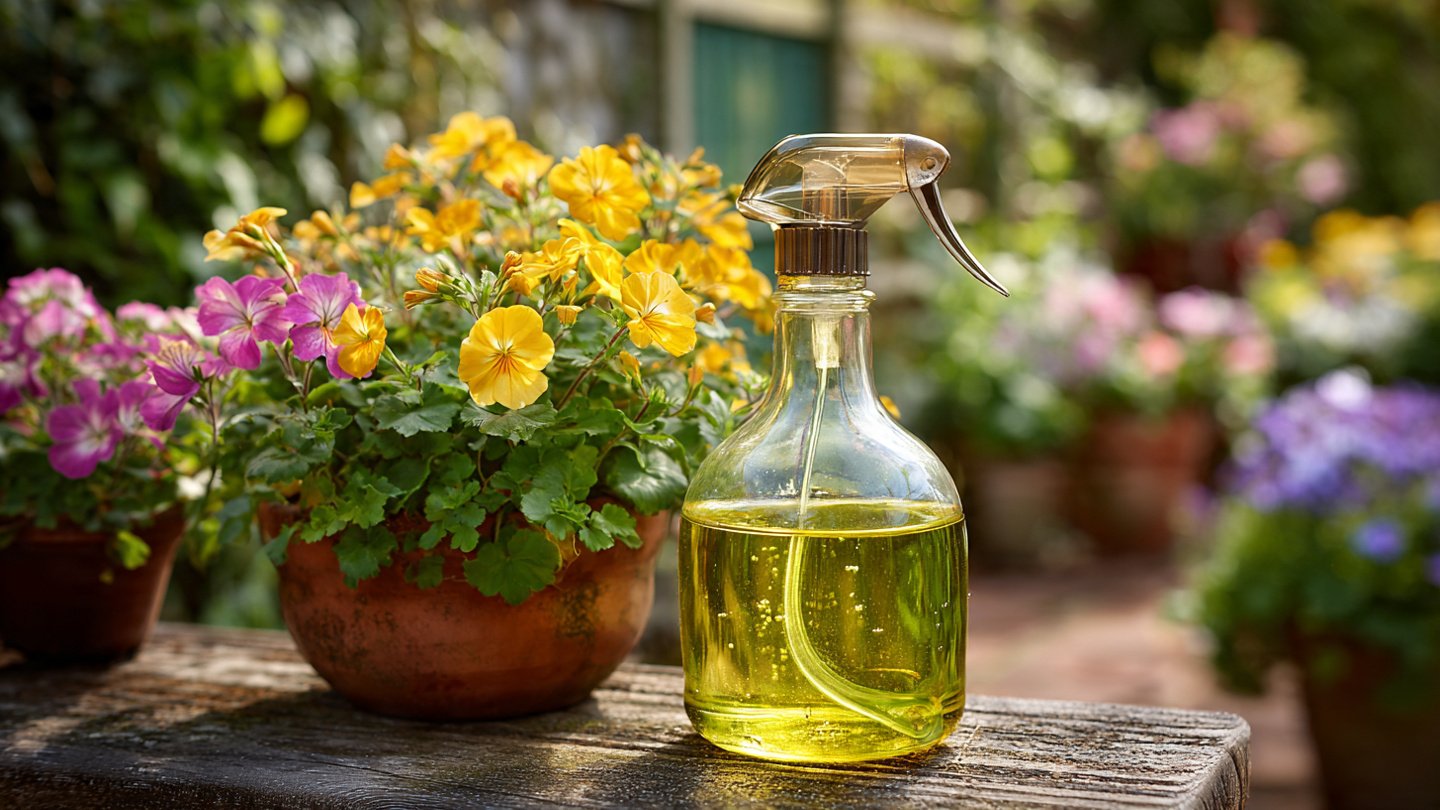
Vinegar’s main active component is acetic acid, which gives it its strong smell and acidic nature. Most garden pests are highly sensitive to odors and chemical changes in their surroundings. When vinegar is present, it disrupts their ability to feed, navigate, or settle comfortably in the garden.
The acidic environment created by vinegar can:
- Irritate soft-bodied insects
- Interfere with pests’ sense of smell
- Damage the outer coating of some insects
- Make treated areas unattractive for nesting or feeding
Because of this, many pests instinctively avoid areas where vinegar has been applied.
How Vinegar Affects Common Flower Garden Pests
1. Ants
Ants rely on scent trails to move between their nests and food sources. Vinegar breaks down these trails, causing confusion and discouraging ants from returning. This is especially helpful in flower gardens where ants protect aphids in exchange for honeydew.
2. Aphids
Aphids have soft bodies that are highly vulnerable to acidic solutions. Light vinegar sprays can damage their outer layer and act as a contact repellent, reducing infestations when used carefully.
3. Slugs and Snails
Vinegar irritates the moist bodies of slugs and snails, making it an effective deterrent along garden borders or pathways. Even the smell alone can keep them from crossing treated areas.
4. Flies and Gnats
The strong odor of vinegar disrupts flying insects, making flower beds less attractive for hovering and egg-laying.
Why Vinegar Is Attractive to Eco-Conscious Gardeners
Many gardeners prefer vinegar because it is:
- Natural and biodegradable
- Affordable and widely available
- Free of synthetic chemicals
- Less harmful to beneficial insects when used selectively
When applied correctly, vinegar offers a more environmentally friendly alternative to commercial pesticides.
Vinegar as a Preventive Tool, Not Just a Treatment
One of vinegar’s biggest advantages is its ability to prevent pests before they become a problem. Used around garden edges, pots, and walkways, vinegar discourages insects from entering flower beds in the first place.
Preventive uses include:
- Spraying fence lines and garden borders
- Treating cracks where ants enter
- Cleaning garden tools and pots to remove insect residue
This proactive approach reduces the need for stronger interventions later.
How to Use Vinegar Safely in Flower Gardens
While vinegar is effective, it must be used with caution. Its acidity can damage plants if applied incorrectly.
Best Practices
- Always dilute vinegar before use (typically 1 part vinegar to 3–4 parts water)
- Apply directly to pests or non-plant surfaces
- Avoid spraying leaves, petals, or roots
- Test on a small area first
- Use during cooler parts of the day
Undiluted vinegar can burn plant tissue and disrupt beneficial soil organisms.
Vinegar vs. Chemical Pesticides
Compared to synthetic pesticides, vinegar works differently:
- It repels and deters rather than poisons long-term
- It breaks down quickly in the environment
- It does not accumulate in soil or water
- It reduces the risk of pest resistance
However, vinegar does not provide lasting residual protection, meaning repeated applications may be needed.
Limitations of Using Vinegar
Despite its benefits, vinegar is not a complete solution.
- It does not target pests deep in the soil
- Overuse can alter soil pH
- It may harm beneficial insects if misused
- It works best on minor to moderate infestations
For severe pest problems, vinegar should be combined with other natural methods such as companion planting, neem oil, or biological controls.
Final Thoughts
Vinegar works wonders in flower gardens because it taps into a simple truth of nature: pests avoid environments that disrupt their senses and survival. Its acidity, strong scent, and natural composition make it a powerful deterrent against many common garden insects.
When used responsibly and in moderation, vinegar can help keep your flower garden healthy, vibrant, and pest-free—without compromising the beauty of your blooms or the balance of your garden ecosystem.
If you’d like, I can also:
- Share vinegar spray recipes
- Explain which flowers tolerate vinegar nearby
- Compare vinegar with other natural pest controls
- Create a seasonal pest-prevention plan
Just let me know 🌼