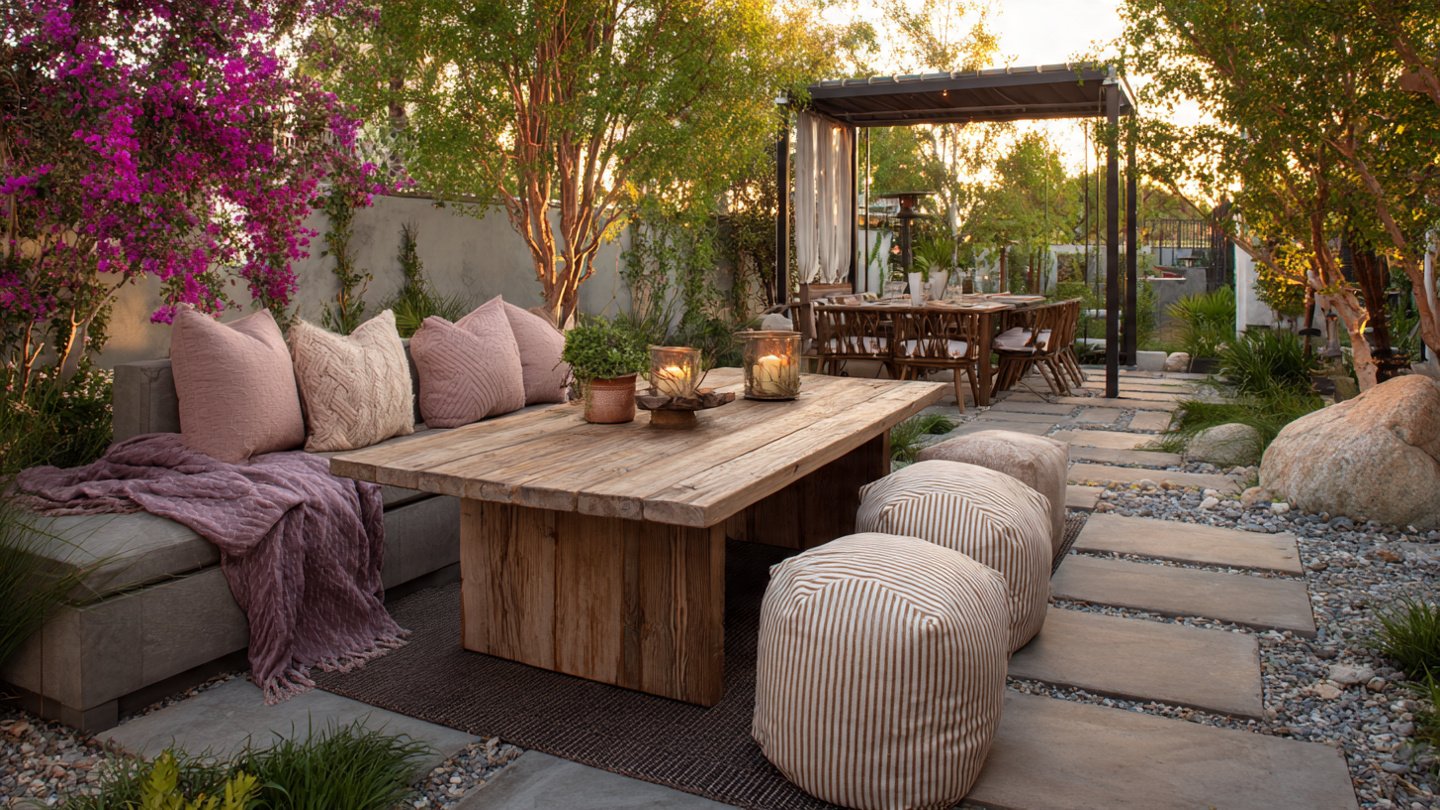
Small patios can feel cramped and cluttered, but with a few smart design strategies, you can transform even the tiniest outdoor space into a relaxing, stylish retreat. By playing with elements like furniture, color, layout, and greenery, you can make your patio feel larger, more inviting, and functional. Whether you want a cozy breakfast nook, a mini garden escape, or a social hangout spot, these tricks and techniques will help you maximize your space without sacrificing style.
1. Choose the Right Furniture
One of the biggest challenges on a small patio is fitting furniture without overcrowding. The key is to select pieces that are appropriately scaled and multi-functional.
Space-Saving Options:
- Foldable or Stackable Chairs: These can be stored easily when not in use.
- Compact Bistro Tables: Perfect for two or three people and won’t dominate the space.
- Built-In Benches: Serve as seating and sometimes as storage underneath.
- Ottomans and Poufs: Act as both seating and footrests without taking up much space.
Layout Tips:
- Place furniture against walls or railing edges to open up the center.
- Avoid oversized pieces that can block walkways or create a cramped feeling.
By selecting furniture that suits the space, your patio can feel airy and functional even with limited square footage.
2. Use Vertical Space
Vertical design is a game-changer for small patios. It draws the eye upward, creating the illusion of height and freeing up floor space.
Ideas to Try:
- Wall-Mounted Planters: Grow herbs, flowers, or trailing plants without occupying floor space.
- Hanging Baskets: Perfect for colorful blooms or small greenery.
- Vertical Shelves: Display decorative items or store gardening tools neatly.
- Trellises: Support climbing plants like ivy or roses, adding greenery without consuming patio space.
Vertical solutions not only expand the visual space but also add layers and depth to your patio design.
3. Light Colors and Reflective Surfaces
Color plays a huge role in making a small area feel larger. Light colors and reflective surfaces can open up space visually.
Tips:
- Paint walls or railings in soft whites, pastels, or neutral shades.
- Use light-colored furniture or cushions to avoid dark, heavy looks.
- Add mirrors or glass tables, which reflect light and create the illusion of depth.
- Transparent furniture, such as acrylic chairs, keeps the eye moving and prevents visual clutter.
These small color tweaks can make a patio feel bright, airy, and inviting, even if it’s only a few square meters.
4. Multi-Functional Pieces
In a small space, furniture that serves more than one purpose is invaluable. Multi-functional pieces can maximize usability without adding clutter.
Examples:
- Storage Benches: Store cushions, tools, or blankets inside.
- Convertible Tables: Expand for dining and fold down for lounging.
- Stackable Chairs: Act as extra seating when guests arrive but stack away when not in use.
- Hanging Shelves with Hooks: Display plants while storing lanterns, mugs, or garden tools.
Smartly chosen multifunctional items give your patio flexibility and functionality without sacrificing style.
5. Incorporate Greenery Strategically
Plants are key to transforming a patio into a peaceful retreat, but in small spaces, placement matters.
Tips:
- Use corners: Tall potted plants in corners draw the eye upward and make the patio feel larger.
- Trailing Plants: Place them on shelves or railings for a cascading effect.
- Herb Gardens: Functional and decorative; perfect for kitchen-adjacent patios.
- Layering Plants: Combine tall, medium, and low plants to create depth without crowding.
Greenery adds life, texture, and color while creating a sense of calm and seclusion.
6. Create Zones With Rugs and Flooring
Even a small patio can feel organized if you define areas visually. Outdoor rugs and flooring tricks can separate functional zones.
Strategies:
- Rugs: Use a small outdoor rug under a table or seating area to create a “room within a room.”
- Deck Tiles: Interlocking wood or stone tiles can define pathways or seating areas.
- Color Blocking: Use slightly different flooring shades or materials to visually expand space.
- Level Changes: A small step or platform can add dimension and make the patio feel more dynamic.
By defining zones, even limited square footage can feel structured and spacious.
7. Optimize Lighting
Lighting can dramatically change the perception of space and set the mood for your patio retreat.
Tips:
- String Lights: Wrap around railings or overhead for cozy, ambient lighting.
- Lanterns or LED Candles: Add warmth and style without taking up much space.
- Solar Path Lights: Illuminate edges to create a sense of boundary and depth.
- Wall-Mounted Fixtures: Free up floor space while providing ample illumination.
Good lighting makes a patio feel inviting and larger, especially for evening relaxation or entertaining.
8. Use Mirrors and Reflective Accents
Mirrors are a classic design trick to create the illusion of space. They reflect light and surrounding elements, making a small patio feel more expansive.
Ideas:
- Hang a mirror on a wall opposite greenery or furniture.
- Use mirrored tiles or metallic accents on furniture and planters.
- Reflective surfaces also help brighten shady patios, maximizing available natural light.
This simple design trick can transform a cramped area into a visually open retreat.
9. Minimalist Decor
Less is more on a small patio. Clutter can make a small area feel even smaller.
Tips:
- Stick to essential furniture and décor pieces.
- Limit accessories to a few statement items, like a vase, lantern, or decorative pillow.
- Store gardening tools and cushions out of sight when not in use.
A minimalist approach ensures your patio feels clean, organized, and spacious.
10. Add Vertical Screens or Curtains
Privacy screens or curtains not only create a sense of enclosure but also make a patio feel cozy yet spacious.
Options:
- Outdoor Curtains: Lightweight fabric adds softness while protecting from wind or sun.
- Wooden or Bamboo Screens: Provide privacy and act as a backdrop for plants.
- Trellis with Climbing Plants: Combines greenery and vertical separation.
By defining boundaries vertically, you create a sense of depth and seclusion, making a small patio feel like a retreat.
11. Incorporate Personal Comfort Elements
Even a small patio can be comfortable and relaxing with a few touches:
- Cushions and Throws: Soft textures make seating areas cozy.
- Portable Fire Pits or Heaters: Extend patio use into cooler months.
- Mini Water Features: The sound of trickling water adds a sense of calm.
- Shade Solutions: Umbrellas, pergolas, or retractable awnings keep your retreat cool.
Comfort-focused touches make your small patio feel like a luxurious, relaxing escape.
12. Maximize Seasonal Flexibility
A small patio can serve multiple purposes if you design it for seasonal adaptability:
- Lightweight Furniture: Move and rearrange as needed.
- Stackable or Foldable Pieces: Create open space for gatherings or exercise.
- Seasonal Plants: Rotate flowers, herbs, and potted plants to match the season.
- Weather-Resistant Materials: Ensure furniture and fabrics last longer and maintain aesthetic appeal.
Adaptability ensures your patio remains useful, stylish, and spacious year-round.
Final Thoughts
Transforming a small patio into a spacious retreat is all about smart design choices, clever use of vertical space, and thoughtful decor. By focusing on appropriately scaled furniture, greenery, lighting, mirrors, and multifunctional elements, you can make even a tiny outdoor area feel welcoming and expansive.
With a combination of strategic layout, minimalist décor, comfort, and flexibility, your patio can become a peaceful sanctuary or social hub, perfect for relaxing, entertaining, or simply enjoying nature. Even limited space can feel luxurious, airy, and open when you apply these simple tricks and maximize every inch thoughtfully.
A small patio doesn’t have to feel cramped—with these strategies, it can become your personal outdoor retreat, a place to unwind, connect, and enjoy the outdoors in comfort and style.