Absolutely! Here’s a detailed 1,200-word article for your requested title:
What Secrets Lie Behind the Mystery of Blue Roses Sold in Stores?
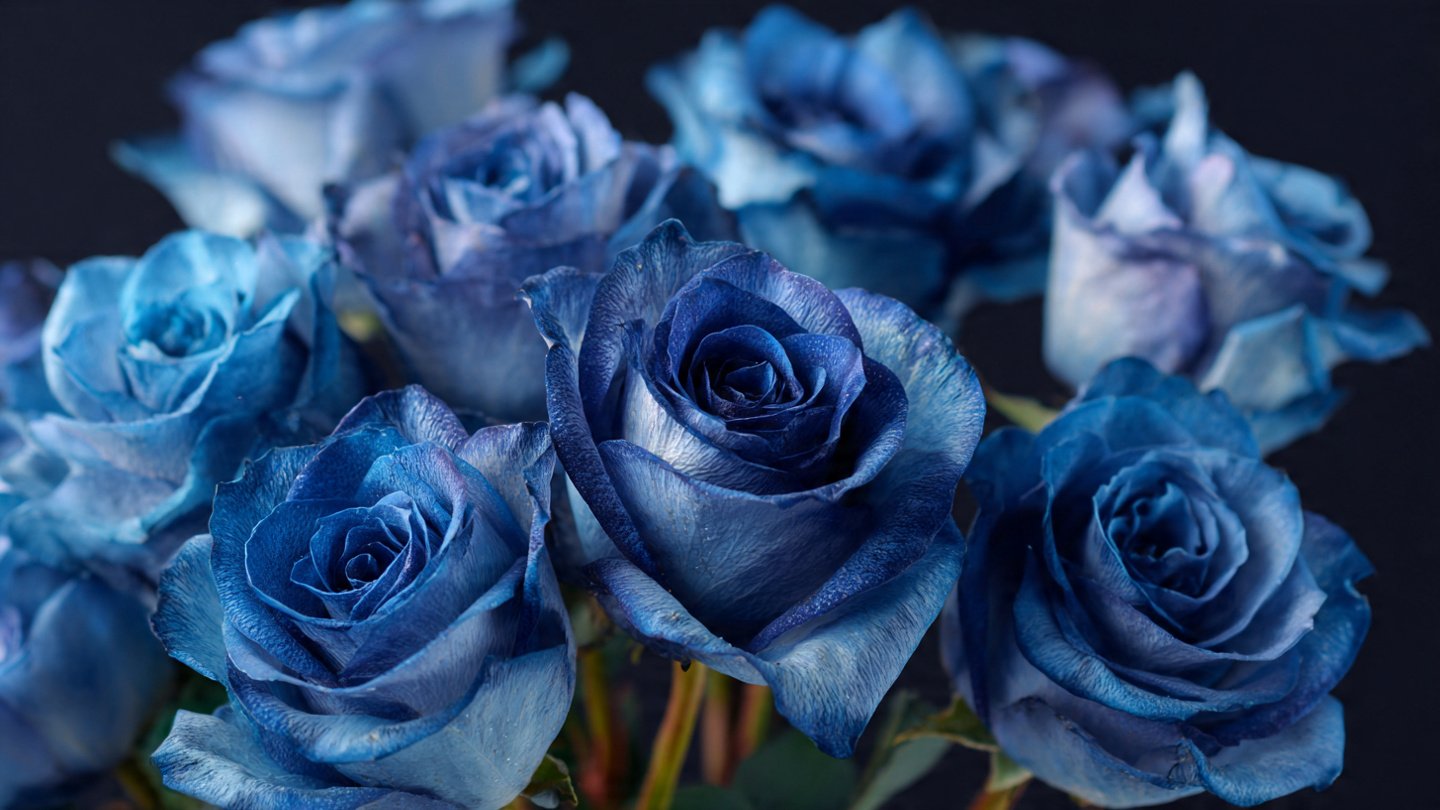
Roses have long held a special place in human culture, symbolizing love, mystery, and beauty. Among them, blue roses captivate the imagination like no other. With their ethereal, almost otherworldly hue, they evoke feelings of intrigue, unattainable desires, and even magic. Yet, if you’ve ever strolled through a florist’s shop and seen blue roses neatly arranged in bouquets, you may have wondered: are blue roses real? And if so, how do they come to life? The story behind blue roses is a fascinating mix of nature, science, and artistry.
The Historical Mystery of Blue Roses
For centuries, gardeners and poets alike were fascinated by the idea of a blue rose. Traditional roses, whether red, white, pink, or yellow, naturally lack the pigment delphinidin, which is essential for a true blue color.
- Early Attempts: Gardeners tried crossbreeding roses with other flowers that had blue pigments, such as pansies or delphiniums, but they never achieved a true blue rose.
- Symbolism: Because of their rarity, blue roses came to symbolize the impossible or unattainable—a dream beyond reach. They often appeared in literature, art, and mythology as emblems of mystery, love, or ambition.
For centuries, the blue rose existed only in folklore and imagination.
Why Roses Don’t Naturally Turn Blue
The natural color of roses is determined by pigments called anthocyanins, which produce red, purple, or pink hues. However, roses lack the specific genes needed to produce delphinidin, the pigment responsible for true blue coloration.
- Pigment Limitation: Without delphinidin, roses can only achieve shades of red, pink, white, or yellow.
- pH Influence: Even if some delphinidin were introduced, the acidity or alkalinity of the petal cells affects the final hue. True blue requires specific conditions that roses do not naturally possess.
This scientific limitation is why blue roses do not occur naturally in gardens, forests, or wild landscapes.
How Are Blue Roses Sold in Stores?
Despite the natural limitations, florists today do offer blue roses—but there’s a catch. The blue roses sold in stores are not naturally blue. They are created using one of several methods:
1. Dyeing White Roses
- The most common method is to take white roses and artificially dye them.
- The process involves placing the cut stems in water mixed with blue floral dye. As the rose absorbs the water, the petals gradually turn blue.
- Advantages: Simple, fast, and cost-effective for florists.
- Limitations: The color may not be uniform, and the petals can fade or discolor over time.
2. Spray Painting or Airbrushing
- Another method is to spray or airbrush blue pigment directly onto white or light-colored roses.
- This technique allows florists to control the intensity and shade of blue more precisely.
- Limitations: The petals may feel slightly unnatural to the touch, and the scent can be diminished by the spray.
3. Genetically Modified Roses
- In 2004, Japanese company Suntory and Dutch biotech firm Florigene announced the creation of a genetically modified blue rose.
- Scientists inserted a delphinidin gene from pansies into rose DNA, creating a rose with a bluish-lavender hue.
- Significance: This was a breakthrough in biotechnology, bringing humanity closer to achieving what was once considered impossible.
- Limitations: Even genetically modified “blue” roses tend to be more lavender or mauve than true blue due to natural cellular limitations.
The Science Behind Genetically Modified Blue Roses
Creating genetically modified blue roses involved advanced genetic engineering:
- Gene Identification: Scientists first identified the delphinidin gene responsible for blue pigmentation in other flowers.
- Gene Insertion: Using sophisticated techniques, they inserted this gene into rose DNA.
- Cell Cultivation: The modified rose cells were cultivated in controlled environments until a plant could grow from them.
- Selective Breeding: The plants were bred to stabilize the color, creating a rose that appeared blue under certain lighting conditions.
Although this method brought scientists closer to a “true blue rose,” natural chemical limitations mean the petals often lean lavender or silvery blue, rather than the deep sapphire seen in dyed roses.
Why Blue Roses Are So Fascinating
Blue roses hold a unique place in human imagination for several reasons:
- Symbol of Mystery: Because they cannot be found naturally, blue roses symbolize the unknown, the unattainable, or a mysterious love.
- Conversation Starter: Their rarity and unique appearance make them ideal for gifts, artistic arrangements, and decorative purposes.
- Scientific Marvel: Genetically modified blue roses are a symbol of human ingenuity, illustrating how science can achieve what was once considered impossible.
Buying Blue Roses: What You Should Know
If you’re considering buying blue roses, there are some important things to understand:
- Most Are Dyed or Painted: Store-bought blue roses are usually white roses colored with dyes or sprays.
- Shorter Lifespan: Dyed roses can sometimes have a shorter vase life because the dye affects petal health.
- Cost: Genetically modified blue roses, when available, tend to be expensive due to the complex scientific process behind them.
- Appearance: Artificially colored roses may not look as natural or vibrant as expected. Consider lighting and angle when displaying them.
Caring for Blue Roses
Even though many blue roses are dyed, caring for them properly can extend their beauty:
- Water: Keep the stems in fresh water, changing it every 2–3 days.
- Temperature: Avoid placing roses in direct sunlight for long periods, as this can fade the color.
- Trimming: Trim the stems at a 45-degree angle to improve water uptake.
- Vase Placement: Keep them away from heat sources, drafts, or ripening fruits to extend vase life.
If you have a genetically modified or naturally lavender-toned blue rose, care is similar to any other rose: plenty of water, indirect sunlight, and routine maintenance.
Cultural and Symbolic Significance
Blue roses have captured human imagination in ways no other flower has:
- Literature and Poetry: Often symbolize mystery, fantasy, and impossible dreams.
- Romantic Gestures: Represent love that is rare or unattainable, perfect for special occasions.
- Decorative Use: Blue roses add a striking aesthetic to weddings, art installations, and home decor.
Because of their rarity, blue roses carry a sense of luxury, uniqueness, and wonder that appeals to both gardeners and flower enthusiasts.
Future of Blue Roses
With advancements in genetic engineering, the dream of a true blue rose may soon be fully realized. Scientists continue to experiment with gene editing, hybridization, and pigment stabilization to create roses that are closer to a deep, natural blue than ever before.
In the near future, consumers might see blue roses that are naturally vibrant, without artificial dyes or sprays. Until then, blue roses remain a beautiful combination of science, art, and imagination—a symbol of human creativity and desire to push boundaries.
Conclusion
Blue roses are one of the most intriguing flowers in the world. Their mystique stems from centuries of myth, symbolism, and the scientific challenge of creating a true blue pigment in roses. Most blue roses sold in stores today are either dyed or genetically modified, each with its advantages and limitations.
Whether as a gift, decoration, or symbol, blue roses capture attention and spark curiosity. They remind us of the power of imagination, the beauty of science, and the allure of the impossible. For gardeners and flower enthusiasts alike, understanding the secrets behind blue roses adds a deeper appreciation for these stunning and enigmatic blooms.
So, the next time you encounter a blue rose in a florist’s display, you’ll know that what seems magical is a blend of artistry, biotechnology, and centuries of human fascination—a flower that embodies mystery, wonder, and the extraordinary.