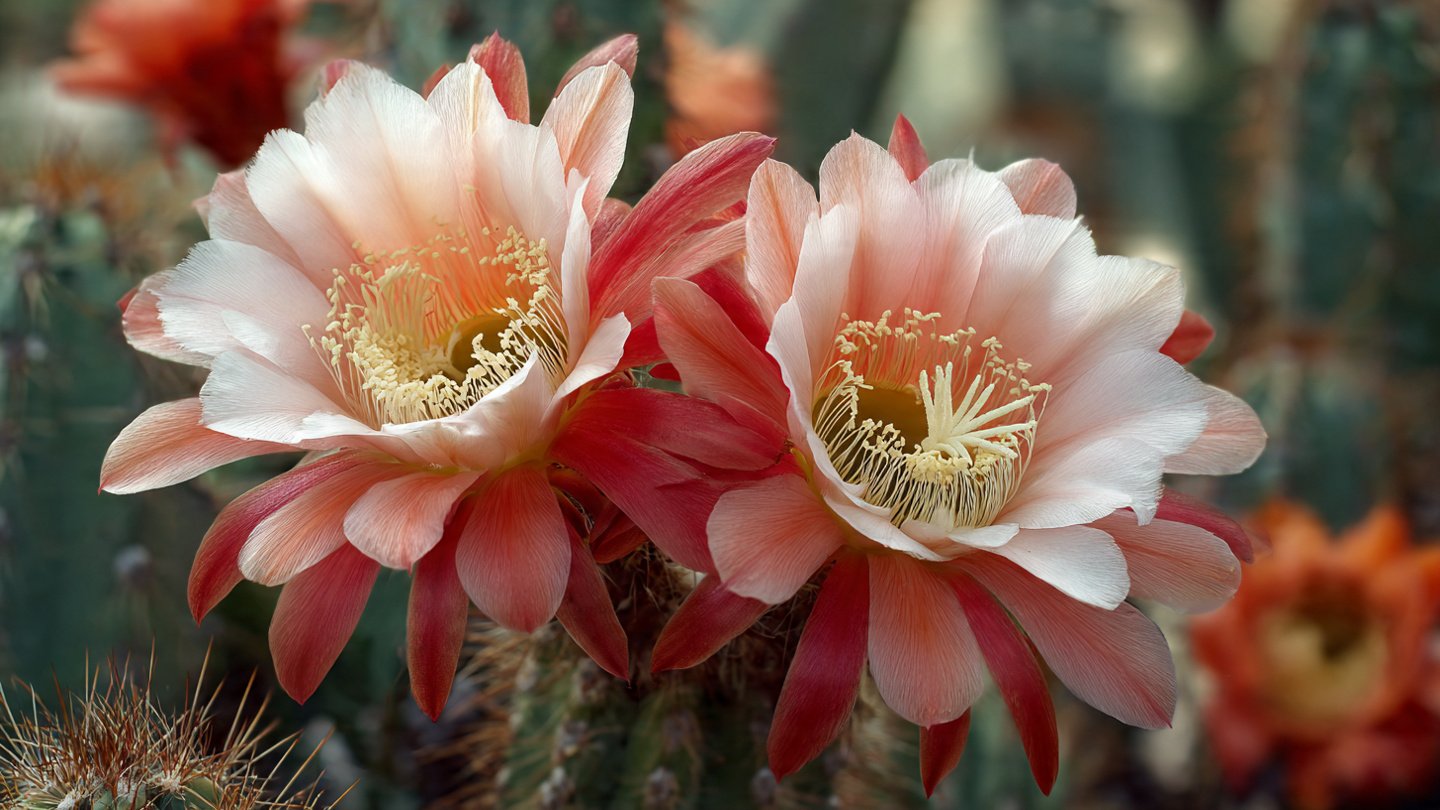
Among the thousands of cactus species found across deserts, mountains, and tropical regions, a select few captivate gardeners and botanists alike with a mysterious trait: they bloom only once a year—sometimes for just a single night. This fleeting display of beauty transforms an otherwise quiet, spiny plant into a breathtaking spectacle, leaving many to wonder: what exactly makes this rare cactus bloom so rarely?
The answer lies in a fascinating combination of evolution, climate cues, survival strategies, and precise biological timing. Let’s explore the science and secrets behind one of nature’s most dramatic floral events.
The Magic of a Once-a-Year Bloom
Rare blooming cacti such as the Queen of the Night (Epiphyllum oxypetalum), Selenicereus, and certain Ariocarpus species are famous for their limited flowering schedules. Unlike common garden flowers that bloom repeatedly throughout the season, these cacti invest all their energy into one carefully timed bloom per year.
This isn’t a flaw—it’s a survival masterpiece refined over thousands of years.
Evolution Shaped by Harsh Environments
Cacti evolved in some of the world’s most extreme habitats, including deserts where rainfall is unpredictable and temperatures fluctuate wildly. In such environments, producing flowers frequently would waste precious resources.
Instead, rare cacti developed a strategy of delayed gratification:
- Store water and nutrients for months
- Grow slowly to conserve energy
- Flower only when conditions are optimal for pollination and seed survival
This once-a-year bloom is nature’s way of saying, “Now is the perfect moment.”
Energy Storage: The Key to Rare Blooming
Flowering is one of the most energy-intensive processes a plant can undertake. Producing petals, fragrance, nectar, and pollen requires a massive expenditure of stored carbohydrates and water.
Rare cacti spend most of the year photosynthesizing and storing energy in their thick stems. When flowering time arrives, they release nearly all that stored power at once.
That’s why:
- Young plants rarely bloom
- Weak or stressed cacti may skip flowering entirely
- A single bloom can last just hours or days
In essence, the cactus treats flowering as a once-a-year celebration, not a casual event.
Climate Triggers: Nature’s Precise Alarm Clock
A rare cactus doesn’t bloom randomly. It waits for a specific combination of environmental signals, which may include:
1. Temperature Shifts
Many species require a clear difference between warm days and cooler nights. Others depend on seasonal temperature changes to “reset” their internal clock.
2. Rainfall or Moisture Patterns
In desert regions, blooming often follows the rainy season. Even a slight increase in humidity can act as a signal that pollinators and seed-friendly conditions are nearby.
3. Day Length (Photoperiod)
Some cacti bloom when daylight hours reach a precise length—either the longest or shortest days of the year.
These cues ensure the cactus blooms only when success is most likely.
The Role of Pollinators
One of the most fascinating reasons behind once-a-year blooming is pollination specialization.
Many rare cacti rely on:
- Nocturnal moths
- Bats
- Specific bees or beetles
For example, night-blooming cacti often open their flowers after sunset, releasing a powerful fragrance to attract moths and bats that are active only at night. Blooming too often would waste energy when these pollinators aren’t present.
By synchronizing flowering with pollinator activity, the cactus maximizes its chance of reproduction—even if it only blooms once.
Short-Lived Flowers, Long-Term Success
Some rare cactus flowers last:
- One night
- Less than 24 hours
- A few precious days
This brevity may seem counterproductive, but it serves several purposes:
- Reduces water loss in dry climates
- Minimizes damage from heat or wind
- Prevents pests from lingering
The cactus isn’t trying to impress humans—it’s focused entirely on efficient reproduction.
Stress Can Trigger—or Prevent—Blooming
Interestingly, a mild level of stress can encourage flowering, while too much stress stops it entirely.
Positive Stress (Encourages Blooming)
- Slight drought periods
- Cool winter rest
- Limited fertilization
Negative Stress (Prevents Blooming)
- Overwatering
- Poor drainage
- Sudden temperature shocks
- Nutrient deficiencies
This delicate balance explains why many home-grown rare cacti refuse to bloom despite appearing healthy.
Dormancy: The Hidden Preparation Phase
For much of the year, a rare cactus is in a dormant or semi-dormant state. During this time:
- Growth slows dramatically
- Water needs decrease
- Flower buds begin forming internally—often months before blooming
Skipping dormancy by keeping a cactus too warm or watered year-round can disrupt this cycle and prevent flowering altogether.
Why Some Cacti Bloom at Night
Night-blooming cacti are among the most famous once-a-year bloomers. Their nighttime schedule is shaped by:
- Cooler temperatures that reduce water loss
- Increased activity of nocturnal pollinators
- Reduced competition from daytime flowers
Their blooms are often:
- Large and white or pale
- Highly fragrant
- Dramatic and short-lived
This makes their annual appearance even more magical.
Age Matters More Than You Think
Many rare cacti must reach maturity before blooming—sometimes taking 5, 10, or even 20 years.
Until then, the plant focuses on:
- Root development
- Energy storage
- Structural strength
This long wait is another reason once-a-year blooms feel so special—they represent years of patience paying off.
Can You Make a Rare Cactus Bloom More Often?
The short answer: no—and you shouldn’t try.
Trying to force more frequent blooms with excess fertilizer, water, or artificial lighting often backfires, leading to:
- Weak growth
- Root rot
- No flowers at all
Instead, the best approach is to mimic the cactus’s natural environment and respect its rhythm.
How Gardeners Can Encourage That Once-a-Year Bloom
If you’re growing a rare cactus and hoping to witness its annual flower, focus on these essentials:
- Provide bright but indirect sunlight
- Allow a cool, dry rest period in winter
- Use fast-draining soil
- Water sparingly and consistently
- Be patient—nature doesn’t rush perfection
Sometimes, doing less is the key to seeing more.
A Lesson in Patience and Timing
The rare cactus that blooms just once a year teaches us a powerful lesson: beauty doesn’t need to be constant to be meaningful. Its brief flowering is the result of precise timing, years of preparation, and a deep connection to its environment.
When that single bloom finally opens—whether for one night or a few days—it carries the weight of an entire year’s worth of growth, survival, and adaptation.
And that’s what truly makes it extraordinary.
If you’d like, I can also:
- Add SEO keywords and meta description
- Rewrite this for news, blog, or magazine style
- Create FAQ or featured snippet sections
- Adapt it for Indian climate or home gardening audiences