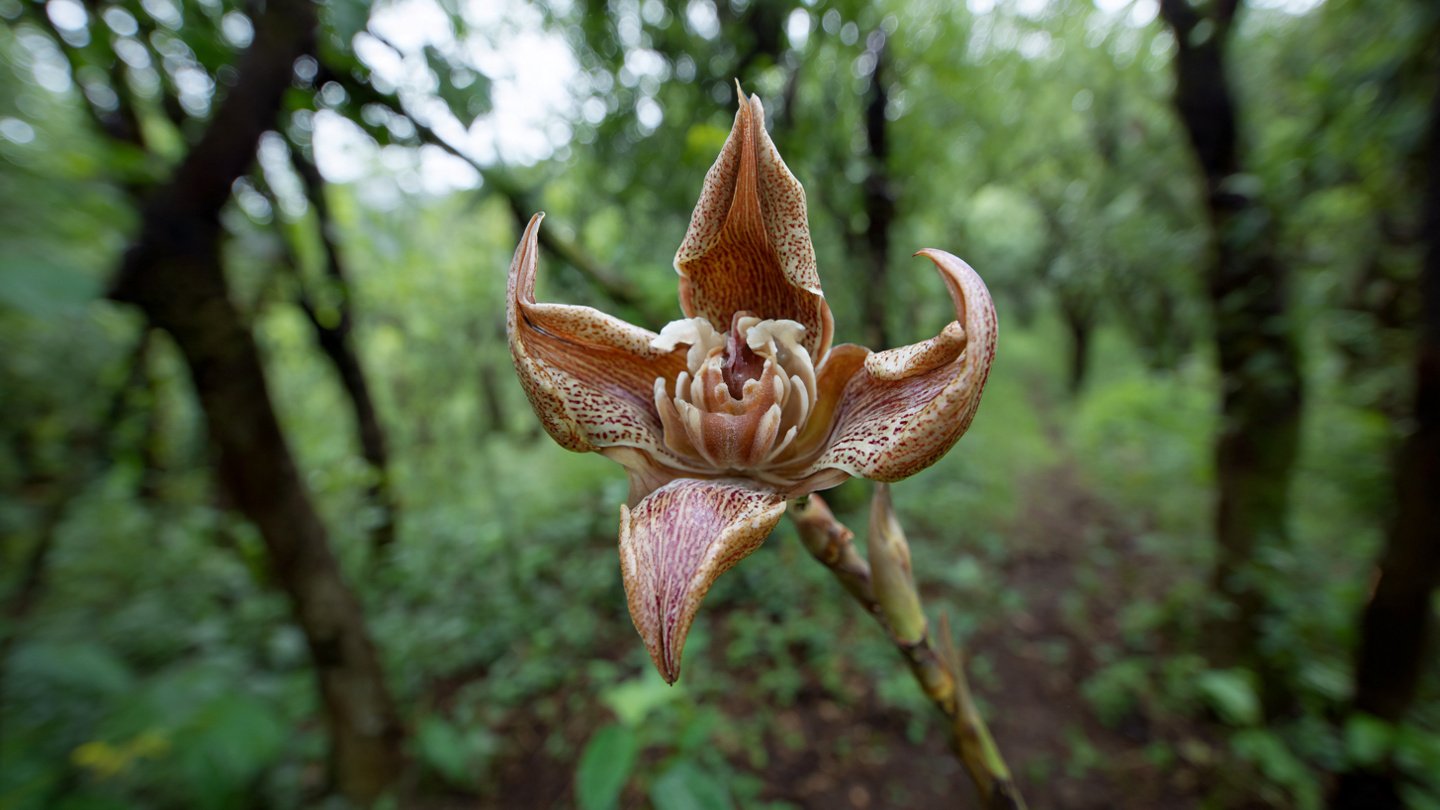
Imagine walking through a garden on a warm afternoon and suddenly catching the unmistakable aroma of chocolate in the air. No café nearby, no bakery in sight—just flowers. It sounds like something out of a fairytale, yet chocolate-scented flowers are very real, and their existence has fascinated gardeners, botanists, and scent lovers for centuries.
But why do some flowers smell like chocolate? Is it coincidence, clever evolution, or nature playing a sensory trick on us? Behind the rich, cocoa-like fragrance lies a story that blends chemistry, biology, and human perception in surprisingly complex ways.
Let’s unravel the mystery behind the chocolate-scented flower—and why it continues to enchant anyone lucky enough to encounter it.
A Scent That Defies Expectation
Flowers are typically associated with sweet, floral, or citrusy aromas. Chocolate, on the other hand, comes from fermented cacao beans and is usually linked to desserts rather than petals. When a flower releases a scent that closely resembles cocoa, it challenges our expectations of how nature should smell.
The most famous example is Chocolate Cosmos (Cosmos atrosanguineus), a deep burgundy flower native to Mexico. Its velvety petals and subtle chocolate-vanilla aroma have earned it cult status among gardeners. But it’s not alone. Other plants, like chocolate daisies, chocolate orchids, and certain varieties of columbine, also produce chocolate-like fragrances.
What makes this phenomenon especially intriguing is that none of these flowers contain chocolate or cacao. The scent is entirely the result of chemistry.
The Chemistry of Chocolate Aroma
Chocolate’s smell is created by a complex blend of aromatic compounds formed during fermentation and roasting of cacao beans. These compounds include vanillin, pyrazines, aldehydes, and various alcohols. Interestingly, many of these same compounds appear naturally in plants—especially flowers.
Chocolate-scented flowers produce volatile organic compounds (VOCs) that closely mimic the aroma profile of chocolate. When these molecules are released into the air, our brains interpret them as “chocolate” because they activate the same scent receptors we associate with cocoa.
It’s not that the flowers smell exactly like a chocolate bar. Instead, they share enough overlapping notes—warm, sweet, slightly bitter, and earthy—to trigger that familiar association. This is where human perception becomes part of the mystery.
Why Flowers Produce Chocolate-Like Scents
From an evolutionary standpoint, floral scents exist for one main reason: pollination. Flowers use fragrance to attract specific pollinators, such as bees, butterflies, moths, or beetles. A scent that seems luxurious or indulgent to humans may signal food, warmth, or safety to an insect.
Chocolate-like aromas tend to be richer and deeper than typical floral scents. In nature, these smells may resemble decaying plant matter, fermented fruit, or nectar-rich blooms—all of which can be highly attractive to certain pollinators.
In the case of Chocolate Cosmos, the scent is believed to help attract insects active during warmer parts of the day. The flower’s dark color also absorbs heat, making it more appealing to pollinators seeking warmth.
So while humans romanticize the scent as “chocolate,” for insects it’s simply an efficient communication tool.
The Role of Color and Scent Together
Another layer of the mystery lies in how scent and appearance work together. Many chocolate-scented flowers share deep, dark hues—burgundy, maroon, chocolate brown, or near-black. These colors are relatively rare in the floral world and often associated with strong, unusual scents.
Dark flowers can appear almost invisible at night or in shade, so scent becomes even more important. A strong, distinctive aroma helps guide pollinators directly to the flower. The chocolate-like fragrance may also stand out among lighter, sweeter floral scents, reducing competition.
To human observers, the pairing of dark petals and chocolate aroma feels intentional and luxurious, as if the flower were designed with us in mind—even though it wasn’t.
Chocolate Cosmos: A Flower With a Vanishing Past
Chocolate Cosmos carries another layer of intrigue: for years, it was believed to be extinct in the wild. Native to Mexico, the original wild populations disappeared due to habitat loss. What we grow today comes from cultivated clones, making the plant both rare and precious.
This scarcity has only deepened its mystique. A flower that smells like chocolate, looks almost black, and exists only through human cultivation feels like a botanical secret passed down through generations.
Its scent is strongest in warm sunlight, adding to the sense that it reveals itself only under the right conditions—another reason gardeners describe encountering it as a moment rather than a constant.
Is the Scent Strong or Subtle?
One of the most surprising things about chocolate-scented flowers is that their fragrance is often subtle. Unlike roses or jasmine, which can fill an entire room, chocolate flowers tend to reward close attention.
This subtlety is part of their charm. You have to lean in, slow down, and engage your senses. The experience feels personal, almost private—like discovering a hidden note in a piece of music.
Environmental factors also play a role. Warm temperatures, sunlight, and time of day can all influence how strong the scent appears. Some people notice it instantly, while others need to be told what to look for before their brain makes the connection.
The Psychology of Smell and Memory
Scent is deeply tied to memory and emotion. Chocolate, in particular, carries powerful associations—comfort, indulgence, celebration, nostalgia. When a flower releases a chocolate-like aroma, it taps into these emotional pathways, creating a stronger reaction than a typical floral scent might.
This raises an interesting question: do the flowers truly smell like chocolate, or does our brain fill in the gaps?
In reality, it’s a bit of both. The chemical similarity triggers recognition, and our personal experiences with chocolate complete the sensory picture. This makes the experience highly subjective. What smells like chocolate to one person might smell earthy or vanilla-like to another.
That subjectivity adds another layer to the mystery.
Chocolate-Scented Flowers in Gardens Today
In recent years, interest in sensory gardening has grown. Gardeners are increasingly drawn to plants that engage more than just sight—fragrance, texture, and even sound. Chocolate-scented flowers fit perfectly into this trend.
They’re often planted near paths, seating areas, or balconies where their subtle scent can be appreciated up close. Because they don’t overwhelm the senses, they pair well with other fragrant plants without clashing.
For many gardeners, growing a chocolate-scented flower feels like keeping a secret—something special that reveals itself only to those who take the time to notice.
Nature’s Playful Side
Perhaps the most compelling aspect of chocolate-scented flowers is what they reveal about nature itself. They remind us that evolution doesn’t always produce outcomes that are immediately logical or obvious to humans. Sometimes, the result is something whimsical, unexpected, and delightful.
A flower that smells like chocolate feels almost playful—as if nature decided to experiment with familiar scents in unfamiliar places. It challenges our assumptions and invites curiosity, encouraging us to look closer and ask questions.
The Enduring Allure of the Chocolate-Scented Flower
The mystery behind the chocolate-scented flower isn’t fully solved, and that’s part of its appeal. It sits at the intersection of science and sensory experience, biology and emotion. It’s a reminder that nature doesn’t just function—it surprises.
Whether you encounter one in a garden, a botanical collection, or a quiet balcony, the experience tends to linger. Not because the scent is overpowering, but because it’s unexpected.
In a world where so much is explained and categorized, a flower that smells like chocolate offers a small, fragrant reminder that some of nature’s best moments are meant to be discovered, not fully understood.