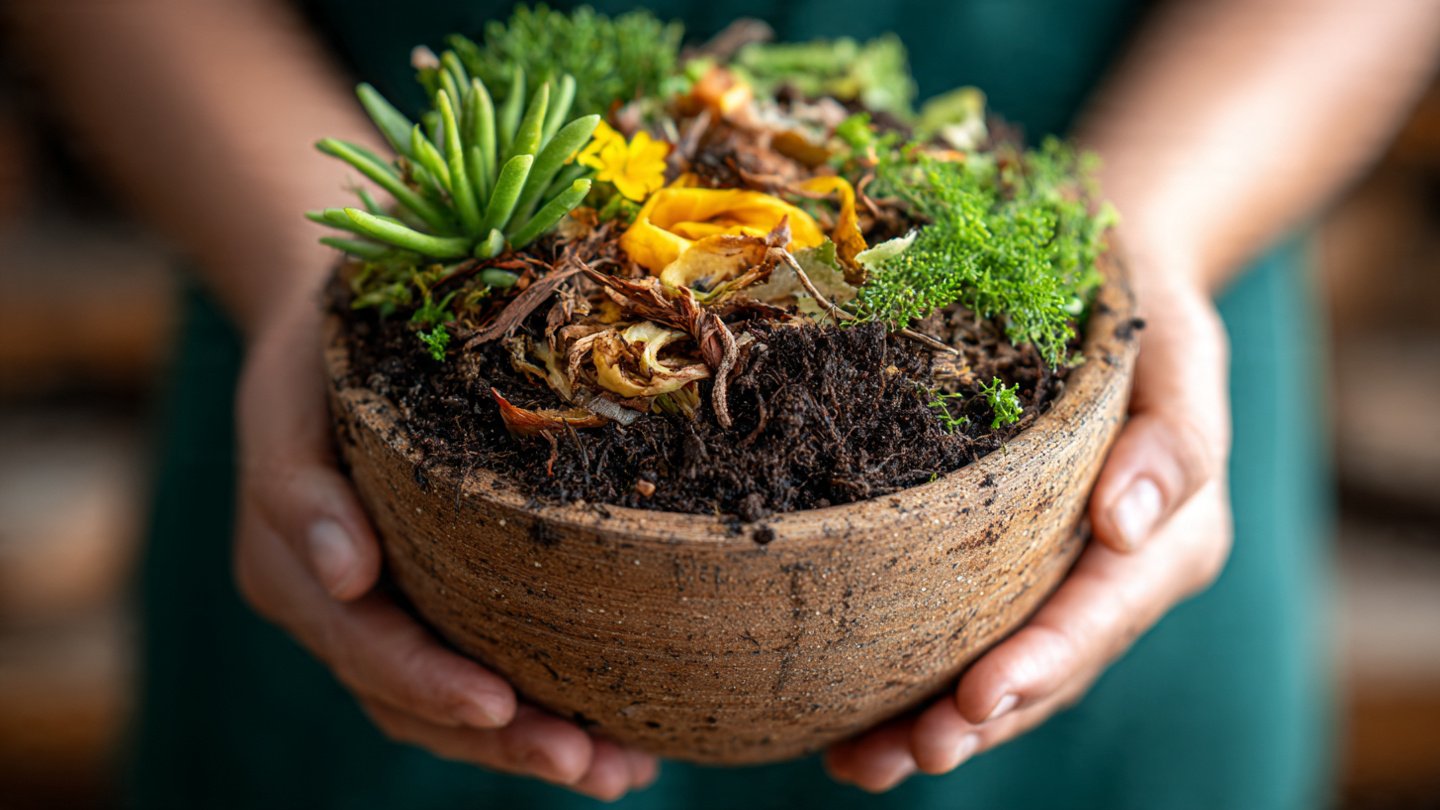
Gardening is rewarding, but the secret to lush, thriving plants lies not just in water and sunlight—it’s in the soil. Healthy soil equals healthy plants, and the best way to nourish your garden is with 100% natural compost made from kitchen waste. Instead of throwing away fruit peels, vegetable scraps, coffee grounds, and eggshells, you can transform them into “black gold” that feeds your plants, improves soil structure, and supports sustainable living.
Composting at home is not only eco-friendly but also cost-effective, simple, and incredibly satisfying. Whether you have a small balcony, a backyard, or a windowsill garden, this guide will show you how to turn everyday kitchen waste into nutrient-rich compost and create a thriving garden ecosystem.
Why Kitchen Waste is Perfect for Composting
Kitchen scraps are packed with nutrients that plants love:
- Fruit and vegetable peels – rich in nitrogen, potassium, and phosphorus
- Coffee grounds and tea leaves – improve soil texture and acidity balance
- Eggshells – provide calcium for strong stems and leaves
- Stale bread or grains – add carbon and feed beneficial microbes
By composting these materials instead of sending them to landfills, you reduce organic waste, lower methane emissions, and recycle nutrients back into your garden. It’s like closing the loop in a natural cycle, turning your food scraps into a renewable soil booster.
Choosing the Right Composting Method
There are several ways to compost kitchen waste at home, depending on the space you have and the amount of scraps you produce.
1. Traditional Compost Bin
- Perfect for backyards or garden spaces.
- Use a large bin with a lid or build a simple wooden or wire enclosure.
- Layer green materials (kitchen scraps, fresh grass) with brown materials (dry leaves, shredded paper) to maintain balance.
- Turn regularly to aerate and speed up decomposition.
2. Worm Composting (Vermicomposting)
- Ideal for indoor kitchens or small balconies.
- Red worms eat food scraps and produce worm castings, a nutrient-dense compost.
- Requires a shallow bin with drainage and bedding like shredded newspaper.
- Great for beginners who want faster results in small spaces.
3. Bokashi Fermentation
- A Japanese method using anaerobic fermentation and beneficial microbes.
- Kitchen scraps are layered with bokashi bran in an airtight container.
- Produces a fermented pre-compost that can be buried in soil to finish decomposition.
- Especially good for soft food waste, meat, and dairy that don’t go well in regular compost bins.
4. Small Countertop Composters
- Electric or manual models designed for indoor use.
- Chop scraps, aerate, and produce compost in weeks.
- Perfect for apartments with no outdoor space.
Each method has its advantages, but the key principle is keeping kitchen waste aerated, moist, and balanced to create rich compost.
Balancing “Greens” and “Browns”
Compost needs two types of materials:
- Greens: High in nitrogen, moist, and rich in nutrients (fruit peels, veggie scraps, coffee grounds).
- Browns: High in carbon, dry, and fibrous (dry leaves, cardboard, paper, straw).
A good compost pile or bin requires a ratio of approximately 2–3 parts browns to 1 part greens. This balance prevents odors, speeds decomposition, and keeps worms and microbes happy.
Tip: Chop or shred kitchen scraps before adding them to your compost. Smaller pieces decompose faster, producing nutrient-rich compost in weeks instead of months.
Steps to Make Kitchen Waste Compost
Step 1: Collect Scraps
Use a countertop container to store kitchen scraps. Materials suitable for composting include:
- Fruit and vegetable peelings
- Coffee grounds and tea leaves
- Eggshells (crushed for faster breakdown)
- Stale bread, rice, or grains
Avoid meat, bones, oily foods, and dairy if you are doing a regular outdoor compost pile, as these can attract pests and create odors.
Step 2: Layer Materials in the Bin
Alternate layers of greens and browns. Start with a layer of browns at the bottom to ensure drainage, then add greens, followed by another layer of browns. Repeat until your bin is full.
Step 3: Maintain Moisture
Compost should feel like a damp sponge. Add water if it’s dry, or mix in extra browns if it’s too wet.
Step 4: Aerate Regularly
Turn or stir the compost every 1–2 weeks to supply oxygen to microbes. Aeration speeds up decomposition and prevents bad odors.
Step 5: Monitor Temperature and Progress
A healthy compost pile will heat up slightly in the center as microbes break down material. In 4–8 weeks, depending on conditions, your compost should become dark, crumbly, and earthy-smelling.
Creative Composting Ideas
- Coffee Lover’s Boost: Coffee grounds add nitrogen and improve soil structure. Mix them into compost or sprinkle directly on acidic-loving plants like tomatoes and blueberries.
- Eggshell Magic: Crush eggshells and add them to compost for calcium, preventing blossom-end rot in tomatoes and peppers.
- Banana Peel Fertilizer: Chop banana peels and bury them in the soil near plants to release potassium and phosphorus.
- Herb Scrap Tea: Use leftover stems from herbs to make compost tea by soaking them in water for a few days. Use this liquid as a gentle organic fertilizer.
- Shredded Paper Bedding: Newspaper and cardboard shredded into strips make excellent brown material, absorbing excess moisture and balancing nitrogen-rich kitchen waste.
These small tricks maximize nutrients and reduce waste simultaneously.
Indoor Composting Tips
Even if you live in an apartment, you can compost kitchen waste effectively:
- Use a small bin with a tight lid to prevent odors.
- Line the bin with newspaper or paper towels to absorb moisture.
- Add red worms for vermicomposting to accelerate decomposition.
- Stir regularly to aerate and mix scraps.
- Harvest worm castings every few weeks for use in potted plants or windowsill gardens.
Indoor composting also allows you to recycle more types of scraps, including soft vegetables, coffee grounds, and eggshells, while keeping your space clean.
Benefits of Homemade Compost
Turning kitchen waste into compost has numerous advantages:
- Improves soil structure: Compost makes soil more friable and better at retaining moisture.
- Increases fertility naturally: Supplies essential nutrients without chemical fertilizers.
- Supports beneficial organisms: Earthworms, fungi, and microbes thrive in compost-rich soil.
- Reduces waste: Keeps organic scraps out of landfills.
- Enhances plant health: Stronger roots, more vibrant leaves, and improved flowering and fruiting.
A single kitchen’s worth of scraps can produce enough compost to nourish dozens of plants over time.
Using Compost for Beautiful Plants
Once your compost is ready, incorporate it into your garden or potted plants:
- Mix 1–2 inches of finished compost into the topsoil before planting new seeds or seedlings.
- Top-dress existing plants with a thin layer of compost to improve fertility gradually.
- Blend compost with potting soil for container gardens to increase nutrient retention.
Regular application creates lush, healthy plants and reduces the need for chemical fertilizers.
Common Composting Mistakes to Avoid
- Overwatering: Compost should be damp, not soaking. Excess moisture leads to rot and odors.
- Skipping browns: Too much green material causes smells and attracts flies.
- Neglecting aeration: Lack of oxygen slows decomposition and produces anaerobic smells.
- Using non-compostable scraps: Meat, bones, oily food, and dairy should generally be avoided unless using bokashi or specialized composting methods.
Correcting these mistakes ensures fast, healthy compost production.
Final Thoughts
Composting is more than just recycling—it’s transforming waste into garden gold. By turning everyday kitchen scraps into nutrient-rich soil, you can create beautiful plants, vibrant flowers, and delicious vegetables while reducing waste and protecting the environment.
Whether you have a backyard, a small balcony, or just a windowsill garden, homemade compost makes your plants stronger, healthier, and more productive. With simple materials, a bit of patience, and consistent care, your kitchen waste can fuel a thriving garden ecosystem.
Turning scraps into compost isn’t just good for your garden—it’s good for the planet, your wallet, and your sense of accomplishment. Every peel, every egg shell, and every coffee ground becomes part of a sustainable cycle that nurtures life and growth.
Start today, and watch your garden flourish as you turn kitchen waste into gold!