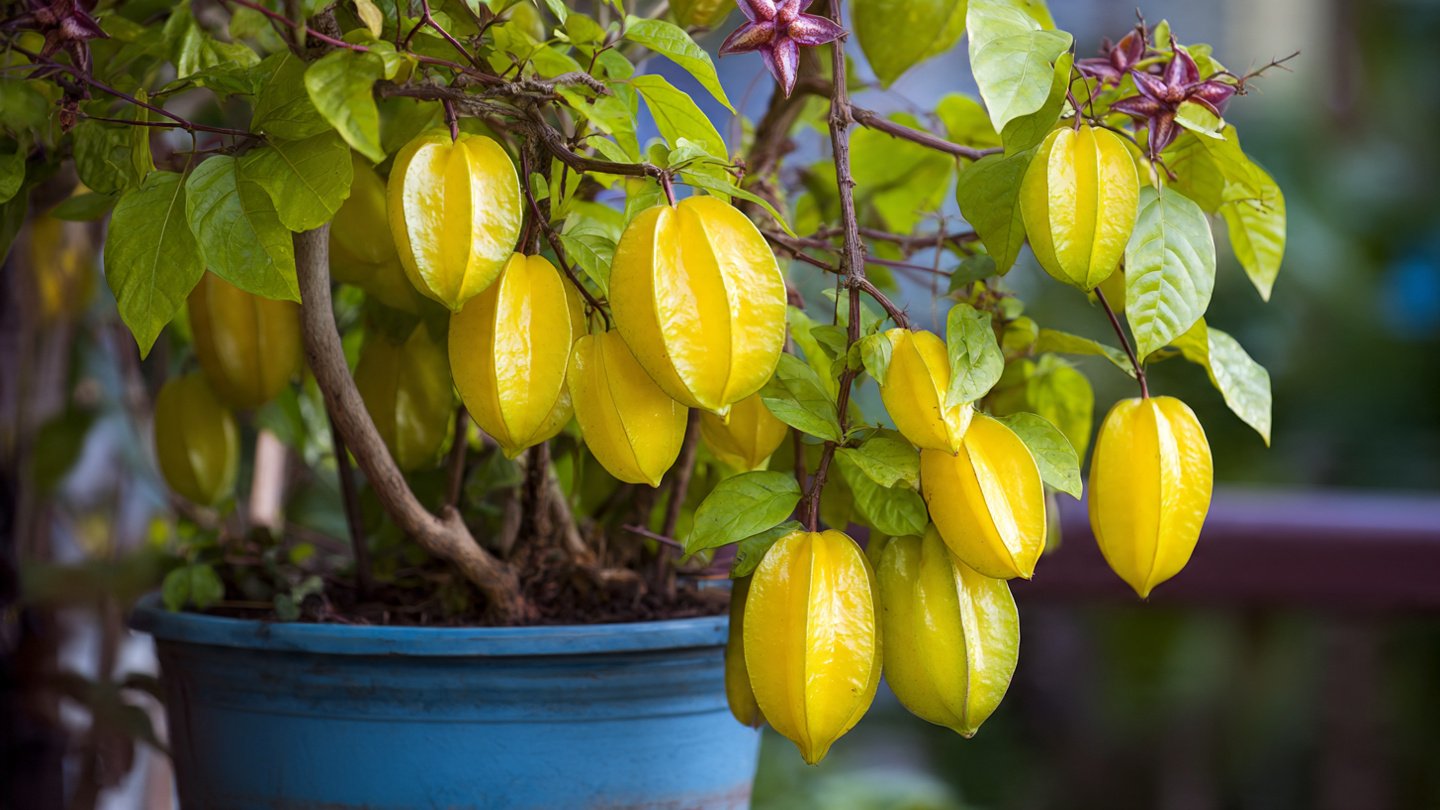
Star fruit, also known as carambola (Averrhoa carambola), is a tropical fruit known for its unique star-shaped cross-section, vibrant yellow color, and sweet-tart flavor. While traditionally grown in tropical orchards, star fruit can also thrive in containers, making it a perfect choice for urban gardeners or those with limited space. Growing star fruit in pots allows you to enjoy fresh, exotic fruit right on your patio or balcony. This guide will take you through every stage of growing star fruit from seed to harvest, including container selection, care, fertilization, pruning, and pest management.
Selecting the Right Seed or Seedling
Growing star fruit from seed is a rewarding process, but it requires patience. If you prefer a faster route to fruiting, you can also start with a grafted seedling, which will produce fruit sooner.
Starting from seeds:
- Select a fully ripe star fruit from a healthy tree.
- Remove the seeds and rinse off any pulp.
- Dry the seeds for a day or two in a shaded area.
- Plant the seeds in a well-draining seed-starting mix about half an inch deep.
Seedling vs. Grafted Tree:
- Seedlings can take 3–5 years to bear fruit, while grafted trees may fruit within 1–2 years.
- Grafted trees also retain the parent tree’s desirable fruit traits, whereas seed-grown trees may vary in quality.
Choosing the Right Container
Star fruit trees can grow quite large in the wild, but container growth restricts size and allows easier care. Selecting the right container is essential for the tree’s health and fruit production.
Container size and type:
- Begin with a 12–15 inch container for seedlings. As the tree grows, upgrade to a 24–30 inch pot.
- Containers made of clay, terracotta, or resin are ideal, as they provide stability and proper airflow.
- Ensure your pot has multiple drainage holes to prevent waterlogging, which can lead to root rot.
Soil Requirements
Star fruit trees thrive in acidic, well-draining soil rich in organic matter. For container planting, use a high-quality potting mix or create your own blend:
- 1 part garden soil
- 1 part compost
- 1 part perlite or coarse sand for drainage
The ideal soil pH for star fruit is between 5.5 and 6.5. Avoid heavy clay soils or overly alkaline soils, as they can stunt growth and reduce fruiting.
Planting Your Star Fruit Tree
Planting in a container requires careful handling to avoid root damage. Follow these steps:
- Fill the bottom of the container with a layer of gravel or broken pottery for drainage.
- Add a portion of your prepared soil mix.
- Remove the seedling or sprouted seed from its temporary container and gently loosen the roots.
- Place the tree in the center of the pot, ensuring the root collar is slightly above the soil line.
- Fill around the roots with soil, gently pressing to eliminate air pockets.
- Water thoroughly to settle the soil.
Sunlight and Placement
Star fruit trees are tropical plants and require full sunlight to thrive. They need at least 6–8 hours of direct sunlight daily to produce healthy growth and fruit.
Tips for container placement:
- South-facing balconies or patios receive maximum sunlight.
- Rotate the pot occasionally to ensure even growth on all sides.
- If your area has limited sunlight, supplement with grow lights to maintain growth and flowering.
Watering and Humidity
Watering is critical for container-grown star fruit trees. These trees prefer consistently moist soil but are susceptible to root rot if overwatered.
Watering guidelines:
- Check soil moisture by inserting your finger 1–2 inches deep; water if dry.
- Water deeply until water drains from the bottom.
- Reduce watering slightly during cooler months when the tree’s growth slows.
Star fruit also thrives in humid environments. If you live in a dry climate, mist the foliage regularly or place a humidity tray near the tree to maintain adequate moisture.
Fertilization
Star fruit trees are heavy feeders and require regular fertilization to promote growth, flowering, and fruiting.
Fertilization tips:
- Use a balanced fertilizer rich in nitrogen, phosphorus, potassium, and micronutrients such as magnesium and iron.
- Feed young trees every 6–8 weeks.
- Mature trees should be fertilized every 8–10 weeks during the growing season.
- Organic options like compost, fish emulsion, or seaweed extract can improve soil health and support vigorous growth.
Pruning and Maintenance
Pruning is essential to maintain the tree’s shape, improve air circulation, and encourage fruiting.
Pruning tips:
- Remove dead, diseased, or crossing branches.
- Trim the top of the tree to control height in container growth.
- Prune lightly after the harvest to encourage new shoots for the next season.
Regularly inspect your tree for pests or fungal infections, which can be more common in container environments.
Pollination and Flowering
Star fruit trees produce small, fragrant, pink to purple flowers. While they are self-pollinating, hand pollination can improve fruit set, especially in urban container gardens where insect activity may be limited.
Hand-pollination technique:
- Use a small paintbrush to transfer pollen from one flower to another.
- Repeat daily during peak flowering to maximize fruit production.
Pest and Disease Management
Container-grown star fruit trees are generally less prone to pests than those in the ground, but vigilance is still necessary. Common issues include:
- Aphids: Tiny green or black insects on young shoots. Treat with insecticidal soap.
- Scale insects: Hard bumps on stems and leaves; treat with horticultural oil.
- Mealybugs: White cottony insects; remove manually or use neem oil.
Prevent fungal infections by avoiding overwatering and ensuring good air circulation.
Harvesting Star Fruit
Star fruit typically takes 2–3 years to produce fruit from a grafted seedling and 4–5 years from seed. Signs of ripeness include:
- Fruit turns bright yellow with a slight green tint near the tips.
- The skin is firm but slightly soft to the touch.
- The fruit has a fragrant, sweet aroma.
Harvest by gently twisting or cutting the fruit from the branch. Avoid letting fruit over-ripen on the tree, as it can attract pests or fall prematurely.
Benefits of Growing Star Fruit in Containers
Growing star fruit in pots has many advantages for urban gardeners:
- Space-saving: Ideal for balconies, patios, or small yards.
- Fresh, tropical fruit: Enjoy homegrown star fruit for cooking, juice, or fresh eating.
- Aesthetic appeal: The unique star-shaped fruit and attractive foliage enhance any container garden.
- Control over growing conditions: Containers allow you to manage soil quality, water, and sun exposure more easily.
Tips for Success
- Patience is key: Growing star fruit from seed requires time. Consistent care ensures eventual fruiting.
- Rotate containers: This prevents uneven growth and ensures all sides receive sunlight.
- Monitor for root-bound conditions: Repot every 2–3 years to encourage healthy root development.
- Use supports if needed: As the tree grows taller, stake it to prevent tipping in windy conditions.
- Regular feeding: Container soil loses nutrients faster than garden soil, so consistent fertilization is essential.
Conclusion
Growing star fruit in a container is an achievable and rewarding endeavor for urban gardeners and tropical fruit enthusiasts. From selecting the right seed or seedling to ensuring proper sunlight, watering, fertilization, and pruning, container-grown star fruit can thrive and produce delicious, exotic fruit. By following careful container gardening practices, you can enjoy the beauty of tropical foliage, fragrant flowers, and the unique taste of homegrown star fruit—even in the heart of the city. With patience, attention, and consistent care, your balcony or patio can become a miniature tropical orchard, bringing both flavor and visual delight to your urban space.