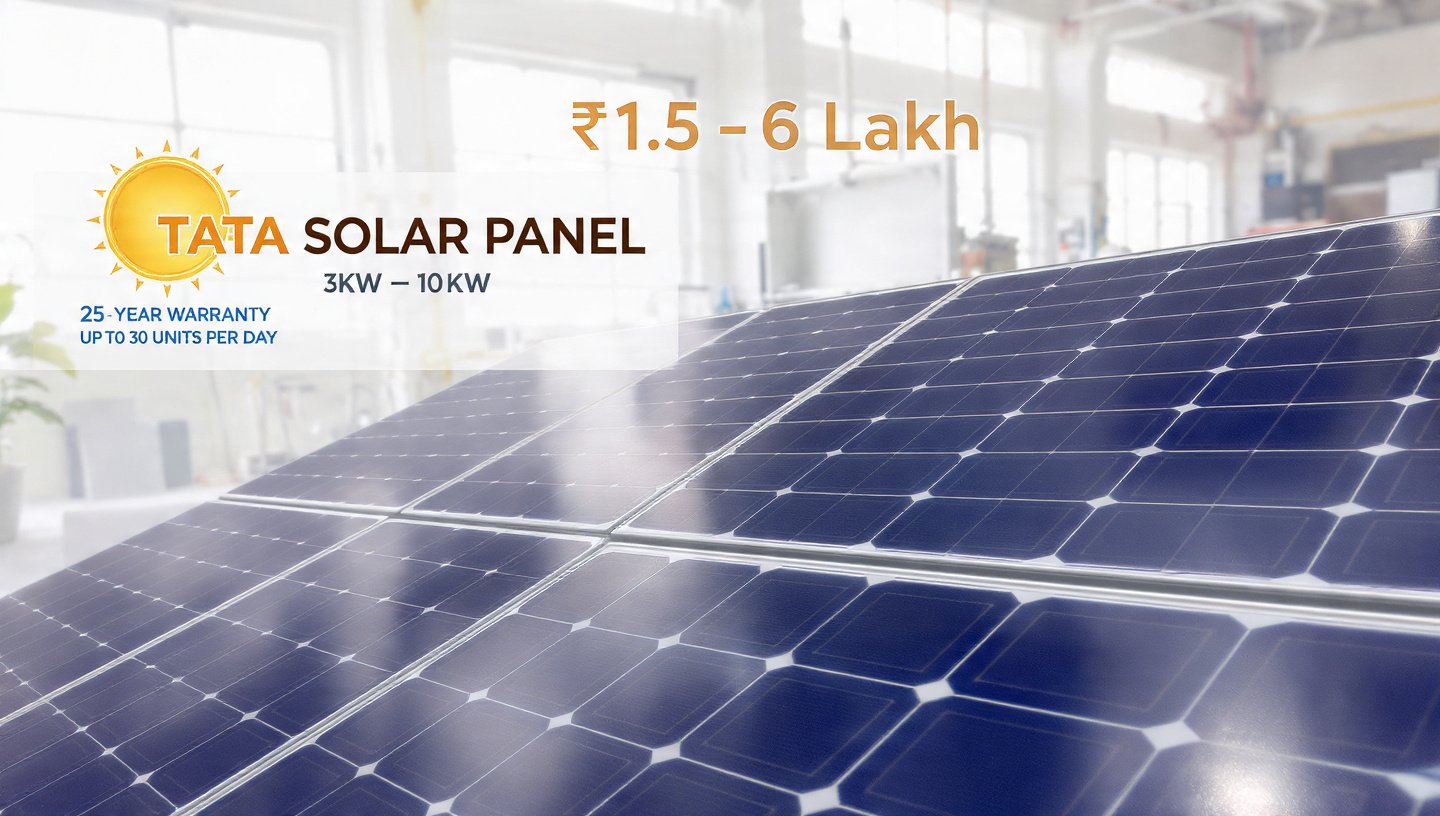
As India continues its transition toward cleaner energy, solar rooftop solutions are rapidly becoming the first choice for households and businesses alike. Among the solar brands gaining traction, Tata Solar stands out thanks to its legacy, reliability, and strong product support. In 2026, Tata’s rooftop solar systems—ranging from 3 kW to 10 kW—offer a compelling mix of performance, savings, and long‑term durability.
In this comprehensive guide, we break down everything you need to know about Tata Solar’s offerings in 2026: from pricing and power output to warranties, installation considerations, and potential savings.
1. Why Tata Solar Panels Are a Popular Choice
Tata Solar systems are built around a simple proposition: deliver solid solar performance for Indian homes and businesses with dependable warranties and long life. Key reasons for their popularity include:
- Trusted brand reputation backed by the Tata Group.
- Competitive pricing for mid‑range residential systems.
- Long 25‑year performance warranty on panels—typical for quality solar manufacturers.
- Systems designed to work well with net‑metering, ensuring better returns on investment.
With electricity prices climbing and environmental awareness rising, Indian homeowners are increasingly pivoting to solar power as both a financial and sustainable energy choice.
2. Tata Solar Panel Prices in 2026 (3 kW–10 kW)
While prices vary by location, installation complexity, and subsidies claimed, the 2026 estimated price range for Tata Solar rooftop systems in India is as follows:
| System Size | Estimated Price Range (₹) |
|---|---|
| 3 kW | ₹1.5 – ₹2.2 Lakh |
| 5 kW | ₹2.8 – ₹3.5 Lakh |
| 7 kW | ₹4.0 – ₹5.0 Lakh |
| 10 kW | ₹5.5 – ₹6.0 Lakh |
These are all‑inclusive figures that typically cover:
✔ Solar panels
✔ Inverter
✔ Mounting structures
✔ Wiring and safety equipment
✔ Standard installation costs
Important to note: government subsidies and incentives under MNRE and state rooftop solar programs can significantly reduce the net cost paid by the consumer.
3. Power Output: Up to ~30 Units/Day
One of the most attractive aspects of Tata Solar systems is their ability to generate robust power in Indian sunlight conditions. While exact daily generation depends on your location, orientation, and shading, average estimates in good sunlight are:
- 3 kW system: ~12–15 units/day
- 5 kW system: ~20–22 units/day
- 10 kW system: Up to ~28–30 units/day
A fully optimized 10 kW system can generate close to 900 units/month, enough to cover the energy needs of large homes, offices, or small commercial establishments.
These figures are well aligned with general solar generation expectations in India and can drastically reduce dependency on grid electricity.
4. Long‑Term Warranty and Reliability
Solar systems are long‑term investments. Knowing your panels will perform efficiently for decades is crucial—and Tata delivers on that front:
Warranty Highlights
- 25‑year performance warranty: Ensures panels will retain a substantial percentage of output even after long use.
- Product warranty: Typically 10–12 years for panels (model‑dependent).
- Inverter warranty: Around 5–10 years, often extendable.
A typical performance warranty promises that even after 25 years, the solar panels will deliver around 80–85% of their original output—a key benchmark in the industry.
These warranties, combined with Tata’s service network across India, lower the risk associated with long‑term energy investments.
5. Types of Solar Systems You Can Choose
Tata Solar offers various configurations depending on your needs:
⚡ On‑Grid Systems
The most commonly installed option. Connects directly to the utility grid and supports net metering, allowing you to offset bills with surplus solar generation exported to the grid.
🔋 Off‑Grid Systems
Great for locations with unreliable electricity. Includes batteries that store energy for use at night or during grid outages. Costs more but ensures uninterrupted power.
🔌 Hybrid Systems
Combines the benefits of both on‑grid net metering and battery backup—ideal for homes that want reliability plus grid integration.
Each configuration influences system cost, design, and power management style, making it important to consult with an installer before finalizing.
6. Roof Space and Installation Considerations
Space requirement increases with system size:
- 3 kW: ~250 – 300 sq. ft.
- 5 kW: ~400 – 500 sq. ft.
- 10 kW: ~900 – 1,000 sq. ft.
Good sunlight exposure and minimal shading are key for maximizing output. Professional installers routinely assess rooftops to optimize panel placement for the highest yield possible.
7. Government Subsidies Can Slash Costs
Indian rooftop solar enjoys strong government backing through incentives and subsidies processed via DISCOMs and state schemes. Common benefits include:
- Up to 40% subsidy for systems up to 3 kW
- Subsidy for larger systems (first 3 kW @ 40% + next capacity @ 20%)
These subsidies, available for residential rooftops under central and state programs like PM Surya Ghar Yojana, make Tata Solar systems far more affordable and shorten the investment payback period.
8. Savings, ROI and Break‑Even
With reduced electricity bills and subsidy support, Tata Solar installations typically pay for themselves within 4–6 years of operation.
Beyond that, you enjoy essentially free electricity for the remaining lifespan of the panels—25 years or more. Over this period, homeowners can save several lakhs in electricity expenses depending on consumption patterns and tariff rates.
Net metering further improves economics—any surplus electricity you feed back to the grid earns credits that offset future bills.
9. Environmental Impact
Switching to solar isn’t just about savings; it reduces your carbon footprint significantly. A mid‑range system like a 10 kW installation can cut down 8–12 tons of CO₂ emissions annually—comparable to planting hundreds of trees.
This aligns with India’s broader clean energy goals, helping households participate in the fight against climate change while becoming more energy independent.
10. Final Verdict: Is Tata Solar Worth It in 2026?
Yes—especially if you’re planning a long‑term investment in home energy infrastructure. Tata Solar’s lineup offers:
🌞 Wide range of system sizes (3 kW–10 kW) for varied electricity needs.
💸 Competitive pricing between ₹1.5 – ₹6 Lakh depending on capacity and configuration.
🛡️ Robust 25‑year performance warranty and dependable panel reliability.
⚡ Up to ~30 units/day potential output (10 kW system).
📉 Lower bills + attractive payback period with subsidies and net metering.
If you’re a homeowner, business owner, or developer planning a rooftop system in 2026, Tata Solar offers a balanced mix of performance, brand trust, and long‑term financial value—making it one of the go‑to choices in India’s burgeoning solar market.