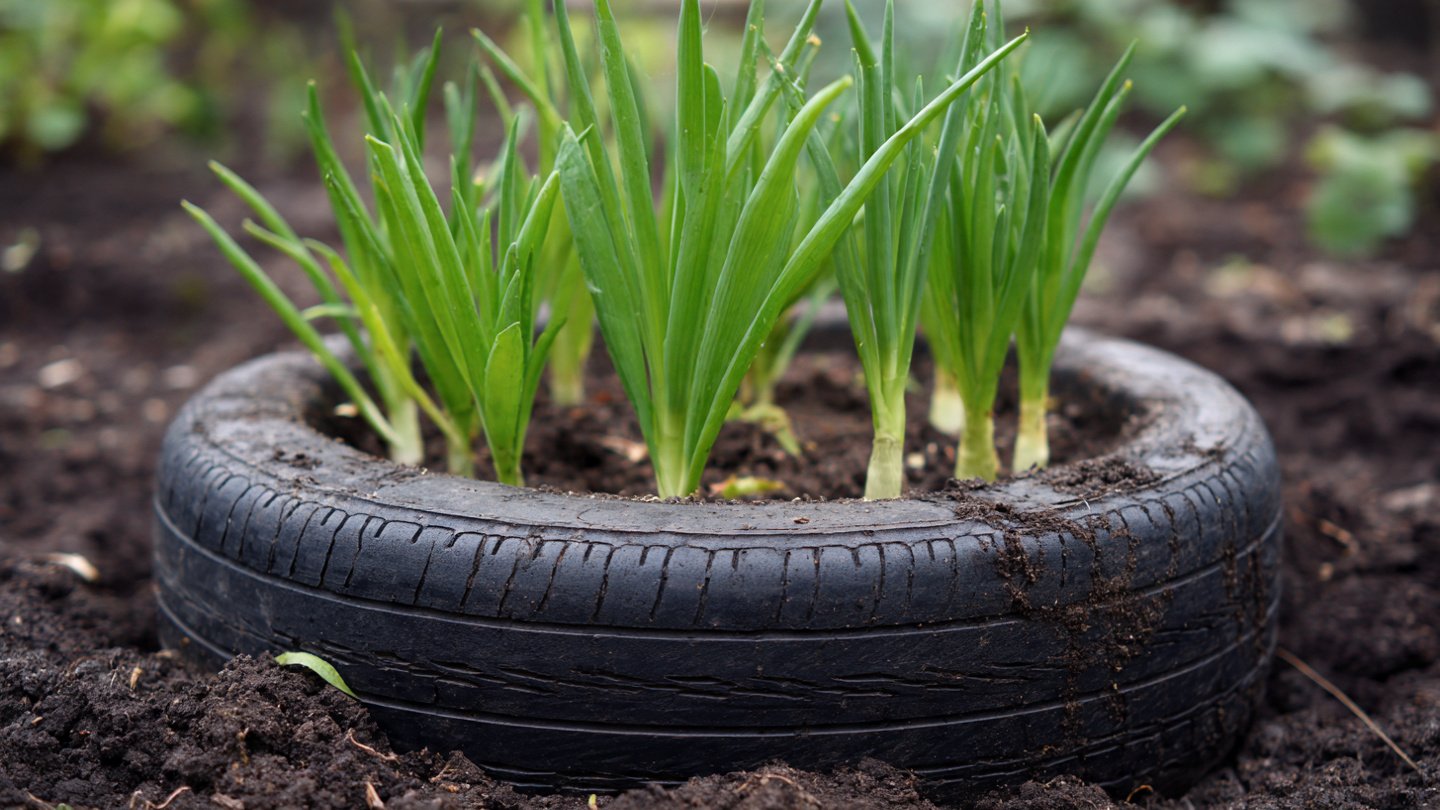
Growing your own food doesn’t have to be complicated, expensive, or space-consuming. One of the smartest and most eco-friendly gardening ideas is using old tires to grow vegetables—especially fast-growing crops like green onions. This simple tire garden trick allows you to recycle waste, save space, and enjoy a steady supply of fresh, flavorful green onions right from your home garden, balcony, or backyard.
Green onions, also known as spring onions or scallions, are among the easiest vegetables to grow. They require minimal care, grow quickly, and can be harvested multiple times. When combined with the durability and warmth-retaining qualities of tires, they become an ideal crop for beginners and urban gardeners alike. This guide will walk you step by step through the process, benefits, and best practices for growing green onions using this clever tire garden method.
Why Use Tires for Growing Green Onions?
Old tires are often discarded, but they make excellent garden containers when used properly. Their structure, depth, and ability to retain heat create an ideal environment for shallow-rooted plants like green onions.
Key Benefits of Tire Gardening
- Recycles waste materials
- Saves space in small gardens or balconies
- Warms soil faster, promoting quicker growth
- Reduces weed pressure
- Easy to move and manage
Green onions thrive in these conditions, making tires a perfect growing solution.
Understanding Green Onions
Green onions are harvested before the bulb fully develops. Both the green tops and white bases are edible, making them versatile in cooking. They grow quickly, often ready for harvest in just 30–45 days, and can regrow after cutting.
They can be grown from:
- Seeds
- Onion sets
- Kitchen scraps (root ends)
For the tire garden trick, all three methods work well, but kitchen scraps and sets are especially beginner-friendly.
Choosing the Right Tire
Not all tires are the same, so selecting the right one helps ensure success.
Best Tire Options
- Standard car tires are ideal
- Avoid heavily damaged or cracked tires
- Clean thoroughly with soap and water
- If concerned about heat or chemicals, you can line the inside with landscape fabric or plastic with drainage holes
Place the tire in a sunny spot before filling it with soil.
Preparing the Tire Garden Bed
Step 1: Create Drainage
Good drainage is essential. Place the tire:
- Directly on soil or grass, or
- On a flat surface with small holes drilled at the bottom
Step 2: Fill with Soil
Use a well-draining, nutrient-rich soil mix:
- Garden soil (40%)
- Compost or well-rotted manure (40%)
- Sand or coco peat (20%)
Green onions prefer loose soil that allows easy root expansion.
Planting Green Onions in Tires
Method 1: Using Kitchen Scraps
This is the easiest and most rewarding method.
- Save the white root ends from store-bought green onions
- Allow them to dry for a few hours
- Plant them 1–2 inches deep in the tire soil
- Space them 2 inches apart
New growth will appear within days.
Method 2: Using Onion Sets
- Plant small onion bulbs root-side down
- Space evenly around the tire
- Cover lightly with soil
Method 3: Growing from Seeds
- Sow seeds ¼ inch deep
- Keep soil moist until germination
- Thin seedlings as they grow
Sunlight and Placement
Green onions require:
- 5–6 hours of sunlight daily
- Morning sun is ideal
- Partial shade helps in hot climates
The black rubber of tires absorbs heat, which is beneficial in cooler regions but may require afternoon shade in very warm areas.
Watering the Tire Garden
Consistent moisture is key for tender green onions.
Watering Tips
- Water when the top inch of soil feels dry
- Avoid waterlogging
- Early morning watering is best
- Tires may dry out faster—check moisture regularly
Mulching with straw or dried leaves helps retain moisture and cool the soil.
Fertilizing for Continuous Growth
Green onions are light feeders but respond well to gentle nutrition.
Best Fertilizer Options
- Compost tea every 2–3 weeks
- Liquid organic fertilizer
- Vermicompost mixed into the soil
Avoid heavy nitrogen fertilizers, as they can weaken flavor and structure.
Managing Pests and Problems
Green onions grown in tires face fewer pest issues, but occasional problems can arise.
Common Issues and Solutions
- Yellowing leaves: Overwatering or nutrient deficiency
- Slow growth: Lack of sunlight or compacted soil
- Aphids: Wash off with water or use neem oil
Maintaining good airflow and avoiding overcrowding prevents most issues.
Harvesting Green Onions
One of the best parts of growing green onions is how quickly you can harvest them.
Harvesting Methods
- Start harvesting when plants reach 6–8 inches tall
- Cut leaves 1–2 inches above the soil
- Leave roots intact for regrowth
This “cut-and-come-again” method allows multiple harvests from the same plants.
Regrowing for Endless Harvests
Green onions can regrow several times when properly cared for.
- After harvesting, water lightly
- Add a thin layer of compost
- Avoid pulling out the roots
With good care, one tire garden can produce green onions for months.
Seasonal Growing Tips
- Spring & Fall: Ideal growing seasons
- Summer: Provide partial shade and extra watering
- Winter: In mild climates, growth continues slowly
Tires can be moved easily to protect plants from extreme weather.
Advantages Over Traditional Gardening
Compared to traditional garden beds, tire gardening offers:
- Better control over soil quality
- Less bending and strain
- Faster warming soil
- Ideal for renters and small spaces
It’s especially useful for urban homes and beginner gardeners.
Safety Considerations
If concerned about tire materials:
- Line the interior with fabric
- Use tires for leafy crops rather than root vegetables
- Avoid placing tires in extreme heat for long periods
When used responsibly, tire gardens are safe and effective.
Final Thoughts
The simple tire garden trick for growing fresh green onions at home is a practical, sustainable, and highly rewarding gardening solution. With minimal effort, recycled materials, and basic care, you can enjoy a continuous supply of crisp, flavorful green onions right outside your door.
Whether you have a large backyard, a small balcony, or no garden space at all, this method proves that fresh homegrown food is always within reach. Once you experience the ease and productivity of tire gardening, you may find yourself growing even more vegetables this smart, eco-friendly way.