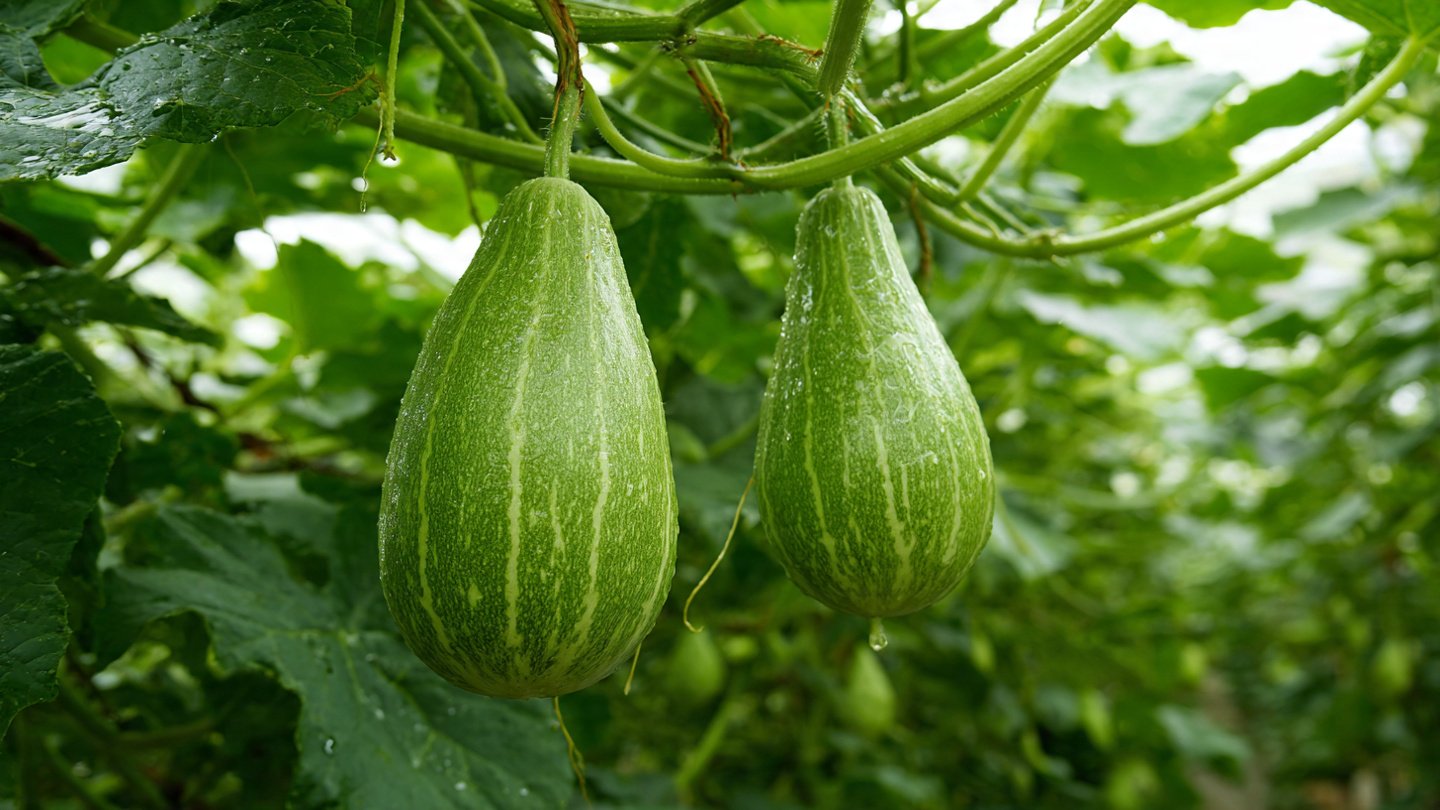
Ridge gourd (Luffa acutangula), also known as angled luffa or Chinese okra, is a popular warm-season vegetable loved for its tender texture, mild flavor, and impressive health benefits. However, many home gardeners face one common frustration—crooked, twisted, or uneven ridge gourd fruits.
The good news is that growing straight, market-quality ridge gourds doesn’t require expensive tools or advanced farming knowledge. With a few smart techniques and consistent care, you can harvest long, straight, and healthy fruits with minimal effort.
This guide walks you through simple, practical methods to ensure straight ridge gourd growth, from planting to harvest.
Why Do Ridge Gourds Grow Crooked?
Before fixing the problem, it helps to understand why it happens. Ridge gourds usually grow bent or curved due to:
- Improper support or no trellis
- Uneven watering
- Poor pollination
- Nutrient imbalance
- Fruits touching the ground or obstacles
- Pest or disease stress
Addressing these factors early makes a huge difference in fruit shape and quality.
1. Choose the Right Variety
The foundation of straight ridge gourds starts with good genetics. Some varieties naturally produce straighter, longer fruits than others.
Tips for choosing seeds:
- Look for hybrid or improved varieties known for uniform fruits
- Purchase seeds from trusted suppliers
- Check descriptions that mention “straight,” “uniform,” or “market-preferred shape”
Starting with high-quality seeds reduces problems later in the growing cycle.
2. Plant at the Right Time and Location
Ridge gourd is a heat-loving climber, and planting it at the wrong time can stress the plant, affecting fruit shape.
Ideal growing conditions:
- Temperature: 25–35°C
- Full sunlight: At least 6–8 hours daily
- Well-drained soil with good airflow
Avoid planting during extreme cold or heavy monsoon periods, as stress leads to irregular fruit development.
3. Use a Strong Vertical Trellis (Most Important Step)
The single most effective technique for growing straight ridge gourds is providing proper vertical support.
Why trellising works:
- Fruits hang freely and grow straight due to gravity
- Prevents fruits from touching soil or obstacles
- Improves air circulation and sunlight exposure
- Reduces pest and disease issues
Simple trellis ideas:
- Bamboo poles with horizontal wires
- Nylon net trellis
- Pergola or fence support
Tie the vines gently as they grow, guiding them upward. Avoid letting fruits rest on the ground—this is the main cause of bending.
4. Maintain Consistent Watering
Irregular watering is a hidden reason behind misshapen ridge gourds.
Best watering practices:
- Water deeply 2–3 times a week
- Keep soil consistently moist, not waterlogged
- Avoid sudden dry spells followed by heavy watering
Inconsistent moisture causes uneven cell growth in fruits, leading to curves and twists.
Mulching with dry leaves, straw, or coconut husk helps retain moisture and reduces effort.
5. Improve Pollination Naturally
Poor pollination often results in curved or underdeveloped fruits, especially at the tip.
Easy pollination tips:
- Grow flowering plants nearby to attract bees
- Avoid chemical sprays during flowering
- Hand-pollinate if needed
Simple hand-pollination method:
- Identify male and female flowers
- Gently transfer pollen from male to female using a soft brush or cotton swab
- Best done early in the morning
Better pollination means evenly developed, straight fruits.
6. Feed Plants with Balanced Nutrition
Nutrient imbalance—especially excess nitrogen or lack of potassium—can cause irregular fruit growth.
Nutrients that help straight fruits:
- Potassium – promotes uniform fruit development
- Calcium – strengthens fruit structure
- Phosphorus – supports flowering and fruiting
Easy organic feeding options:
- Compost or vermicompost every 15 days
- Banana peel water (for potassium)
- Wood ash in small amounts
- Liquid seaweed or fermented plant tea
Avoid overusing nitrogen-rich fertilizers, which cause leafy growth at the expense of fruit quality.
7. Prune for Better Shape and Yield
Light pruning helps the plant direct energy toward fruit development.
Simple pruning steps:
- Remove weak or overcrowded side shoots
- Trim excessive leaf growth near fruiting nodes
- Allow good airflow and sunlight penetration
This reduces competition within the plant and encourages straighter fruit growth.
8. Harvest at the Right Stage
Leaving ridge gourds on the vine for too long causes them to harden, bend, or twist.
When to harvest:
- Fruits should be tender, green, and medium-sized
- Harvest every 2–3 days during peak season
Frequent harvesting encourages the plant to produce more straight, uniform fruits.
9. Keep Pests and Diseases Under Control
Stress from pests or diseases affects fruit shape and overall plant health.
Common problems:
- Aphids and whiteflies
- Fruit borers
- Powdery mildew
Low-effort solutions:
- Neem oil spray once a week
- Soap water spray for aphids
- Remove affected leaves early
Healthy plants produce straighter, better-quality fruits.
10. Space Plants Properly
Overcrowding forces vines and fruits to grow around obstacles, resulting in curved gourds.
Ideal spacing:
- 2–3 feet between plants
- Adequate distance between rows
Proper spacing ensures free-hanging fruits and better airflow.
Bonus Tip: Use Gravity to Your Advantage
If a young fruit starts bending slightly, gently reposition it while it’s still small. Tie it loosely so it hangs straight. Ridge gourds are flexible in early stages and often correct themselves when guided properly.
Final Thoughts
Growing straight ridge gourd fruits doesn’t require hard labor or costly equipment. By focusing on vertical support, consistent watering, proper nutrition, and timely care, you can dramatically improve fruit shape and yield with minimal effort.
To summarize the key steps:
- Choose good seeds
- Provide a strong trellis
- Water consistently
- Encourage proper pollination
- Feed with balanced nutrients
- Harvest regularly
With these simple techniques, your ridge gourd plants will reward you with long, straight, healthy fruits perfect for cooking, selling, or sharing with family.
Happy gardening! 🌱