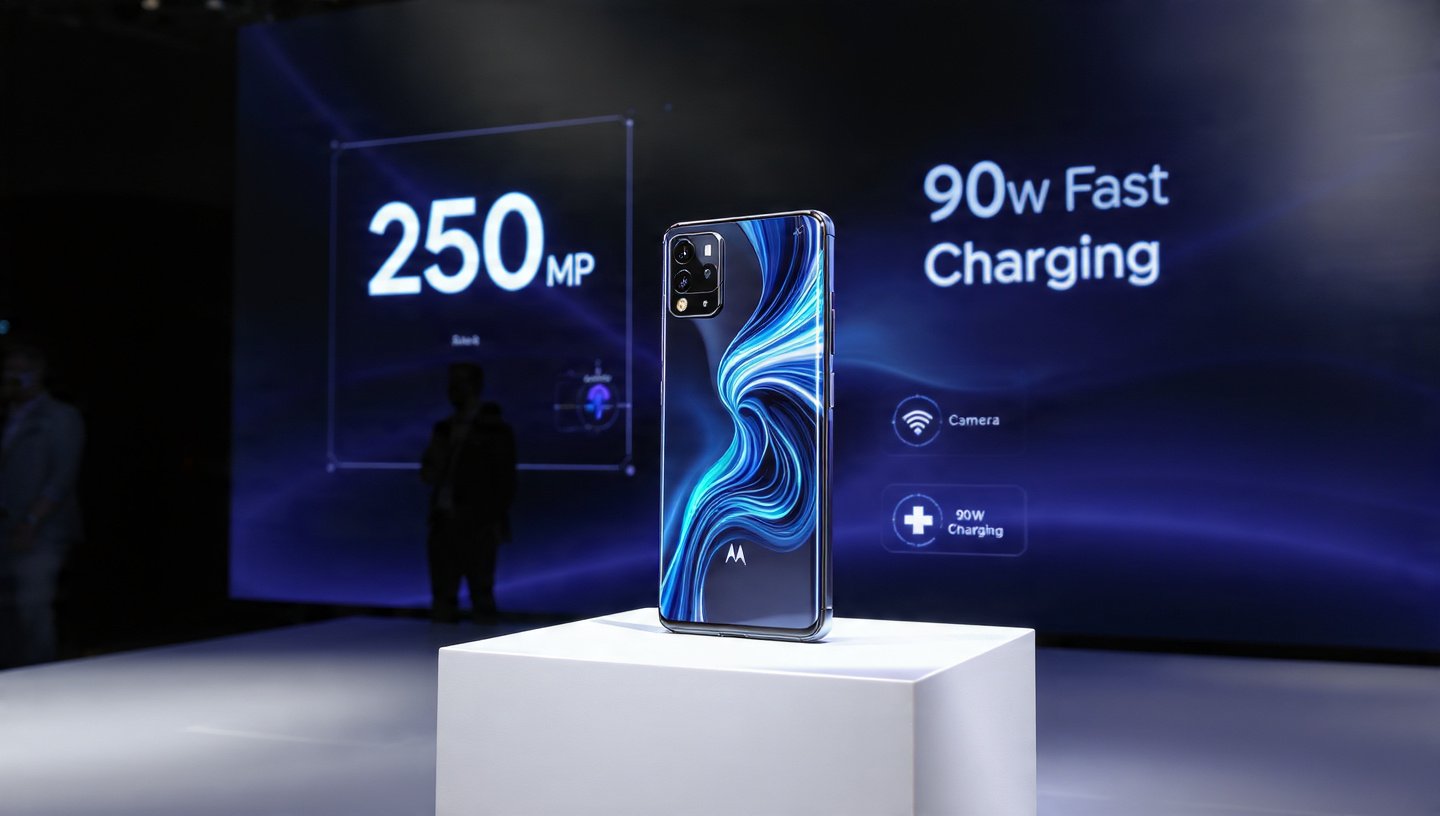
In the ever‑evolving smartphone landscape, Motorola continues to make its presence known. In early 2026, the company unveiled a new smartphone that’s turning heads in the tech world — thanks to its massive 250 MP camera sensor and speedy 90 W fast charging support. This launch represents Motorola’s strategy to blend high‑end photography capabilities with impressive battery technology while targeting users who want flagship‑level features without flagship‑level pricing.
In this article, we’ll unpack everything you need to know about Motorola’s latest device, including its key features, performance, camera prowess, battery technology, design, software, and how it stacks up against the competition.
A New Contender in 2026: What’s the Big Deal?
Smartphone camera specs have been steadily climbing over the last few years. From 12 MP sensors dominating flagship phones, the industry has shifted to ultra‑high‑resolution sensors of 108 MP, 200 MP, and now 250 MP. Motorola’s new launch taps directly into this trend, promising photography quality previously seen only in specialty devices. While most smartphone users focus on megapixels as a measurement of camera strength, the reality is more nuanced — megapixels help with detail capture, but the quality of the sensor, software processing, and lens optics are equally critical.
Alongside its camera, Motorola has installed 90 W fast charging support — a feature in demand from users who don’t want to wait hours to recharge their phones. That’s paired with a large battery (details on exact capacity may vary depending on the model), aimed at balancing endurance with charging speed.
Cutting‑Edge Photography: 250 MP Camera System
The standout spec here is the headline‑grabbing 250 MP rear camera — a specification that places Motorola among the leaders in mobile imaging resolution. Such a high resolution allows for:
- Ultra‑fine detail capture: More megapixels mean more visual information, which can result in sharper images, especially when cropping or zooming in.
- Advanced digital zoom: With a large sensor to begin with, Motorola’s software can produce clearer results even when zoomed in digitally.
- High‑resolution video stills: Frame grabs from video can offer more detail thanks to the high pixel count.
However, getting the most out of such a large sensor requires robust image processing. Motorola reportedly uses computational photography — a mix of AI and software tweaks — to enhance dynamic range, color accuracy, and low‑light performance. This can make photos look more natural and balanced compared with competitors’ outputs that rely solely on raw pixel count.
Battery Life & Charging: The Fast Lane
One of the persistent frustrations among smartphone users has been charging speed. Waiting an hour or more to recharge a large battery isn’t ideal in today’s fast‑paced world. Motorola addresses this with 90 W fast charging, which significantly cuts down charging times compared with typical 30 W or 45 W chargers found on many mid‑range phones.
Here’s why 90 W charging matters:
- Faster top‑ups: From low battery to a meaningful percentage of charge in just minutes.
- Less downtime: Perfect for users who are constantly on the go — gamers, business professionals, frequent travelers.
- Improved battery habits: Users may be more comfortable plugging in whenever needed rather than waiting for long overnight charges.
Fast charging technology also includes safety protections that prevent battery overheating during rapid juice‑ups — something Motorola’s system incorporates through smart power delivery controls.
Display and Design: Premium Look and Feel
While specifications like camera and charging grab headlines, the look and feel of a smartphone often determine its daily usability. Motorola’s new device reportedly features a modern design with slim bezels and a premium finish that feels comfortable in hand. Many units in this category also sport large high‑refresh‑rate displays, ensuring smooth scrolling, gaming, and video playback.
Motorola’s design philosophy here seems oriented toward balancing aesthetics with practicality — offering a device that looks good without being too fragile or slippery. Materials such as glass backs and matte finishes are often used to keep fingerprints and smudges under control.
Though exact display size and refresh rates weren’t confirmed in early reports, devices in this class typically offer between 6.5 inches to 6.8 inches of AMOLED or pOLED screen real estate, along with refresh rates of 90 Hz or higher for fluid interactions.
Performance: Power for Today and Tomorrow
Under the hood, Motorola’s latest smartphone is expected to feature a mid‑to‑high‑range chipset. This ensures:
- Smooth everyday performance: From social media to video streaming and productivity tools.
- Capable gaming: Even demanding games should run smoothly at balanced settings.
- Efficient multitasking: With sufficient RAM and optimized software, switching between apps remains fluid.
Given Motorola’s focus on balancing price and performance, the chipset may not match flagship silicon like Qualcomm Snapdragon 8 Series or Apple’s A‑series chips — but it will still deliver reliable performance for most users. Combined with options for generous RAM (potentially up to 16 GB) and ample storage, the overall user experience should feel modern and responsive.
Software and Connectivity
Software experience plays a big role in a smartphone’s long‑term appeal. Motorola typically ships its devices with a near‑stock version of Android, enhanced with thoughtful Moto experiences like gesture controls and productivity‑focused features.
Users can expect:
- Clean Android UI — without unnecessary bloatware.
- Timely updates — depending on the region and Motorola’s software policy.
- Connectivity essentials — including 5G support, Wi‑Fi 6 or better, Bluetooth upgrades, and GPS features.
These software and connectivity features combine to make the smartphone not just powerful on paper but versatile in everyday use.
Market Position & Pricing Strategy
One of Motorola’s traditional strengths has been delivering strong specs at competitive prices. Based on earlier launches and reports, the company usually targets:
- Upper mid‑range consumers who want near‑flagship features without the flagship price tag.
- Budget‑aware tech enthusiasts who value balance between performance and cost.
- Photography and battery‑focused users who prioritize camera quality and charging speed over bleeding‑edge internals.
Pricing in India and global markets is expected to be aggressive, allowing Motorola to compete directly with other Android brands offering high‑resolution cameras and fast charging at similar price points.
How It Stacks Up Against the Competition
High‑res cameras and fast charging are no longer unique to Motorola alone. Brands like Samsung, Xiaomi, and even other mid‑range competitors have introduced phones with 200 MP‑plus cameras and fast‑charging technologies.
However, the combination of a 250 MP sensor plus 90 W charging in a competitively priced phone gives Motorola a compelling edge in 2026, especially for users who prioritize photography and battery life. Whether it overtakes rivals will depend on real‑world camera performance, software optimization, and post‑launch user feedback.
Final Thoughts: A Smart Phone for Smart Users
Motorola’s latest smartphone launch with a 250 MP camera and 90 W fast charging reflects the industry’s evolution toward powerful, user‑centric devices that don’t compromise on essential features. By blending advanced imaging, speedy charging, solid performance, and thoughtful design, Motorola has created a device that appeals to both tech enthusiasts and everyday users alike.
While the smartphone market remains crowded and fiercely competitive, Motorola’s new entrant stands out by focusing on what users care about most in 2026 — camera quality, charging convenience, and overall value for money. Early reports suggest it could become a bestseller in its segment once fully launched in key markets.