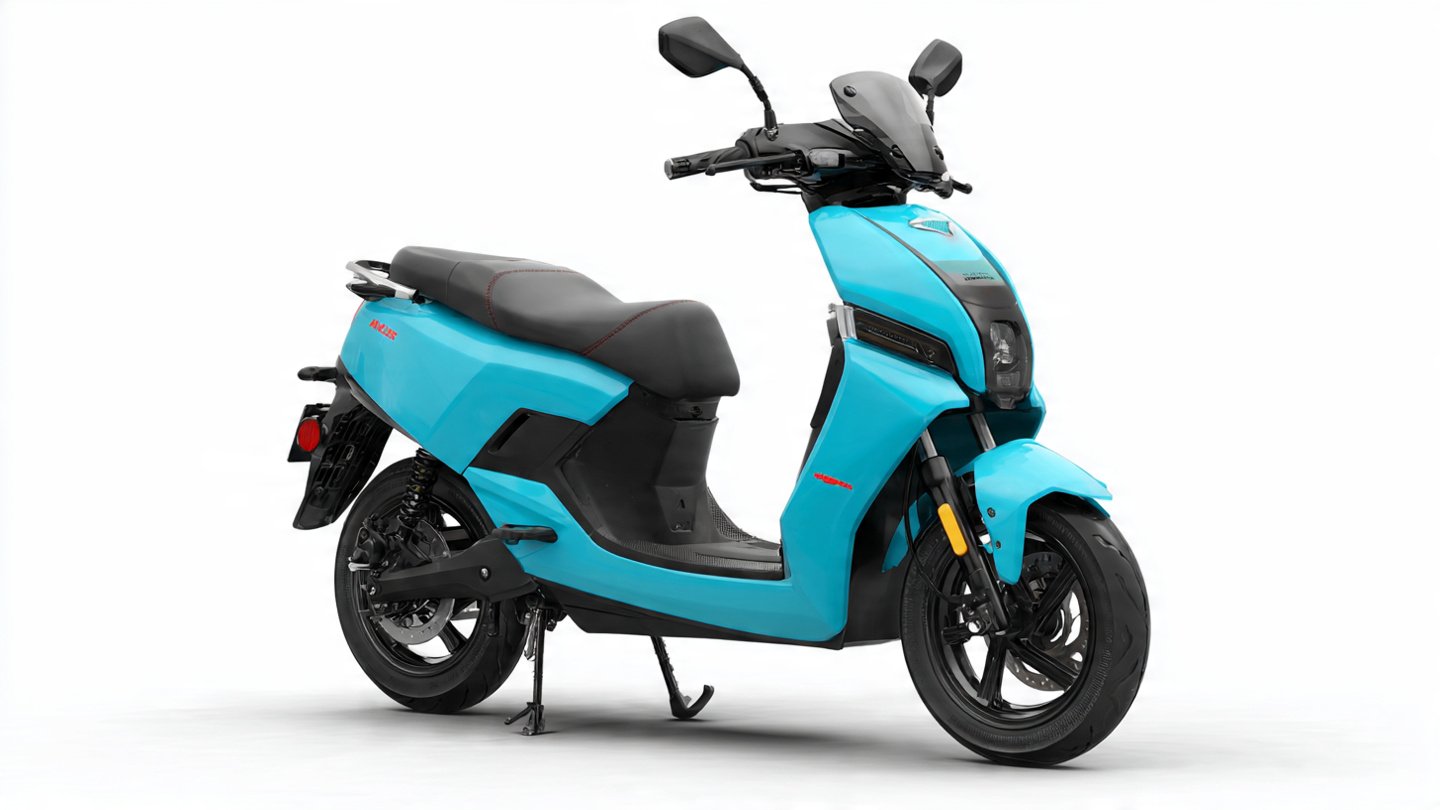
India’s electric two-wheeler market has witnessed a major shake-up as Mahindra has reportedly launched a new electric scooter priced at just ₹75,000, sending shockwaves across the budget commuter segment. With a claimed range of up to 230 kilometers on a single charge and a top speed of 85 km/h, the scooter is being positioned as a game-changer for cost-conscious riders looking to switch to electric mobility in 2026.
At a time when rising fuel prices and urban pollution are pushing consumers toward EVs, Mahindra’s aggressive pricing and impressive specifications could significantly disrupt the market dominated by brands like Ola Electric, Ather, TVS, and Bajaj.
A Bold Move in India’s Competitive EV Market
Mahindra has long been a trusted name in India’s automotive industry, especially in SUVs and electric cars. With this new electric scooter, the company appears to be making a strong statement: electric mobility doesn’t have to be expensive.
Most electric scooters offering long range and decent performance are priced well above ₹1 lakh. By introducing a scooter at ₹75,000 (ex-showroom, company-claimed), Mahindra is targeting:
- Daily office commuters
- Students and first-time buyers
- Budget-conscious families
- Rural and semi-urban riders
This move could accelerate EV adoption in segments that were previously hesitant due to high upfront costs.
Claimed 230Km Range: A New Benchmark?
One of the most talked-about aspects of this launch is the claimed 230 km riding range, which, if achieved even partially in real-world conditions, would place this scooter among the longest-range electric two-wheelers in India.
According to early details, the extended range is achieved through:
- A high-capacity lithium-ion battery pack
- Optimized energy management software
- Lightweight chassis design
- Regenerative braking technology
Mahindra claims the scooter is designed primarily for urban and suburban commuting, where consistent speeds and frequent braking help maximize efficiency.
Even if real-world usage delivers 170–190 km per charge, it would still outperform most competitors in the budget category.
Top Speed of 85 Km/H: Practical and Purposeful
With a claimed top speed of 85 km/h, the scooter is clearly built for everyday usability rather than aggressive performance. This speed is more than sufficient for:
- City traffic
- Ring roads and short highway stretches
- Daily office commutes
The balance between speed and efficiency suggests Mahindra has focused on practical performance, ensuring riders get smooth acceleration without sacrificing range.
Designed for the Indian Rider
Mahindra has reportedly engineered this scooter keeping Indian road conditions and rider expectations in mind. Early previews indicate:
- A sturdy frame capable of handling rough roads
- Comfortable seating for long commutes
- Adequate ground clearance
- Wide footboard for convenience
The design language is expected to be clean and modern, avoiding overly futuristic styling that might alienate traditional buyers.
Charging and Battery Technology
Charging infrastructure remains a concern for many EV buyers, and Mahindra seems to have addressed this with flexible charging options.
Expected charging features include:
- Home charging compatibility
- Standard charging time of 4–5 hours
- Fast-charging support (optional variant)
- Removable or semi-removable battery options (market-dependent)
If Mahindra offers affordable fast-charging solutions, it could further enhance the scooter’s appeal among urban users.
Running Cost: A Major Advantage
One of the biggest reasons budget riders are excited about this launch is the extremely low running cost. Compared to petrol scooters, the savings are substantial.
Estimated benefits include:
- Cost per km as low as ₹0.20–₹0.30
- Minimal maintenance due to fewer moving parts
- No oil changes or engine-related servicing
Over five years, owners could potentially save tens of thousands of rupees compared to petrol-powered alternatives.
Features Expected in the Budget Segment
Despite its aggressive pricing, the scooter is expected to offer several modern features, including:
- Digital instrument cluster
- Smartphone connectivity (basic)
- Multiple riding modes (Eco / City)
- Regenerative braking
- Anti-theft features
While premium features like touchscreen displays or advanced navigation may be reserved for higher variants, the base offering still appears competitive for its price point.
Impact on Competitors
Mahindra’s ₹75,000 electric scooter could force competitors to rethink their pricing strategies. Brands currently selling entry-level electric scooters between ₹90,000 and ₹1.2 lakh may face pressure to:
- Introduce more affordable variants
- Improve range and efficiency
- Offer better warranty and after-sales support
For consumers, this competition is a win—leading to better products at lower prices.
Government Subsidies and EV Push
The scooter’s pricing is also aligned with India’s broader push for electric mobility. State-level EV subsidies, road tax exemptions, and registration benefits could further reduce the effective on-road price in some regions.
If eligible under current EV incentive schemes, buyers could see even greater affordability, making this scooter one of the most value-driven electric two-wheelers in the country.
Ideal for Whom?
This electric scooter seems particularly well-suited for:
- Daily commuters traveling 30–60 km per day
- Budget-conscious families
- Students and young professionals
- First-time EV buyers
- Riders looking to reduce fuel expenses
Its combination of range, speed, and pricing makes it a practical alternative to petrol scooters rather than just a secondary vehicle.
Challenges and Real-World Expectations
While the specifications look impressive, real-world performance will ultimately determine success. Key factors to watch include:
- Actual riding range under load
- Battery durability over time
- Availability of service centers
- Charging reliability
Mahindra’s established service network could play a crucial role in building trust among buyers new to electric vehicles.
Final Thoughts
The Mahindra electric scooter launch at ₹75,000 has undoubtedly captured attention across India’s two-wheeler market. With a claimed 230 km range, 85 km/h top speed, and budget-friendly pricing, it challenges the idea that electric vehicles must be expensive or compromise on practicality.
If Mahindra delivers even close to its claimed figures in real-world conditions, this scooter could become a milestone product—one that brings electric mobility within reach of millions of Indian riders.
As the EV revolution continues to gain momentum in 2026, this launch could mark the beginning of a new era where affordability, performance, and sustainability finally come together.