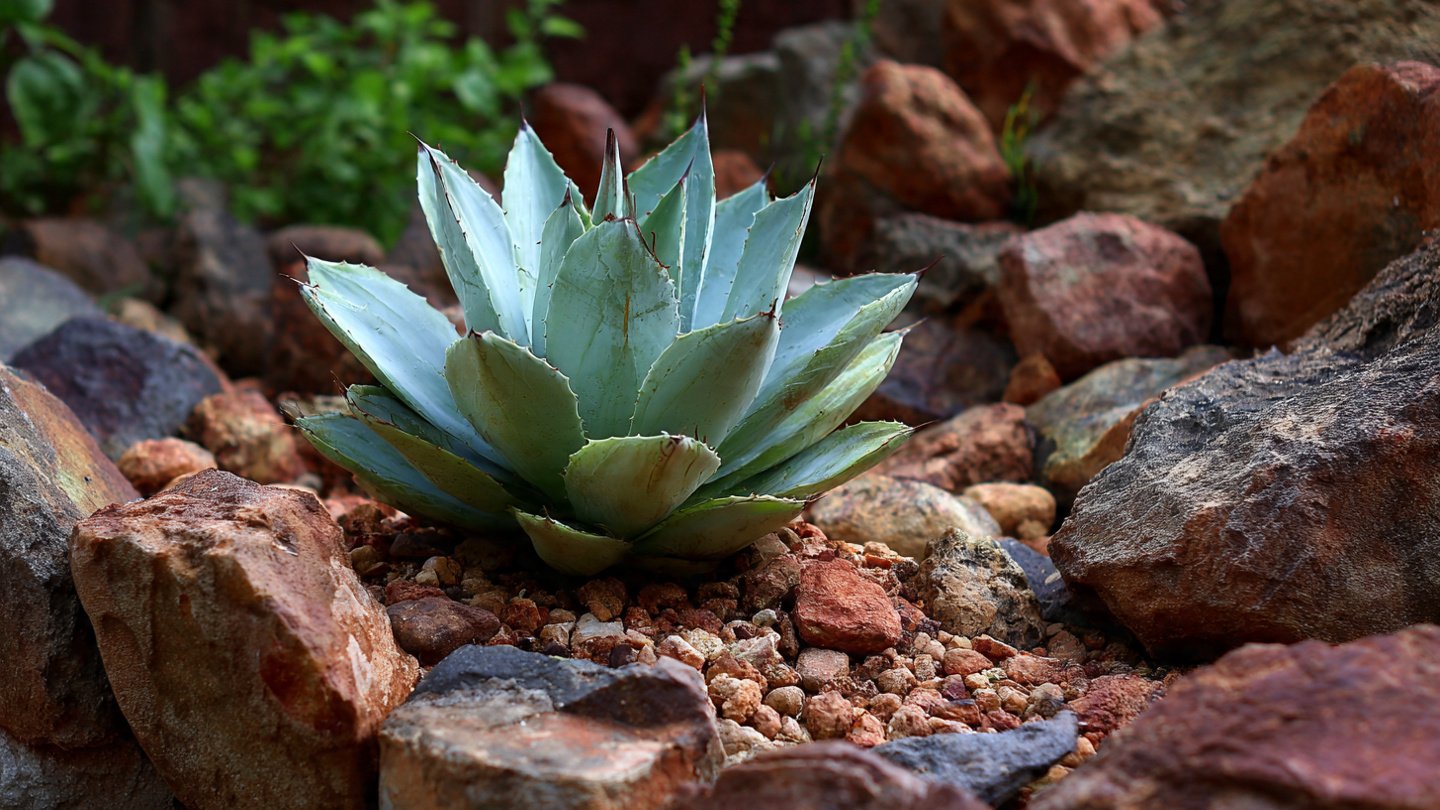
Rock gardens are a stunning way to showcase plants that thrive in dry, well-drained conditions, and agave is one of the stars of these landscapes. With their architectural form, spiky leaves, and drought tolerance, agave plants create a bold focal point while requiring minimal maintenance. If you’re wondering how to grow agave easily in your rock garden, this guide will walk you through everything from preparation to planting, care, and long-term maintenance.
Why Agave Is Perfect for Rock Gardens
Agave plants are succulent perennials known for their thick, fleshy leaves and dramatic rosette shapes. They are particularly well-suited for rock gardens because:
- Drought Tolerance: Agaves store water in their leaves, allowing them to survive dry periods.
- Low Maintenance: They require minimal watering and few nutrients once established.
- Architectural Appeal: Their bold, symmetrical forms contrast beautifully with rocks, gravel, and other plants.
- Longevity: Many agave varieties live for several decades, slowly forming offsets and enhancing your garden over time.
- Versatility: Agaves thrive in both small rock garden beds and large landscape designs.
With proper soil, drainage, and placement, agave can thrive for years with minimal care.
Step 1: Choose the Right Agave Variety
Selecting the right agave species is critical for success. Some popular choices for rock gardens include:
- Agave americana (Century Plant): Large, dramatic rosette; hardy in many climates.
- Agave parryi (Parry’s Agave): Compact, blue-gray leaves, perfect for smaller gardens.
- Agave attenuata (Foxtail Agave): Spineless, smooth leaves; ideal for child- and pet-friendly gardens.
- Agave victoriae-reginae (Queen Victoria Agave): Slow-growing, small, and strikingly geometric.
Choose a variety that suits your climate, space, and desired garden aesthetic.
Step 2: Select the Best Location
Agave thrives in full sun but can tolerate light shade in hotter climates. When choosing a spot in your rock garden:
- Ensure 6–8 hours of direct sunlight daily.
- Pick a location with well-draining soil to prevent root rot.
- Avoid areas prone to water pooling after rain.
- Consider the mature size of the agave to avoid crowding or overshadowing other plants.
Good location choice is one of the easiest ways to ensure healthy growth without extra maintenance.
Step 3: Prepare the Soil
Agave requires soil that drains exceptionally well. Poor drainage is the most common reason for agave failure.
Easy Soil Mix for Rock Gardens:
- 50% coarse sand or gravel
- 25% garden soil or compost
- 25% perlite or small crushed stones
Mix the components thoroughly to create a loose, porous medium. You can also plant agave directly in a rocky mound or raised bed to further enhance drainage.
Step 4: Planting Agave in Your Rock Garden
Planting agave is straightforward:
- Dig a hole slightly larger than the root ball of your plant.
- Position the agave so the base of the rosette sits just above the soil line, preventing water from collecting around the crown.
- Backfill with your prepared soil mix, gently pressing it around the roots.
- Add gravel or small rocks around the base to improve drainage and blend with your rock garden design.
Planting agave on a slight slope or mound ensures that excess water flows away, reducing root rot risk.
Step 5: Watering Your Agave
Agave is drought-tolerant, but newly planted specimens need consistent moisture to establish roots.
- First 2–4 weeks: Water lightly 1–2 times per week to encourage root development.
- After establishment: Reduce watering drastically; mature agaves typically require water only during prolonged dry periods.
- Avoid overwatering—standing water is lethal to agave roots.
A simple soaker hose or drip irrigation system can provide controlled watering without wetting the crown.
Step 6: Fertilization
Agaves grow slowly and generally don’t need much fertilizer. However, occasional feeding can encourage robust growth:
- Apply a low-nitrogen succulent fertilizer in spring and summer.
- Avoid fertilizers high in nitrogen, which promote soft, weak growth.
- Organic compost can be lightly sprinkled around the base, but avoid contact with the crown.
Fertilization is optional but can enhance your agave’s health and longevity.
Step 7: Mulching and Rock Integration
Mulch helps retain soil moisture and keeps weeds at bay:
- Use gravel, pebbles, or decomposed granite around the base instead of organic mulch, which can retain too much moisture.
- Create a natural-looking integration with surrounding rocks in your rock garden.
- Avoid piling rocks directly against the crown, which can trap water and lead to rot.
Proper mulching and rock placement not only protect the plant but enhance the visual appeal of your garden.
Step 8: Pruning and Maintenance
Agave is low-maintenance, but occasional pruning and care are beneficial:
- Remove dry or damaged leaves at the base using gloves to avoid injury from sharp tips.
- Thin offsets (pups) to prevent overcrowding if you want to maintain a single dramatic rosette.
- Monitor for pests like mealybugs or scale, and remove affected areas promptly.
Minimal pruning is needed, but maintaining the plant’s appearance enhances your rock garden aesthetics.
Step 9: Propagating Agave for a Fuller Rock Garden
Agaves produce offsets, also called pups, which can be used to expand your garden:
- Wait until offsets reach 6–8 inches.
- Gently separate the pup from the parent plant using a clean, sharp knife.
- Allow the pup to dry for 1–2 days to let the cut callus over.
- Plant in well-draining soil as described above.
This easy propagation method ensures that your rock garden continues to grow and flourish over time.
Step 10: Seasonal Considerations
Agave plants are hardy but may need some protection in extreme climates:
- Winter: Protect sensitive varieties from frost using burlap covers or relocate potted agaves indoors.
- Summer: Provide occasional shade during extreme heat if leaves show sunburn signs.
- Rainy Season: Ensure gutters and drainage prevent excess water accumulation.
Seasonal care ensures longevity and continued growth for years.
Benefits of Growing Agave in Rock Gardens
- Drought-Tolerant Landscaping: Perfect for xeriscaping and low-water gardens.
- Architectural Focal Point: Provides strong visual structure.
- Low Maintenance: Requires minimal watering, fertilizer, and care.
- Propagation Potential: Offsets allow expansion with little extra cost.
- Soil Stabilization: Roots help stabilize soil in sloped rock gardens.
Agaves are both practical and ornamental, making them an excellent choice for rock gardens of all sizes.
Common Mistakes to Avoid
- Planting agave in poorly draining or clay soil.
- Overwatering, especially during establishment.
- Planting too deep, burying the crown under soil.
- Ignoring offsets, leading to overcrowding.
- Exposing sensitive varieties to frost or extreme cold.
Avoiding these mistakes will make growing agave in your rock garden a simple and rewarding experience.
Final Thoughts
Growing agave in a rock garden is an easy, low-maintenance way to add dramatic beauty and texture to your landscape. By choosing the right variety, preparing well-draining soil, planting carefully, and maintaining minimal care, your agave will thrive for years, offering architectural interest and natural elegance.
Whether you’re creating a small urban rock garden, a desert-inspired landscape, or a large xeriscape, agave is the perfect companion. With these easy steps, you can enjoy the bold, sculptural beauty of agave while cultivating a sustainable, low-water garden.
Turn your rock garden into a succulent paradise by following this method, and watch your agave grow strong, healthy, and striking for years to come.