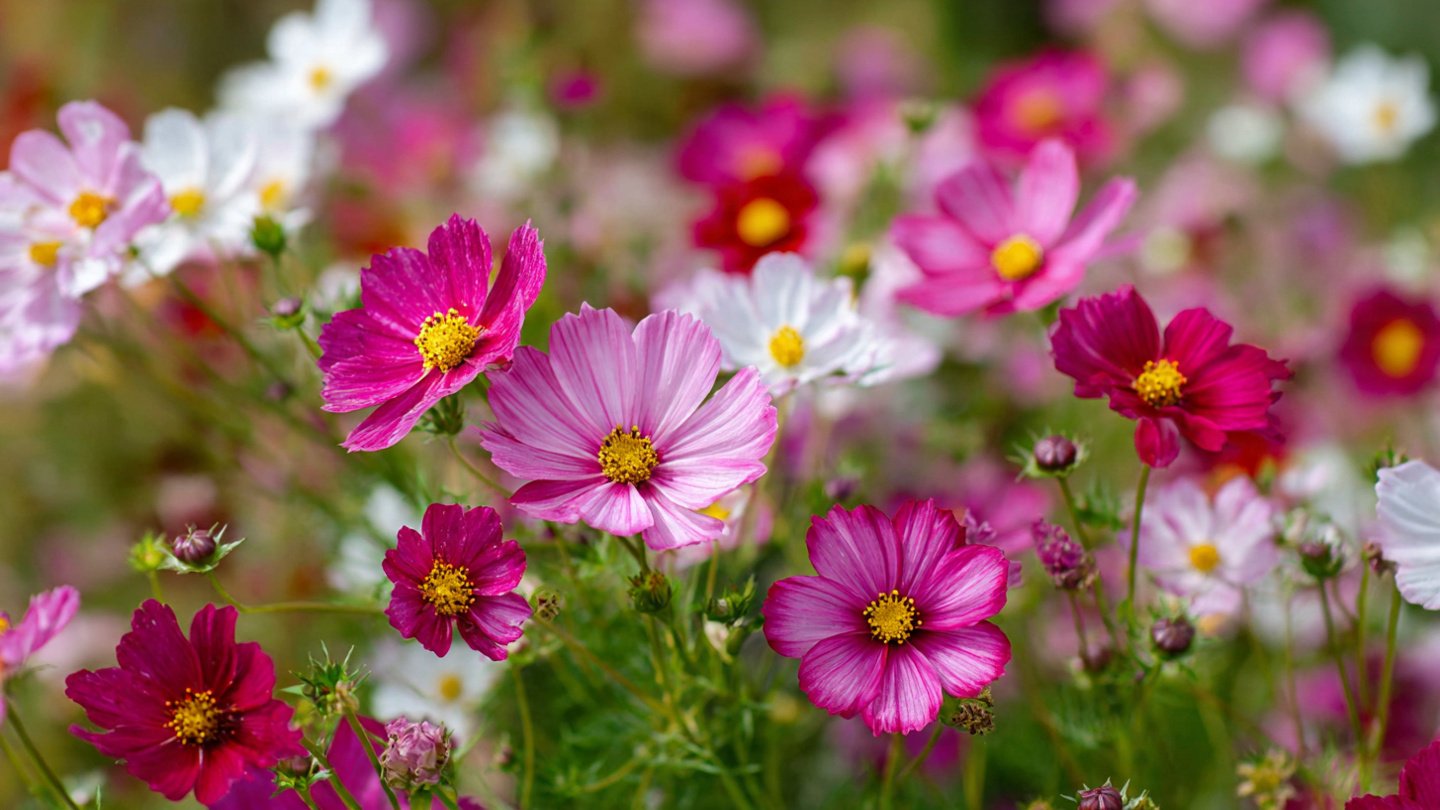
If you want a garden bursting with cheerful, airy blooms, few flowers rival Cosmos Pink and White Mix. With their delicate, daisy-like petals, feathery foliage, and vibrant colors swaying gracefully in the breeze, cosmos flowers are a gardener’s delight. They are not only visually stunning but also attract pollinators like bees and butterflies, creating a lively and dynamic garden ecosystem.
Successfully growing cosmos is both fun and rewarding, but it requires understanding the plant’s ideal growing conditions, soil preferences, and maintenance needs. In this comprehensive guide, we’ll explore everything you need to know to cultivate a flourishing pink-and-white cosmos garden, ensuring you enjoy a vibrant display all season long.
Step 1: Choosing the Right Location
Cosmos thrive in sunny locations. Full sun—at least 6–8 hours per day—ensures optimal flowering. These plants love warmth and light, which encourages more blooms and healthier foliage.
- Sunny Spots: Choose garden beds, borders, or containers that receive ample sunlight.
- Protection from Wind: While cosmos are hardy, tall varieties can topple in strong winds. Consider planting near fences or using garden stakes for support.
- Space Considerations: Cosmos can grow 3–6 feet tall depending on the variety. Allow sufficient spacing—about 12–18 inches apart—to prevent overcrowding and encourage good air circulation.
Selecting the right location lays the foundation for vibrant and abundant blooms.
Step 2: Preparing the Soil
Cosmos are adaptable but perform best in well-draining soil. They prefer soil that is light, slightly sandy, and moderately fertile. Overly rich soil may result in excessive foliage growth with fewer flowers.
- Soil Testing: Check pH; cosmos thrive in a slightly acidic to neutral range (pH 6.0–7.0).
- Amending Soil: Incorporate compost or organic matter to improve drainage and provide gentle nutrition. Avoid high-nitrogen fertilizers, which encourage leaf growth rather than blooms.
- Loosen the Soil: Lightly till or turn the soil to a depth of 6–8 inches to allow roots to establish quickly.
Proper soil preparation ensures strong root systems and healthy, colorful plants.
Step 3: Planting Cosmos Seeds
Cosmos are easy to grow from seeds, making them perfect for both novice and experienced gardeners.
- Timing: Sow seeds after the last frost, when soil has warmed to at least 60°F (16°C).
- Direct Sowing: Scatter seeds on the soil surface and lightly press them in—cosmos seeds need light to germinate. Avoid burying them too deeply.
- Spacing: For a dense display, plant seeds 6–12 inches apart, thinning seedlings later if necessary.
- Containers: Cosmos can also thrive in pots or hanging baskets. Ensure containers have drainage holes and use a well-draining potting mix.
Germination usually occurs in 7–14 days, depending on temperature and moisture conditions.
Step 4: Watering and Moisture Needs
Cosmos are drought-tolerant once established, but consistent watering is important in the early stages.
- Seedling Stage: Keep the soil moist but not waterlogged. Overwatering can lead to seed rot.
- Established Plants: Water deeply but sparingly, allowing the soil to dry slightly between watering.
- Avoid Wet Foliage: Water at the base of the plant to prevent leaf diseases.
Proper watering ensures strong growth while preventing fungal issues and root problems.
Step 5: Fertilization for Maximum Blooms
Cosmos thrive in low-nutrient soil and do not require heavy fertilization. Overfeeding can lead to lush foliage at the expense of flowers.
- Organic Fertilizer: Use a low-nitrogen, balanced fertilizer or compost tea once or twice during the growing season.
- Bloom Booster: If desired, a phosphorus-rich fertilizer can encourage bigger, longer-lasting blooms.
- Timing: Fertilize once seedlings are 4–6 inches tall and again during early bloom stages.
Moderate feeding supports abundant, vibrant flowers without overstimulating leaf growth.
Step 6: Supporting Tall Varieties
Some cosmos varieties, especially pink-and-white mixes, can grow quite tall. To prevent flopping:
- Staking: Use bamboo stakes or small trellises to support taller plants.
- Pinching: Pinch the tips of young seedlings to encourage bushier growth and more blooms.
- Spacing: Give tall varieties enough room to sway without leaning on neighboring plants.
These measures help maintain an attractive, upright garden display.
Step 7: Deadheading and Maintenance
Regular maintenance encourages continuous flowering and prevents the plant from self-seeding too aggressively:
- Deadheading: Remove spent blooms to redirect energy into producing new flowers.
- Trimming: Occasionally trim overgrown stems to maintain shape and prevent legginess.
- Pest Monitoring: Cosmos are generally pest-resistant but watch for aphids or caterpillars, removing them manually or using natural insecticidal sprays.
Maintenance ensures a long, colorful blooming season, often lasting until the first frost.
Step 8: Companion Planting
Cosmos mix beautifully with other garden plants, enhancing the visual appeal and attracting pollinators:
- Pollinator-Friendly Plants: Sunflowers, zinnias, and lavender attract bees, butterflies, and beneficial insects.
- Color Harmony: Combine pink-and-white cosmos with purple salvia or yellow marigolds for a vibrant garden palette.
- Height Variation: Plant shorter flowers in front and taller cosmos at the back for a tiered effect.
Thoughtful companion planting creates a dynamic, lively garden display.
Step 9: Attracting Wildlife
Cosmos flowers are a magnet for pollinators, helping your garden flourish:
- Bees and Butterflies: Bright colors and open blooms make nectar easily accessible.
- Beneficial Insects: Predatory insects like ladybugs help control pests naturally.
- Birds: Some birds may visit for seeds once flowers fade, adding movement and life to the garden.
A pollinator-friendly cosmos garden contributes to both beauty and ecological health.
Step 10: Harvesting and Indoor Use
Cosmos flowers are perfect for cutting and arranging indoors:
- Cutting: Harvest flowers early in the morning when blooms are fresh.
- Vase Life: Trim stems and remove excess foliage; place in clean water for several days of display.
- Propagation: Collect seeds from mature flowers at the end of the season for next year’s planting.
This allows you to enjoy the beauty of your garden indoors while preparing for future seasons.
Step 11: Troubleshooting Common Problems
Even resilient cosmos may face occasional challenges:
- Leggy Plants: Caused by low light or overcrowding. Ensure full sun and proper spacing.
- Powdery Mildew: Avoid overhead watering and improve air circulation.
- Pests: Aphids or slugs can be treated with neem oil or hand-picking.
- Poor Flowering: Often a result of over-fertilization or lack of sunlight. Reduce nitrogen and ensure at least 6 hours of sun daily.
Early detection and intervention keep the garden healthy and vibrant.
Step 12: Seasonal Care
Cosmos are annuals, so at the end of the growing season:
- Seed Collection: Collect dried seeds for next season’s planting.
- Composting: Compost spent plants to recycle nutrients into your soil.
- Soil Preparation: Lightly amend soil with compost for spring planting.
This cycle ensures that your pink-and-white cosmos mix continues to flourish year after year.
Step 13: The Joy of Cosmos
Beyond their visual appeal, cosmos flowers bring lightness, movement, and joy to any garden. Their feathery foliage and delicate blooms create an effortless elegance, while their ease of care makes them ideal for beginners. Watching bees dance among pink-and-white blooms or seeing butterflies rest on petals adds an enchanting, lively quality to your garden space.
With proper attention to sunlight, soil, watering, and maintenance, cosmos flowers can provide months of continuous beauty, transforming your garden into a vibrant, dynamic landscape.
Conclusion
Growing a pink-and-white cosmos mix is a rewarding experience that combines simplicity, beauty, and ecological benefit. From selecting a sunny spot and preparing the soil to sowing seeds, deadheading blooms, and attracting pollinators, each step contributes to a stunning display of color and movement.
Cosmos are forgiving yet rewarding plants, offering both aesthetic pleasure and a chance to engage with nature. With consistent care, thoughtful planning, and a little patience, you can cultivate a vibrant cosmos garden that brightens your outdoor space, attracts wildlife, and brings joy throughout the growing season.
Whether you’re planting them in garden beds, containers, or alongside companion plants, cosmos pink-and-white mixes promise a cheerful, lively display that embodies the essence of a flourishing summer garden.