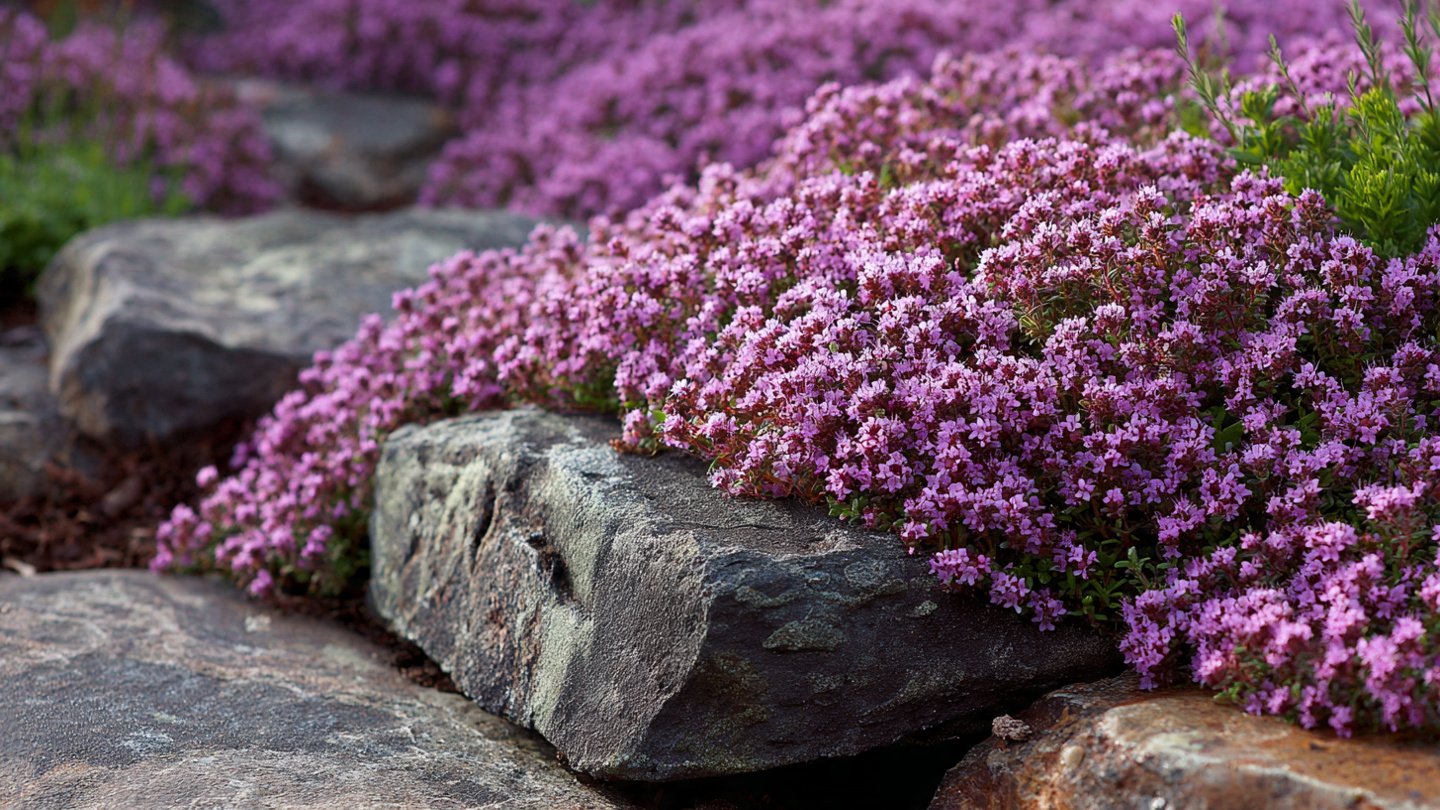
Gardening enthusiasts and homeowners alike are constantly looking for ground covers that are not only beautiful but also low-maintenance, drought-tolerant, and fragrant. One standout option is Red Creeping Thyme (Thymus serpyllum ‘Coccineus’)—a vibrant, low-growing perennial that adds a splash of color, a pleasant aroma, and a soft carpet of greenery to any garden. This guide will walk you through everything you need to know about growing, maintaining, and maximizing the benefits of this versatile and hardy ground cover.
Why Red Creeping Thyme Is the Perfect Ground Cover
Red Creeping Thyme is widely loved by gardeners for several reasons:
- Low Maintenance: Once established, it requires minimal watering, fertilizing, or pruning.
- Beautiful Blooms: Tiny red to pink flowers create a striking carpet that attracts bees, butterflies, and other pollinators.
- Fragrant Foliage: Leaves emit a subtle thyme aroma when brushed or stepped on.
- Erosion Control: Dense growth helps prevent soil erosion on slopes and embankments.
- Durable: Can withstand light foot traffic, making it ideal for pathways and between stepping stones.
- Drought-Tolerant: Thrives in sunny, dry areas with well-draining soil.
With these benefits, Red Creeping Thyme is perfect for gardeners who want beauty without constant upkeep.
Step 1: Choosing the Right Location
Location is key to thriving Red Creeping Thyme:
- Sunlight: Prefers full sun for at least 6 hours a day. It tolerates partial shade, but flower production may be reduced.
- Soil Type: Well-draining soil is essential. Sandy or loamy soils are ideal. Avoid heavy clay soils that retain water.
- Slope Considerations: Planting on a gentle slope can improve drainage and prevent waterlogging.
- Spacing: Leave at least 6–12 inches between plants to allow spreading. Crowding can limit airflow and lead to disease.
Choosing a sunny, well-drained spot ensures vigorous growth, dense foliage, and abundant flowering.
Step 2: Preparing the Soil
Healthy soil is the foundation of successful ground cover planting:
- Clear the Area: Remove weeds, rocks, and debris from the planting site.
- Loosen Soil: Dig or till the soil to a depth of 6–8 inches to encourage root penetration.
- Amend Soil: Incorporate organic matter such as compost or well-rotted manure to improve fertility and drainage.
- Check pH: Red Creeping Thyme prefers slightly acidic to neutral soil (pH 6.0–7.0). Adjust with lime or sulfur if necessary.
Well-prepared soil promotes strong root systems and fast spreading, essential for effective ground coverage.
Step 3: Selecting Plants or Seeds
Red Creeping Thyme can be established from seeds, cuttings, or small nursery plants:
- Seeds: Ideal for large areas. Germination takes 2–3 weeks. Keep soil moist but not soggy during this time.
- Cuttings: Take 3–4 inch cuttings from healthy plants and root them in moist soil or sand. This method is faster than seeds.
- Nursery Plants: Small plants spaced 6–12 inches apart establish quickly and fill in the area within a growing season.
Nursery plants and cuttings are the easiest options for beginners, while seeds are cost-effective for larger projects.
Step 4: Planting Red Creeping Thyme
Planting correctly ensures rapid establishment and a dense ground cover:
- Seeds: Scatter evenly over prepared soil, lightly press into the surface, and water gently. Do not cover with more than ¼ inch of soil.
- Cuttings or Nursery Plants: Dig a small hole slightly larger than the root ball, place the plant, and backfill with soil. Press gently to eliminate air pockets and water thoroughly.
- Spacing: 6–12 inches apart allows plants to spread and form a dense mat. Closer spacing may require thinning later.
After planting, water consistently until plants are established, then reduce frequency to promote drought tolerance.
Step 5: Watering and Fertilization
Red Creeping Thyme is drought-tolerant, but young plants need consistent moisture:
- Watering: Keep soil evenly moist during the first 4–6 weeks. Established plants need watering only during prolonged dry spells. Avoid overwatering, which can lead to root rot.
- Fertilization: Light fertilization with a balanced, slow-release fertilizer in spring encourages healthy growth. Excess nitrogen can lead to leggy plants and fewer flowers.
- Mulching: Apply a thin layer of mulch around young plants to retain moisture and suppress weeds, but avoid covering the crown of the plants.
Proper watering and occasional fertilization result in lush foliage and a vibrant flowering display.
Step 6: Pruning and Maintenance
Although low-maintenance, regular care keeps Red Creeping Thyme healthy and visually appealing:
- Shearing After Flowering: Trim the plants lightly after flowering to maintain compact growth and encourage a second bloom.
- Remove Dead Stems: Clear any dead or damaged stems to prevent disease.
- Control Spreading: If thyme starts encroaching on other plants or pathways, trim edges to keep it contained.
These simple maintenance steps prevent thinning and ensure a dense, continuous carpet of green and red blooms.
Step 7: Controlling Weeds and Pests
Red Creeping Thyme is generally resistant to pests and diseases, but vigilance is important:
- Weed Control: Dense growth naturally suppresses weeds. Hand-pull any intruders, especially during the first growing season.
- Pests: Aphids, spider mites, and whiteflies occasionally appear. Spray with neem oil or insecticidal soap if necessary.
- Diseases: Root rot can occur in poorly drained soil. Ensure proper drainage to prevent fungal issues.
Healthy, well-spaced plants are naturally resilient and require minimal intervention.
Step 8: Encouraging Pollinators
Red Creeping Thyme flowers attract beneficial insects that improve garden health:
- Bees: Tiny blooms are a favorite for honeybees, supporting local pollination.
- Butterflies: Bright flowers attract butterflies, adding movement and color to your garden.
- Hoverflies: Beneficial for pest control as they feed on aphids.
Planting thyme near vegetable gardens or flowering beds boosts biodiversity and supports a thriving garden ecosystem.
Step 9: Winter Care and Hardiness
Red Creeping Thyme is hardy in most temperate climates (USDA zones 4–9):
- Cold Protection: Apply a thin layer of mulch in colder regions to protect roots from freezing.
- Pruning in Spring: Remove any winter-damaged stems in early spring before new growth begins.
- Sunlight: Full sun exposure during winter months keeps plants healthy and vibrant.
With minimal winter care, Red Creeping Thyme bounces back easily each season, providing year-round greenery.
Step 10: Creative Uses in the Garden
Red Creeping Thyme is versatile and adds both beauty and function:
- Pathways: Plant between stepping stones for a soft, fragrant carpet that can withstand light foot traffic.
- Rock Gardens: Thrives in well-drained rocky soils, adding vibrant color to stone landscapes.
- Containers: Grows beautifully in pots or hanging baskets for patios and balconies.
- Erosion Control: Plant on slopes or embankments to stabilize soil naturally.
Its adaptability makes Red Creeping Thyme an excellent choice for gardeners looking for both form and function.
Benefits of Growing Red Creeping Thyme
- Low Maintenance: Ideal for busy gardeners or first-time growers.
- Fragrance: Leaves release a pleasant aroma when walked on or brushed.
- Pollinator-Friendly: Supports bees, butterflies, and other beneficial insects.
- Drought-Tolerant: Reduces water usage in the garden.
- Aesthetic Appeal: Bright red blooms and green foliage create a striking visual impact.
With these benefits, Red Creeping Thyme is more than just a ground cover—it’s a functional and beautiful addition to any landscape.
Conclusion
Red Creeping Thyme is truly one of the easiest and most rewarding ground covers to grow. Its vibrant red flowers, aromatic foliage, drought tolerance, and low-maintenance requirements make it a favorite for gardeners seeking a beautiful yet practical landscape solution. By carefully selecting the right location, preparing soil, planting correctly, and providing minimal but consistent care, you can cultivate a thriving carpet of Red Creeping Thyme that will beautify your garden, attract pollinators, and even help control soil erosion.
Whether used to fill spaces between stepping stones, cover slopes, or enhance a rock garden, Red Creeping Thyme combines elegance, practicality, and ecological benefits. With patience and simple maintenance, your garden can enjoy a lush, colorful, and fragrant ground cover that will last for years—turning your outdoor space into a vibrant, pollinator-friendly paradise.