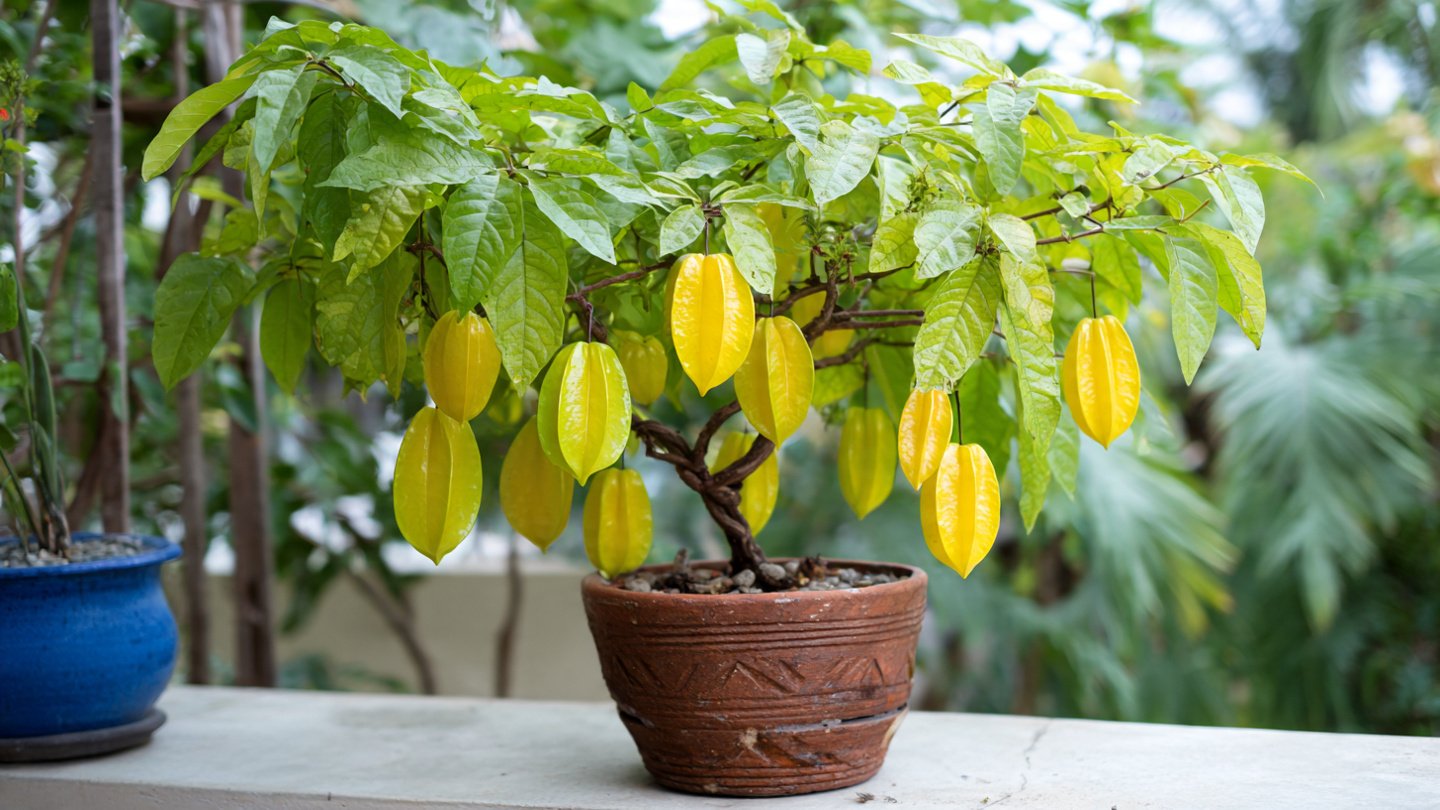
Star fruit, also known as carambola, is a tropical treasure. With its distinctive five-pointed shape, crisp texture, and sweet-tart flavor, it’s a fruit that delights both the eyes and the taste buds. While commonly grown in tropical orchards, did you know you can grow a star fruit tree right in a pot? Container cultivation allows gardeners in subtropical or even temperate regions to enjoy homegrown star fruit with proper care and planning. This guide will take you step by step from seed to harvest, including detailed updates over a full two-year growing cycle to help you achieve success.
Why Grow Star Fruit in a Pot?
Growing star fruit in a pot has several advantages:
- Space-saving – Ideal for patios, balconies, and small yards.
- Mobility – You can move the tree indoors during cooler months.
- Soil control – Easy to provide nutrient-rich, well-draining soil.
- Pest and disease management – Easier to monitor and manage problems.
The main challenge is patience—star fruit trees take time to mature, but watching a seedling grow into a fruiting tree is highly rewarding.
Selecting and Preparing Star Fruit Seeds
Starting from seed is the most common and economical method. Here’s how to select and prepare them:
Selecting Seeds
- Choose fully ripe star fruits from a trusted source.
- Cut open the fruit and remove the seeds.
- Wash seeds to remove any residual pulp.
Seed Preparation
- Optional: Soak seeds in warm water for 24 hours to improve germination.
- Plant fresh seeds promptly, as viability decreases over time.
Choosing the Right Container
Container size and drainage are crucial for healthy growth.
Recommended Pot
- Start with a 6–8 inch seedling pot for germination.
- Upgrade to a 12–15 inch pot after 6–8 months.
- Use pots with good drainage holes to prevent root rot.
- Materials: Plastic, ceramic, or fabric pots all work, but avoid heavy, non-draining pots.
Soil Mix for Optimal Growth
Star fruit thrives in loose, nutrient-rich soil.
Ideal Soil Composition
- 40% quality potting mix
- 30% compost or well-rotted organic matter
- 20% sand or perlite for drainage
- 10% coco peat for moisture retention
pH preference: slightly acidic to neutral (5.5–6.5).
Germination: The First Stage
Planting Seeds
- Sow seeds ½ inch deep in moist soil.
- Cover lightly with soil and maintain humidity by covering with plastic wrap.
- Place in a warm, bright area (70–85°F).
Germination Timeline
- Seeds sprout in 2–3 weeks under optimal conditions.
- Keep soil consistently moist but not waterlogged.
Pro tip: Mist daily until seedlings emerge, then gradually reduce humidity.
Year 1: Seedling Stage and Growth Updates
The first year is all about establishing roots and foliage.
Early Growth (Months 1–6)
- Seedlings develop 2–4 true leaves.
- Keep in bright, indirect sunlight.
- Water regularly but avoid overwatering.
- Feed with diluted liquid fertilizer (half-strength) every 4 weeks.
Mid-Year Update (Months 6–12)
- Transplant to a larger pot if roots fill the container.
- Gradually expose seedlings to direct sunlight.
- Begin training a single main stem for structure.
- Expect height growth of 1–2 feet in the first year.
Year 2: Developing a Fruiting Tree
By the second year, your potted star fruit may begin to show flower buds, depending on climate and care.
Pot and Soil Management
- Upgrade to a 20–25 inch container for continued growth.
- Refresh top 2–3 inches of soil or repot completely if compacted.
- Continue a balanced feeding program with an NPK fertilizer (10-10-10) monthly.
Sunlight and Temperature
- Provide at least 6–8 hours of sunlight daily.
- Protect from frost or cold winds if in subtropical regions.
- Maintain temperatures above 60°F for flowering and fruiting.
Fertilization for Fruiting Success
A nutrient-rich diet encourages flowers and healthy fruits.
Fertilizer Routine
- Nitrogen in early growth for leaves.
- Balanced NPK before flowering.
- Higher potassium once fruits start to form.
- Apply liquid fertilizer every 2–4 weeks during active growth.
Tip: Organic options like compost tea, seaweed extract, or worm castings improve soil health and fruit quality.
Flowering and Pollination
Star fruit trees produce both male and female flowers on the same plant, and some varieties are self-pollinating.
Encouraging Flowers
- Reduce nitrogen slightly before flowering to prevent excessive leaf growth.
- Maintain consistent watering and humidity.
- Prune small branches to direct energy to flower production.
Pollination Tips
- If indoors, hand-pollinate using a small brush to transfer pollen.
- Outdoor plants benefit from bees and other pollinators.
Fruit Development and Care
Once flowers are pollinated, fruit begins to form.
Key Tips for Fruit Growth
- Keep soil consistently moist.
- Mulch surface to retain moisture.
- Avoid excessive fertilizer during fruiting to prevent leafy growth over fruiting.
- Thin crowded fruits to improve size and quality.
Harvest Timing
- Star fruit matures in 70–80 days after flowering.
- Look for a bright yellow color with a hint of green at the edges.
- Harvest gently by cutting the stem with scissors.
Common Challenges and Solutions
Root-Bound Trees
- Solution: Repot into a larger container.
- Ensure proper drainage.
Leaf Yellowing
- Cause: Overwatering or nutrient deficiency
- Solution: Adjust watering and feed with balanced fertilizer.
Pest Problems
- Spider mites and scale insects can appear.
- Solution: Use insecticidal soap or neem oil.
Cold Damage
- Protect potted trees indoors or in greenhouses during winter.
Monitoring Growth with Full 2-Year Updates
A potted star fruit tree grows slowly but steadily:
Month 0–3: Seed germination and first true leaves.
Month 4–6: Steady leaf development and root expansion.
Month 6–12: Transplanting, main stem training, and first signs of flower buds.
Year 2: Height 3–4 feet, branching, flowering, initial fruit set.
End of Year 2: First small harvests, typically 1–5 fruits, depending on size and care.
Tip: Keep a growth journal with photos every 2–3 months to track progress and adjust care.
Long-Term Maintenance for Continuous Fruiting
- Prune annually to remove dead branches and maintain shape.
- Repot every 2–3 years to refresh soil and nutrients.
- Monitor for pests regularly.
- Rotate pot occasionally for even sunlight exposure.
With proper care, a potted star fruit tree can produce fruit consistently year after year, even in limited spaces.
Final Thoughts: Patience Pays Off
Growing star fruit in a pot is a slow but deeply satisfying journey. Starting from a seed and nurturing it through two years to the first harvest teaches patience, observation, and precision gardening. By following proper potting, watering, feeding, and sunlight routines, you can enjoy this tropical delight right from your patio or balcony.
Star fruit may take time, but each fruit is a reward for your dedication. With the right container, soil, nutrients, and careful monitoring, your home-grown star fruit will be a source of beauty, flavor, and pride for many seasons to come.