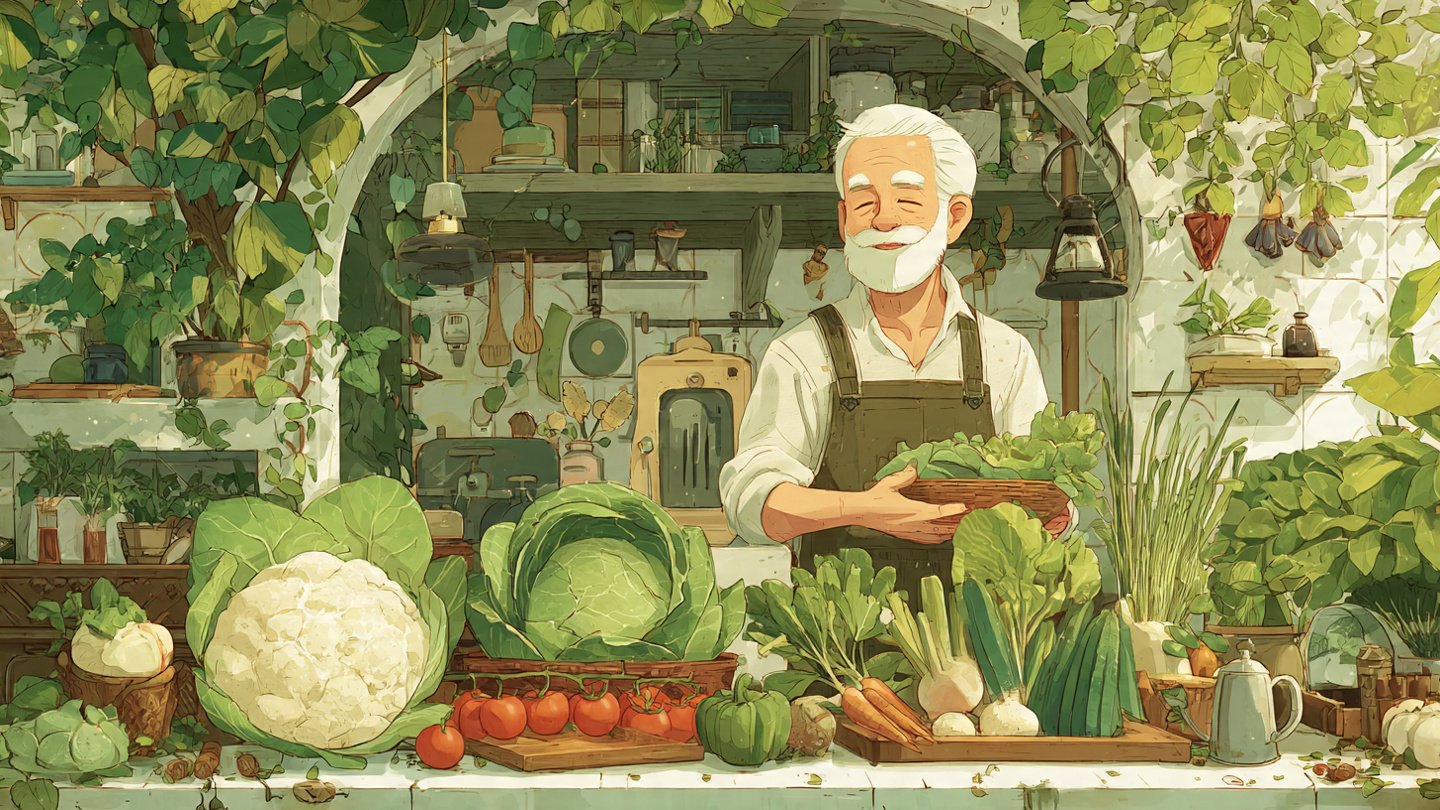
Every morning just after sunrise, Grandpa Kaki steps into his garden with a woven basket tucked under his arm. The air is still cool, the soil damp with dew, and the leaves glisten as if they’ve been polished overnight. By the time he returns to the house, the basket is heavy with tomatoes, leafy greens, beans, and whatever else happens to be ripe that day. To anyone passing by, it almost seems magical—how can one small garden produce so much, all year round?
But Grandpa Kaki will tell you there’s no magic involved. His garden stays full of fresh vegetables because of patience, observation, and a deep respect for the land. Decades of tending the soil have taught him that a productive garden isn’t built in a season; it’s nurtured slowly, one habit at a time.
A Garden Built on Healthy Soil
Grandpa Kaki believes that vegetables are only as healthy as the soil they grow in. Long before planting a single seed, he focuses on feeding the earth. Every scrap of vegetable peel, fallen leaf, and bit of kitchen waste goes into his compost pile. Over time, this turns into dark, crumbly compost that smells rich and alive.
He never uses chemical fertilizers. Instead, he mixes compost into the beds at the start of each season, replenishing nutrients naturally. “If the soil eats well, the plants will too,” he often says. This living soil holds moisture better, drains well, and supports beneficial insects and microorganisms that protect plants from disease.
Planting with the Seasons, Not Against Them
One of Grandpa Kaki’s greatest strengths as a gardener is his understanding of timing. He doesn’t force plants to grow when the weather isn’t right. Leafy greens go in during cooler months, while tomatoes, peppers, and eggplants wait for warm soil and longer days.
By planting crops that suit the season, he avoids many common problems like pests and poor yields. Plants grow stronger when they’re comfortable, and healthy plants naturally resist disease. Grandpa Kaki keeps a small notebook where he writes down planting dates, weather patterns, and harvest results, refining his timing a little more each year.
Succession Planting for Constant Harvests
One reason Grandpa Kaki’s garden never looks empty is his clever use of succession planting. Instead of planting everything at once, he sows seeds in small batches every couple of weeks. When one row of lettuce is ready to harvest, another is already halfway grown, and a third is just sprouting.
This approach ensures a steady supply of vegetables rather than one overwhelming harvest followed by bare soil. It also reduces waste—he picks what he needs, and the garden keeps producing. Empty spaces are quickly replanted, keeping the beds productive throughout the year.
Saving Seeds and Choosing the Right Varieties
Grandpa Kaki prefers traditional, open-pollinated vegetable varieties that have been grown in the region for generations. He saves seeds from his strongest plants, gradually adapting his garden to local conditions. Over time, these plants become more resilient to local pests, weather changes, and soil conditions.
Seed saving also gives him independence. He doesn’t rely on stores or expensive seed catalogs; instead, he carries forward a living legacy from one season to the next. Each seed tells a story of past harvests and lessons learned.
Watering with Care and Intention
In Grandpa Kaki’s garden, watering is done thoughtfully, never carelessly. He waters early in the morning, allowing moisture to soak deep into the soil before the heat of the day. This encourages roots to grow downward rather than staying near the surface.
He avoids overhead watering whenever possible, directing water to the base of the plants to reduce disease. Mulch—made from dried leaves, straw, or grass clippings—covers the soil, keeping it cool and moist while suppressing weeds. Thanks to this method, the garden stays lush even during dry spells.
Letting Nature Do Some of the Work
Rather than fighting nature, Grandpa Kaki works with it. Flowers are planted alongside vegetables to attract bees, butterflies, and other pollinators. Marigolds, basil, and herbs help repel pests naturally, reducing the need for intervention.
He welcomes birds, frogs, and even certain insects into the garden, knowing they play a role in keeping harmful pests under control. A small dish of water and a few shady spots are enough to invite these helpful allies. The garden becomes a balanced ecosystem rather than a battlefield.
Daily Attention, Not Occasional Effort
Grandpa Kaki doesn’t believe in neglecting the garden for weeks and then trying to fix everything at once. Instead, he spends a little time there every day. He checks leaves for signs of stress, pulls small weeds before they spread, and gently supports plants as they grow.
This daily attention allows him to catch problems early. A yellowing leaf, a chewed stem, or dry soil is noticed immediately and addressed before it becomes serious. Gardening, for him, is not a chore but a daily conversation with the land.
Harvesting the Right Way
How vegetables are harvested matters just as much as how they’re grown. Grandpa Kaki never strips a plant bare. He picks outer leaves of greens first, allowing the plant to continue producing. Beans and cucumbers are harvested while still young, encouraging the plant to keep flowering and fruiting.
This respectful harvesting extends the life of each plant and maximizes overall yield. The garden responds generously when treated gently.
Passing Down Knowledge and Joy
Perhaps the most important reason Grandpa Kaki’s garden thrives is the love he pours into it. Gardening is his way of connecting with the past and teaching the future. He invites grandchildren and neighbors to help, sharing seeds, stories, and meals made from the garden’s bounty.
Through these moments, knowledge is passed down—how to read the sky for rain, how soil should feel in your hands, how patience leads to abundance. The garden becomes more than a source of food; it becomes a classroom and a gathering place.
A Garden That Gives Back
At the end of the day, Grandpa Kaki’s garden stays full of fresh vegetables because it’s built on respect, consistency, and care. He doesn’t chase shortcuts or quick fixes. Instead, he trusts the slow, steady rhythms of nature.
His garden reminds us that abundance doesn’t come from forcing growth, but from nurturing life thoughtfully. With healthy soil, smart planting, and a little daily love, even a small patch of land can provide more than enough. And as Grandpa Kaki likes to say with a quiet smile, “If you take care of the garden, the garden will take care of you.”