If you’ve ever struggled with growing straight, healthy carrots in your garden, you’re not alone. Heavy soil, stones, poor drainage, and limited space often lead to short, forked, or misshapen roots. But what if the solution was already sitting in your home—unused and overlooked?
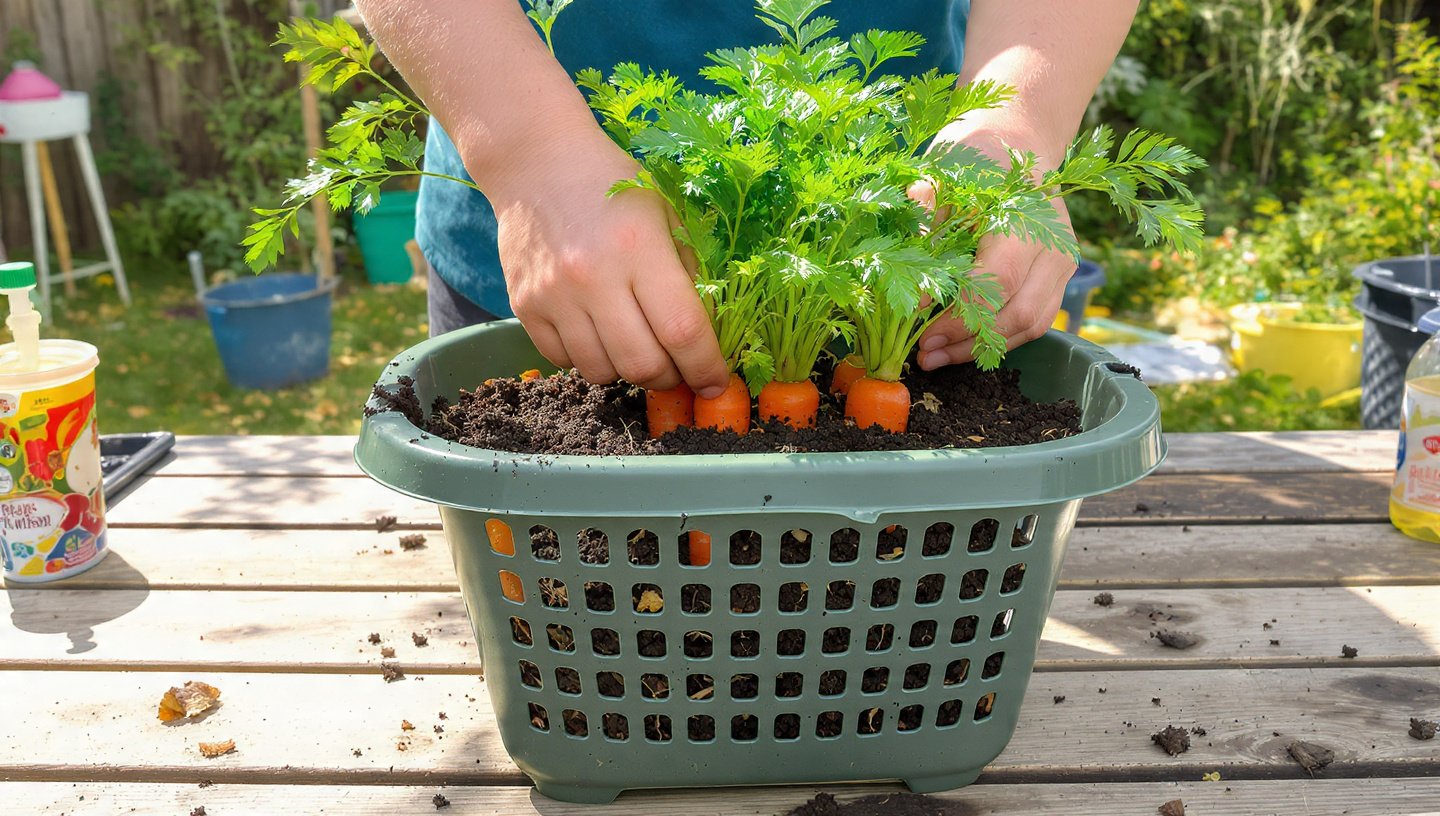
Yes, that old plastic basket you were about to throw away can become the perfect container for growing carrots. This simple, budget-friendly method is ideal for balconies, terraces, small yards, and even kitchen gardens. With excellent drainage, deep root space, and easy maintenance, plastic baskets can transform carrot growing into a surprisingly successful experience.
In this article, you’ll learn why plastic baskets work so well, how to prepare them, and step-by-step instructions to grow sweet, crunchy carrots at home with minimal effort.
Why Use an Old Plastic Basket to Grow Carrots?
Carrots are root vegetables that demand specific growing conditions—loose soil, good drainage, and enough depth to grow long and straight. Plastic baskets naturally meet many of these requirements.
Key Benefits of Using Plastic Baskets
- Excellent drainage prevents waterlogging and root rot
- Air circulation keeps soil healthier
- Lightweight and portable, perfect for balconies
- Eco-friendly reuse of household items
- Low cost or free compared to pots or grow bags
Unlike traditional pots that may trap water, baskets allow excess moisture to drain quickly, which carrots love.
Choosing the Right Plastic Basket
Not every basket is ideal, so choose carefully.
Best Basket Features
- Depth: At least 10–12 inches (deeper for long carrot varieties)
- Strong plastic: Must hold soil weight
- Multiple holes or mesh sides: For airflow and drainage
- Wide opening: Makes sowing and thinning easier
Laundry baskets, fruit baskets, or storage baskets work wonderfully.
Tip: Avoid very shallow or brittle baskets that may crack under soil weight.
Preparing the Basket for Planting
Before planting, your basket needs a few simple modifications.
Step 1: Line the Basket
Since baskets have holes, you’ll need a lining to hold soil.
Use:
- Old newspaper (3–4 layers)
- Coconut coir liner
- Jute fabric
- Perforated plastic sheet
Make small holes in the lining to allow drainage.
Step 2: Elevate the Basket
Place the basket on:
- Bricks
- Wooden blocks
- Pot stands
This improves airflow and ensures proper drainage from the bottom.
The Perfect Soil Mix for Carrots
Soil quality is the most important factor for successful carrots.
Ideal Carrot Soil Mix
- 40% garden soil (sieved, stone-free)
- 30% sand or river sand
- 20% compost or vermicompost
- 10% coco peat
This mix ensures:
- Loose texture for straight roots
- Good drainage
- Enough nutrients without excess nitrogen
Avoid fresh manure, which causes forked and hairy carrots.
Choosing the Right Carrot Variety
Some carrot types perform better in containers and baskets.
Best Varieties for Basket Growing
- Nantes
- Danvers
- Short Horn
- Chantenay
- Baby carrots
Long carrot varieties require deeper baskets (14–16 inches).
How to Sow Carrot Seeds in a Plastic Basket
Carrot seeds are tiny, so careful sowing is important.
Step-by-Step Sowing Guide
- Fill the basket with prepared soil mix
- Level the surface gently
- Sprinkle seeds thinly over the soil
- Cover lightly with a thin layer of soil (¼ inch max)
- Water gently using a spray or watering can with a fine rose
Spacing Tip: Mix carrot seeds with sand to distribute them evenly.
Germination and Early Care
Carrot seeds take time to germinate—patience is key.
Germination Timeline
- Sprouts appear in 7–14 days
- Keep soil consistently moist
- Do not let soil dry out during this stage
Place the basket in a sunny location that receives at least 5–6 hours of sunlight daily.
Thinning: The Secret to Straight Carrots
Many gardeners skip thinning, but it’s crucial.
Why Thinning Matters
- Prevents overcrowding
- Allows roots to grow straight
- Improves carrot size and quality
How to Thin
- Thin seedlings when they are 2–3 inches tall
- Maintain spacing of 2–3 inches between plants
- Snip extra seedlings instead of pulling to avoid disturbing roots
Watering Carrots in Plastic Baskets
Consistent watering leads to sweet, crack-free carrots.
Watering Tips
- Water deeply but lightly
- Keep soil evenly moist
- Avoid flooding the basket
- Reduce watering close to harvest
Irregular watering can cause:
- Bitter taste
- Cracked roots
- Stunted growth
Feeding Carrots Naturally
Carrots don’t need heavy feeding.
Best Natural Feeding Schedule
- Add compost at planting time
- Apply diluted compost tea once every 3–4 weeks
- Avoid nitrogen-rich fertilizers
Too much nitrogen promotes leafy tops but poor root development.
Pest and Disease Control
Basket-grown carrots face fewer problems, but stay alert.
Common Issues
- Aphids
- Leaf miners
- Fungal diseases (rare with good airflow)
Organic Solutions
- Neem oil spray every 10–14 days
- Remove damaged leaves promptly
- Maintain proper spacing
Basket gardening significantly reduces soil-borne pests.
How Long Do Carrots Take to Grow?
Most carrot varieties mature in 60–90 days depending on type and climate.
Signs Carrots Are Ready to Harvest
- Tops of roots visible at soil surface
- Deep orange color
- Firm feel when gently exposed
Harvesting Carrots from a Plastic Basket
Harvesting is one of the biggest advantages of basket growing.
Easy Harvesting Method
- Water the soil lightly
- Gently pull carrots by the tops
- If stuck, loosen soil from sides
Because the soil stays loose, carrots come out clean and straight.
Why Carrots Taste Better Grown This Way
Gardeners often report sweeter carrots from baskets because:
- No soil compaction
- Balanced moisture
- Better oxygen at root level
- Minimal stress during growth
Stress-free carrots = better flavor.
Reusing the Basket for Continuous Harvest
Once harvested, don’t stop!
You can:
- Replant carrots immediately
- Rotate with radish, beetroot, or lettuce
- Refresh soil with compost
One basket can produce multiple harvests in a season.
Perfect for Small Spaces and Urban Homes
This method is ideal for:
- Apartments
- Balconies
- Rooftop gardens
- Kitchen gardens
- Schools and beginners
No digging, no heavy tools—just simple, smart gardening.
Final Thoughts
So, got an old plastic basket? Don’t throw it away. With a little preparation, it can become a high-yield carrot garden that delivers fresh, sweet, and perfectly shaped roots right at home.
This method proves that successful gardening doesn’t require expensive containers or large spaces—just creativity and understanding your plant’s needs. Whether you’re a beginner or an experienced gardener, growing carrots in plastic baskets is an easy, sustainable, and rewarding way to enjoy homegrown food.
Once you try it, you’ll never look at an old basket the same way again.