Peaches are a quintessential summer fruit, bursting with juicy sweetness and a vibrant aroma that instantly evokes warm days and garden bliss. While buying peaches from the store is easy, there’s something truly rewarding about growing your own peach tree in your backyard—watching it go from a delicate sapling to a tree laden with fruit. With the right care, even novice gardeners can cultivate peaches that are fresher, sweeter, and more satisfying than anything bought from the market.
This complete guide will walk you through every step of growing a backyard peach tree—from choosing the right variety to harvesting your first sweet peaches.
Why Grow a Peach Tree in Your Backyard?
Growing a peach tree at home is more than just about fresh fruit; it’s about experience, beauty, and sustainability.
- Flavor and freshness: Homegrown peaches are naturally sweeter and more flavorful.
- Control over chemicals: You can grow peaches organically without synthetic pesticides.
- Aesthetic value: Peach trees provide springtime blossoms and lush greenery.
- Educational experience: Ideal for families or anyone wanting to learn about fruit cultivation.
Even a single peach tree can produce 50–150 pounds of fruit per season once mature, depending on the variety and care.
Choosing the Right Peach Tree Variety
Choosing the right variety for your climate and backyard space is critical. Peach trees are categorized as freestone or clingstone:
- Freestone: Easy to separate from the pit; perfect for fresh eating and desserts.
- Clingstone: Flesh clings to the pit; better for canning or preserves.
Other factors to consider:
- Chill hours: Peaches require a certain number of cold hours during winter to produce fruit. Check your local climate zone.
- Size: Dwarf or semi-dwarf varieties are perfect for small yards or container planting.
- Disease resistance: Select varieties resistant to common diseases like peach leaf curl.
Popular backyard varieties include:
- Elberta: Classic sweet flavor, freestone.
- Redhaven: Reliable, disease-resistant, freestone.
- Belle of Georgia: Large, juicy peaches, semi-dwarf.
Selecting and Planting Your Peach Sapling
Peach trees are typically planted as bare-root saplings in early spring, although container-grown trees can be planted almost any time when the soil is workable.
Steps for Planting
- Choose a sunny spot – Peach trees need 6–8 hours of direct sunlight daily.
- Ensure well-draining soil – Sandy loam is ideal; avoid clay-heavy soil.
- Dig a wide hole – Approximately twice the root spread of the sapling.
- Amend soil – Mix native soil with compost or well-rotted manure.
- Plant the sapling – Spread roots carefully, keeping the graft union (swollen section near base) above soil level.
- Backfill and water thoroughly – Ensure soil is settled around the roots.
Mulch around the base to conserve moisture and regulate soil temperature, but keep mulch a few inches away from the trunk to prevent rot.
Watering and Fertilization
Young peach trees need consistent watering and nutrients to develop strong roots and healthy foliage.
Watering Guidelines
- Water deeply once or twice a week, depending on rainfall and soil.
- Avoid waterlogging, which causes root rot.
- Increase watering during flowering and fruit development stages.
Fertilization
- First year: Light feeding with a balanced fertilizer (10-10-10) every 6–8 weeks.
- Second year: Increase nitrogen slightly to encourage leaf and shoot growth.
- Once fruiting begins: Switch to potassium-rich fertilizer to support fruit development.
- Organic options like compost tea, aged manure, or seaweed extract are excellent for sustainable growth.
Pruning for Growth and Fruit
Pruning is essential for maintaining tree structure, airflow, and fruit production.
How to Prune a Young Peach Tree
- First year: Remove any weak or crossing branches. Focus on one central leader.
- Second year: Encourage lateral branches for a vase-like shape.
- Remove any suckers or shoots growing from the base.
Pruning Mature Trees
- Annual winter pruning keeps the canopy open, allowing sunlight to reach all branches.
- Remove diseased, damaged, or overcrowded branches.
- Thin fruiting branches if needed to prevent overcrowding and improve fruit size.
Flowering and Pollination
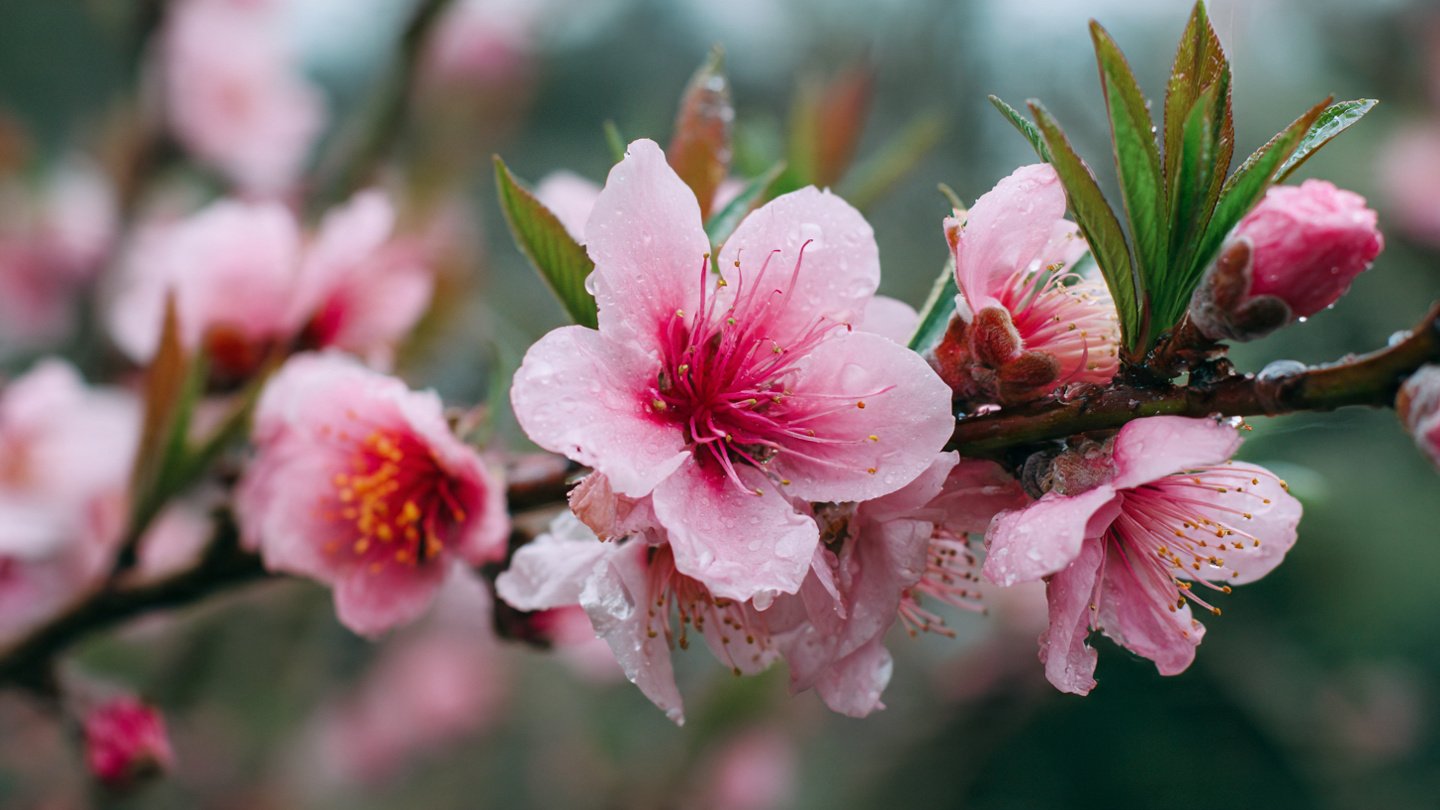
Peach trees produce showy pink blossoms in spring before leaves fully develop. Most peach varieties are self-pollinating, but having more than one tree can increase fruit set.
Tips for Successful Pollination
- Attract pollinators with companion flowers nearby.
- Avoid spraying pesticides during bloom to protect bees.
- Gently shake branches if pollinator activity is low; this can help transfer pollen.
Pest and Disease Management
Peach trees are susceptible to several pests and diseases. Early detection and preventive measures are key.
Common Pests
- Aphids: Can be controlled with insecticidal soap or neem oil.
- Peach tree borers: Monitor trunk for holes; use protective wraps or sprays.
- Scale insects: Handpick or use horticultural oil.
Common Diseases
- Peach leaf curl: Prevent with dormant season fungicide sprays.
- Brown rot: Thin fruits and remove fallen debris to reduce infection.
- Powdery mildew: Ensure good airflow and prune overcrowded branches.
Fruit Development and Care
Once flowers are pollinated, fruits start to form in early summer.
Tips for Healthy Fruit
- Thin fruits when they are about 1–2 inches in diameter, leaving 6–8 inches between each. This improves size and quality.
- Consistent watering prevents splitting.
- Mulch helps retain moisture and suppress weeds.
- Harvest fruits when fully colored and slightly soft to the touch.
Harvesting Your Peaches
Timing is everything. Unlike some fruits, peaches do not ripen significantly off the tree in flavor.
- Check color: Peaches should be fully yellow or golden (depending on variety).
- Texture: Slightly soft under gentle pressure.
- Harvest carefully: Twist or cut fruit to avoid bruising.
- Enjoy immediately or refrigerate for short-term storage.
Seasonal Care: Year-Round Peach Tree Maintenance
Winter
- Prune and clean up fallen leaves and fruit.
- Apply dormant spray to prevent disease.
Spring
- Fertilize with balanced feed as buds swell.
- Water consistently during flowering and fruit set.
Summer
- Mulch to retain moisture and prevent heat stress.
- Monitor for pests and thin fruits.
Fall
- Prepare for winter by reducing water and inspecting for any disease.
- Remove debris from around the tree.
Space Considerations for Backyard Peach Trees
Even standard varieties can thrive in home gardens with proper spacing:
- Dwarf varieties: 8–10 feet between trees.
- Semi-dwarf: 12–15 feet.
- Standard: 18–20 feet or more.
If you have limited space, consider planting a dwarf variety in a large container. This allows mobility and easier care.
Expected Yield and Growth Timeline
A backyard peach tree progresses through predictable stages:
- Year 1: Establishment of roots, minimal growth.
- Year 2–3: Vigorous vegetative growth, occasional flowers.
- Year 3–4: First significant harvest; 10–30 fruits possible.
- Year 5+: Full production; up to 150 pounds for a mature standard tree.
Patience is essential, but the rewards grow sweeter each season.
Final Thoughts: From Sapling to Sweet Success
Growing a backyard peach tree is a journey that combines science, patience, and care. By selecting the right variety, planting properly, pruning strategically, fertilizing correctly, and monitoring for pests, your backyard can produce luscious, juicy peaches year after year.
From the first delicate sapling to the abundant harvest, each stage teaches valuable lessons about growth, timing, and attention to detail. With dedication and consistent care, your homegrown peaches will be a highlight of summer, providing flavor, nutrition, and satisfaction that store-bought fruit simply cannot match.