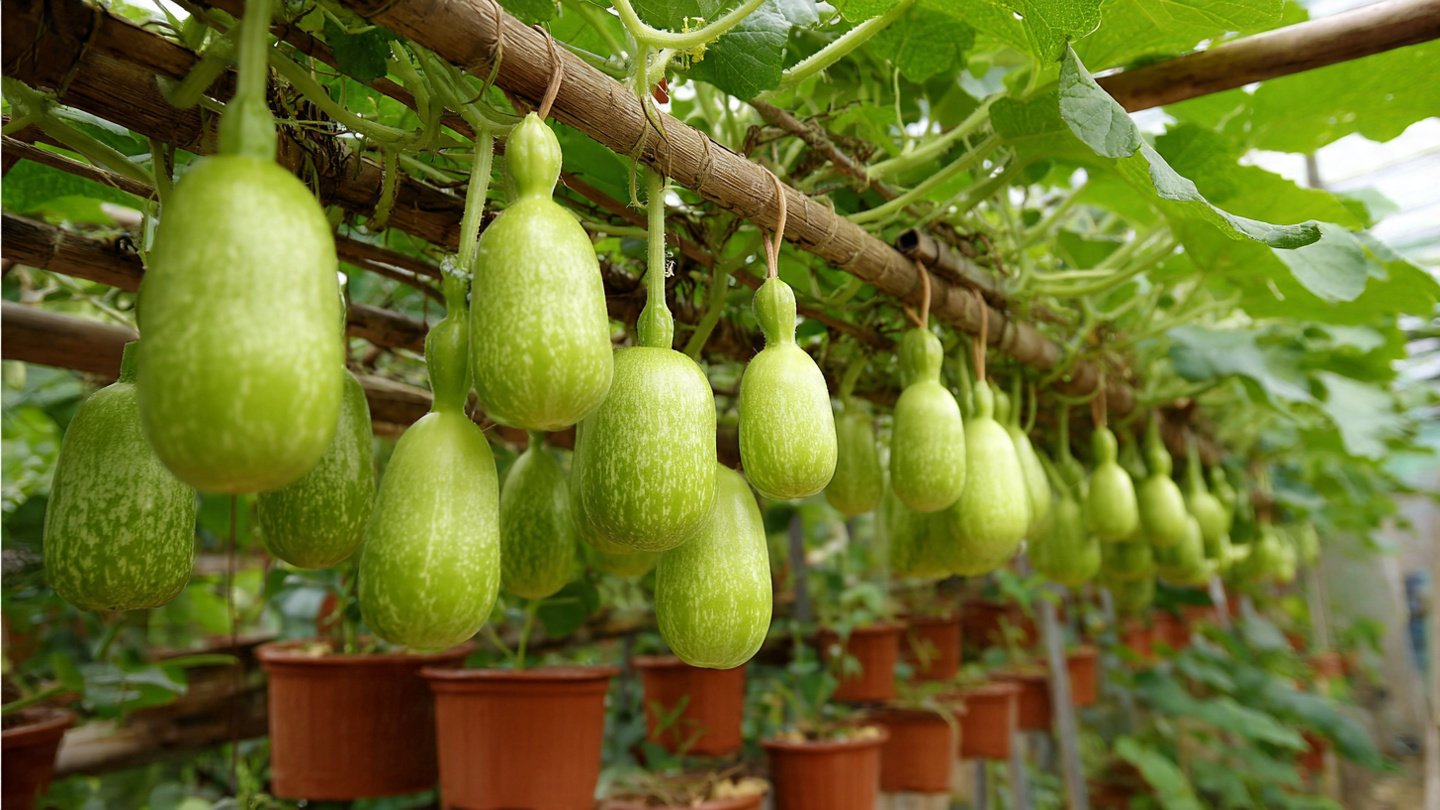
Bottle gourd (Lagenaria siceraria) is a versatile and nutritious vegetable popular in many cuisines worldwide. Its elongated, green fruits are not only delicious but also rich in vitamins, minerals, and antioxidants. Traditionally, bottle gourd plants are vigorous climbers, often requiring large trellises or ample garden space. However, with compact varieties and proper techniques, it’s possible to grow bottle gourd at home—even in small gardens, balconies, or containers. This guide explores easy and effective methods for cultivating compact bottle gourd for a healthy, abundant harvest.
1. Why Choose Compact Bottle Gourd Varieties
Compact varieties of bottle gourd have been bred specifically for limited spaces:
- Space Efficiency: Ideal for home gardens, balconies, and container planting.
- Early Harvest: Many compact varieties mature faster than traditional vine types.
- Ease of Maintenance: Smaller vines are easier to manage, prune, and trellis.
- Consistent Fruit Size: Compact varieties often produce uniform, tender gourds.
- Higher Yield per Area: Dense planting is possible without overcrowding.
Popular compact varieties include ‘Pusa Summer Prolific’, ‘Husk’, and ‘Mini Bottle’, which are well-suited for home cultivation.
2. Choosing the Right Planting Site
Even compact bottle gourd needs sunlight and support for healthy growth:
- Sunlight Requirements: Select a location that receives 6–8 hours of direct sunlight daily.
- Air Circulation: Good airflow reduces fungal infections and pest infestations.
- Support Structures: Use trellises, cages, or stakes to guide the vines upward, even for compact varieties.
- Proximity to Water Source: Easy access to water makes regular irrigation simpler.
A sunny, well-ventilated spot is essential to ensure strong growth and abundant flowering.
3. Soil Preparation
Healthy soil forms the foundation of compact bottle gourd cultivation:
- Soil Type: Well-draining, loamy soil rich in organic matter works best.
- pH Level: Slightly acidic to neutral soil (pH 6.0–7.0) promotes nutrient availability.
- Soil Enrichment: Mix compost, well-rotted manure, or vermicompost to provide essential nutrients.
- Raised Beds or Containers: If garden space is limited, raised beds or large containers (18–24 inches deep) support healthy root development.
Good soil preparation enhances fruit quality and plant vigor, especially in compact varieties.
4. Seed Selection and Sowing
Starting with quality seeds ensures successful growth:
- Seed Choice: Purchase certified seeds of compact varieties for consistent growth and fruiting.
- Sowing Method: Seeds can be sown directly in soil or in nursery trays for early germination.
- Depth: Sow seeds 1–2 inches deep in well-drained soil.
- Spacing: For compact varieties, maintain 18–24 inches between plants to allow enough room for airflow and light.
- Germination Conditions: Keep soil moist and warm (25–30°C) for germination, which usually occurs in 7–10 days.
Starting with healthy seeds maximizes germination success and uniform plant growth.
5. Watering and Moisture Management
Proper watering is crucial for compact bottle gourd:
- Regular Irrigation: Maintain consistent soil moisture, especially during flowering and fruit development.
- Avoid Waterlogging: Excess water can cause root rot and fungal infections.
- Drip Irrigation: Ideal for container or home gardens, reduces water waste and prevents leaf wetting.
- Mulching: Apply straw, dry leaves, or organic mulch around plants to retain moisture, regulate soil temperature, and suppress weeds.
Balanced watering ensures healthy leaves, strong vines, and tender fruits.
6. Providing Support for Compact Vines
Even compact varieties benefit from vertical growth:
- Trellising: Use bamboo sticks, wire mesh, or netting to guide vines upward.
- Cages: Small tomato cages work well for container-grown bottle gourd.
- Training Young Vines: Gently wrap vines around supports to prevent sprawling on the ground.
- Benefits of Vertical Growth: Improved airflow reduces fungal disease risk, keeps fruits clean, and makes harvesting easier.
Proper support ensures compact, organized plants with higher yields.
7. Fertilization for Compact Bottle Gourd
Fertilizing at the right time promotes healthy growth and fruiting:
- Pre-Planting Enrichment: Mix compost or well-rotted manure into soil before planting.
- Nitrogen, Phosphorus, and Potassium (NPK): Apply balanced fertilizer (10-10-10) every 3–4 weeks.
- Flowering Stage: Increase potassium slightly to promote flowering and fruit development.
- Organic Alternatives: Fish emulsion, compost tea, or vermicompost provide nutrients gradually.
- Avoid Overfertilization: Too much nitrogen encourages leaf growth at the expense of flowers and fruits.
Proper feeding ensures vibrant leaves, abundant flowers, and high-quality fruits.
8. Pruning and Vine Management
Pruning is key to keeping compact bottle gourd productive and manageable:
- Remove Dead Leaves: Prevents disease and improves airflow.
- Trim Excess Lateral Shoots: Focus energy on main stems and fruit-bearing vines.
- Control Vine Length: For container plants, prune longer shoots to maintain compact growth.
- Pinching: Pinch vine tips to encourage branching and more flowering sites.
Regular pruning enhances plant structure and fruiting efficiency.
9. Pollination Tips
Bottle gourd flowers are unisexual, so proper pollination ensures fruit set:
- Natural Pollination: Bees and other insects can pollinate flowers.
- Hand Pollination: In low insect activity, gently transfer pollen from male to female flowers using a small brush.
- Flower Observation: Female flowers have a small swelling at the base; male flowers appear on longer stems.
- Timing: Pollinate in the morning for best results.
Proper pollination increases fruit set and overall yield, especially in compact home gardens.
10. Pest and Disease Management
Even compact bottle gourd plants can face challenges:
- Common Pests: Aphids, whiteflies, fruit flies, and mites. Use neem oil or insecticidal soap as needed.
- Fungal Diseases: Powdery mildew, downy mildew, and leaf spot may occur in humid conditions. Remove affected leaves and maintain airflow.
- Preventive Measures: Avoid overhead watering, provide trellis support, and rotate crops yearly in outdoor beds.
Vigilant monitoring keeps plants healthy and productive.
11. Harvesting Tips
Timely harvesting ensures tender fruits and encourages continuous production:
- Fruit Size: Harvest when bottle gourd reaches 6–12 inches long (depending on variety).
- Tenderness: Compact varieties are best harvested when young and tender.
- Regular Picking: Frequent harvesting encourages more flowers and fruits.
- Clean Handling: Cut fruits with a sharp knife to prevent vine damage.
Proper harvesting practices maximize yield and fruit quality.
12. Growing Bottle Gourd in Containers
Container gardening is ideal for compact varieties:
- Pot Size: 18–24 inches diameter, 18–24 inches deep.
- Soil Mix: Use a combination of potting soil, compost, and perlite for drainage.
- Support: Use a small trellis or tomato cage for vine training.
- Mobility: Containers can be moved to ensure optimal sunlight.
Container-grown bottle gourd is perfect for patios, balconies, and small gardens.
13. Advantages of Compact Bottle Gourd
- Space-Saving: Suitable for small gardens and containers.
- Early Maturity: Produces fruits faster than sprawling varieties.
- High Yield per Area: Can plant more per square foot without overcrowding.
- Ease of Maintenance: Trellising and pruning are simpler with shorter vines.
- Uniform Fruits: Compact varieties produce consistent, tender fruits.
Compact bottle gourd is a home gardener’s ideal choice for nutrition and convenience.
14. Common Mistakes to Avoid
- Neglecting Trellis Support: Leads to sprawling vines and wasted space.
- Overwatering: Causes root rot and fungal infections.
- Ignoring Fertilization Needs: Poor nutrient supply reduces fruit size and yield.
- Failure to Prune: Excess lateral growth reduces flowering and fruiting efficiency.
- Poor Pollination: Without insect activity or hand pollination, fruit set may be low.
Avoiding these mistakes ensures healthy, productive compact bottle gourd plants.
Conclusion
Growing compact bottle gourd at home is easy, rewarding, and space-efficient with the right techniques. By selecting the right variety, providing proper soil, water, and sunlight, and employing trellis support and pruning, gardeners can enjoy abundant, tender fruits even in limited spaces.
Key steps include:
- Choosing compact, high-yield varieties.
- Preparing nutrient-rich, well-draining soil.
- Providing consistent moisture without overwatering.
- Training vines on trellises and pruning regularly.
- Monitoring pests and practicing proper pollination.
With patience and care, even small home gardens, balconies, or patios can yield healthy, delicious bottle gourd fruits throughout the growing season. Compact bottle gourd plants combine nutritional value, convenience, and aesthetic appeal, making them an ideal choice for home gardeners looking for fresh, homegrown produce.