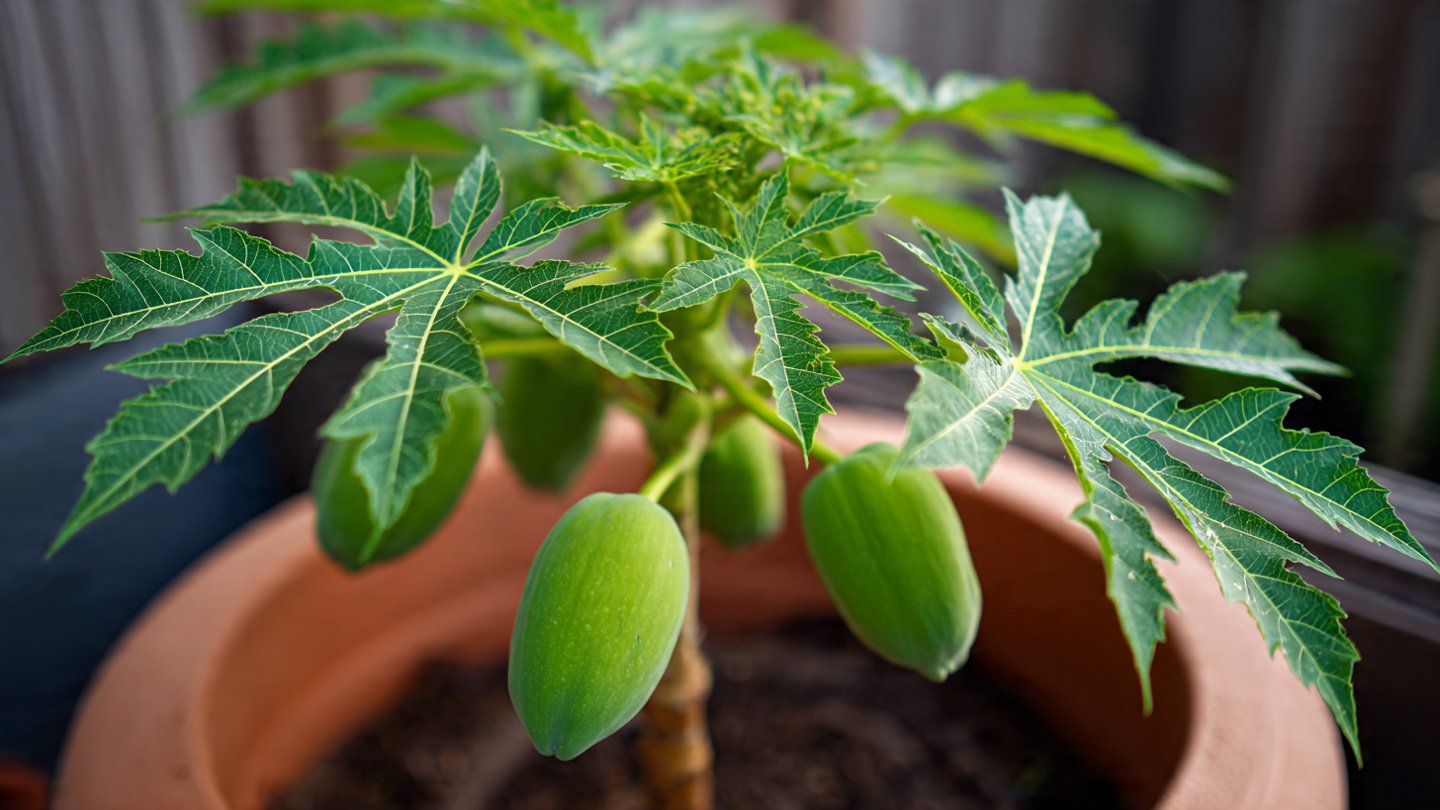
Papaya, often called the “fruit of the angels,” is a tropical delight known for its sweet, juicy flavor and impressive health benefits. Packed with vitamins A, C, and E, antioxidants, digestive enzymes, and fiber, papaya promotes digestion, boosts immunity, and supports overall wellness. Imagine harvesting fresh, organic papayas right from your home—even if you don’t have a garden. With the container-growing method, this is entirely possible!
Growing papaya in a container from seeds is not only practical for small spaces like balconies and terraces, but it also allows you to control soil quality, watering, and sunlight, ensuring healthy growth and bountiful fruiting. This step-by-step guide will make it easy for beginners to cultivate papaya plants successfully and enjoy their first harvest within months.
Why Grow Papaya in Containers?
Container gardening is perfect for papaya due to the plant’s fast growth and space flexibility. Here are the key advantages:
- Space Efficiency: Even a small balcony or terrace can support one or more papaya plants.
- Controlled Soil: Using containers allows you to provide fertile, well-draining soil that promotes healthy root development.
- Pest and Disease Management: Elevated containers reduce exposure to soil-borne pests and fungal infections.
- Mobility: Containers can be moved to optimize sunlight or protect plants during heavy rain or extreme heat.
- Faster Growth and Fruit Production: Healthy container-grown papayas can produce fruits within 8–12 months, faster than traditional garden planting.
Choosing the Right Papaya Seeds
Selecting good seeds is the first step to growing healthy papaya plants. Consider the following:
- Variety: Opt for high-yielding, disease-resistant varieties like Red Lady, Solo, or Sunrise. These varieties are ideal for container growth and produce sweet, juicy fruits.
- Seed Source: Purchase seeds from trusted nurseries or extract seeds from ripe, organic papayas. Fresh seeds have higher germination rates.
- Seed Quality: Choose plump, dark brown seeds. Avoid seeds that are shriveled, pale, or damaged.
Preparing Papaya Seeds for Planting
Papaya seeds have a gelatinous coating that can slow germination. Proper preparation improves success rates:
- Extract Seeds: Scoop seeds from a ripe papaya and rinse them under running water to remove the gelatinous layer.
- Drying (Optional): Pat the seeds dry for 1–2 hours. Avoid prolonged drying, as it can reduce germination.
- Soaking: Soak seeds in water for 24 hours before planting. This softens the seed coat and encourages faster sprouting.
Selecting the Right Container
Papaya plants grow fast and develop strong roots, so a suitable container is crucial for healthy growth:
- Size: Use containers at least 15–20 inches deep and 18–24 inches wide. Large containers support root expansion and reduce the risk of stunted growth.
- Drainage: Ensure multiple drainage holes at the bottom to prevent waterlogging.
- Material: Plastic pots are lightweight, durable, and easy to move. Avoid thin or flimsy containers that may crack under sun exposure.
Preparing the Soil Mix
Papayas thrive in fertile, well-draining soil. A nutrient-rich soil mix encourages fast growth and early fruiting:
Recommended Soil Mix for Papaya Containers:
- 40% Garden Soil
- 30% Compost or Vermicompost
- 20% Cocopeat or Perlite for aeration
- 10% Sand for drainage
Tip: Add a handful of organic fertilizer or bone meal to enrich the soil and support early root development.
Planting Papaya Seeds
Planting papaya seeds in containers is simple if you follow these steps:
- Fill the container with the prepared soil mix, leaving 2–3 inches at the top.
- Plant 2–3 seeds per container at a depth of about 0.5–1 inch.
- Cover lightly with soil and water gently to keep the soil moist but not waterlogged.
- Place the container in a warm, sunny location receiving 6–8 hours of sunlight daily.
Germination Time: Papaya seeds usually sprout within 2–3 weeks, depending on temperature and seed freshness.
Caring for Young Papaya Seedlings
Once seedlings emerge, proper care ensures strong growth and healthy development:
Thinning
- When seedlings reach 4–6 inches in height, thin them to leave the strongest plant per container.
- Gently snip weaker seedlings at soil level to avoid disturbing the healthy plant.
Watering
- Keep soil consistently moist but avoid waterlogging.
- Water early in the morning or late in the evening to reduce evaporation.
Sunlight
- Papayas require full sun to grow fast and produce fruits. Ensure 6–8 hours of direct sunlight daily.
- For container-grown plants, rotate the pot occasionally to ensure even sunlight exposure.
Fertilization
- Feed young plants with a balanced organic fertilizer every 2–3 weeks.
- Nitrogen-rich fertilizers encourage leafy growth, while phosphorus and potassium promote flowering and fruiting as the plant matures.
Supporting Papaya Growth
Papaya plants are fast-growing and can become top-heavy, especially when fruiting. Proper support is important:
- Staking: Use bamboo stakes or garden stakes to support young plants. Tie the stem loosely with soft ties.
- Wind Protection: Container-grown papayas are more vulnerable to wind. Place pots near walls or use temporary wind barriers during strong winds.
- Mulching: Apply organic mulch around the base to retain moisture, regulate soil temperature, and reduce weeds. Keep mulch away from the stem to prevent rotting.
Flowering and Fruiting
Papaya plants are typically dioecious (male and female flowers on separate plants), but some varieties produce hermaphrodite flowers, which are self-pollinating and ideal for container growth.
- Pollination: Hermaphrodite flowers do not require external pollination. If you have separate male and female plants, gently transfer pollen from male to female flowers using a small brush.
- Flowering Time: Papayas usually flower within 5–7 months when grown from seeds in optimal conditions.
- Fruit Development: After successful pollination, fruits develop quickly and can be harvested in 6–12 months, depending on variety and growing conditions.
Harvesting Papayas
Knowing when to harvest ensures sweet, juicy fruits:
- Fruits are ready when skin color changes from green to yellowish.
- For container-grown papayas, you can harvest slightly immature fruits and let them ripen off the plant.
- Gently cut the fruit using a sharp knife to avoid damaging the plant.
- Regular harvesting encourages the plant to produce more fruits.
Common Challenges and Solutions
Even container-grown papayas can face minor issues. Here’s how to handle them:
- Pests: Aphids, spider mites, and fruit flies can attack leaves and fruits. Use organic sprays like neem oil or garlic solution for control.
- Diseases: Powdery mildew, root rot, and leaf spot are common. Avoid overwatering and ensure proper airflow around the plant.
- Nutrient Deficiency: Yellowing leaves may indicate lack of nitrogen or magnesium. Apply organic fertilizer or compost to correct deficiencies.
- Poor Fruit Set: Ensure full sunlight, proper fertilization, and adequate pollination.
Benefits of Growing Papaya at Home
Growing papaya in containers has multiple advantages:
- Fresh, Organic Fruit: Chemical-free, nutrient-rich, and delicious.
- Compact Gardening: Perfect for urban spaces, terraces, and balconies.
- Rapid Growth and Early Harvest: Container-grown papayas can bear fruit in under a year.
- Therapeutic Gardening: Watching seeds transform into fruit-bearing plants is rewarding and stress-relieving.
- Health Benefits: Papayas are excellent for digestion, skin health, immunity, and overall wellness.
Extra Tips for Thriving Container Papayas
- Rotate pots regularly to ensure uniform sunlight.
- Use self-watering containers to reduce maintenance.
- Pair with companion plants like marigold or basil to naturally repel pests.
- Maintain consistent watering and fertilization schedules.
- Keep a growth journal to track plant health, flowering, and fruiting stages.
Conclusion
Growing papaya in containers from seeds is an easy and rewarding way to enjoy fresh, healthy fruits at home. By following the step-by-step method—selecting quality seeds, preparing fertile soil, using suitable containers, providing sunlight, watering properly, supporting growth, and managing pests—even beginners can cultivate strong, productive papaya plants.
With patience and consistent care, your container-grown papaya can provide sweet, juicy fruits within a year, adding beauty, nutrition, and flavor to your home. This simple and efficient approach to growing papayas brings the joy of gardening into small spaces and allows anyone to experience the satisfaction of harvesting fresh, homegrown papayas.
Start your container papaya garden today and enjoy the magic of homegrown tropical fruits!