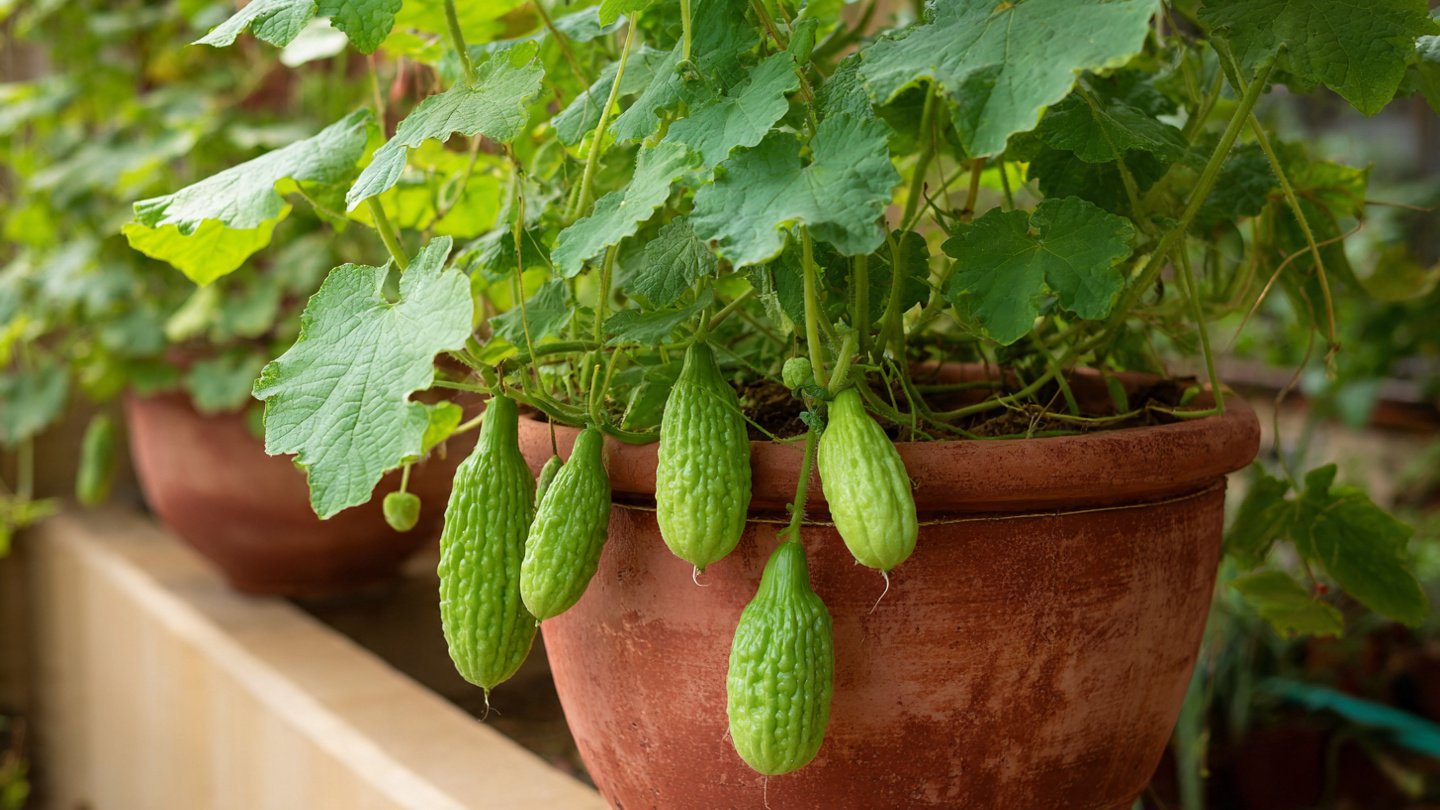
Bitter gourd, also known as karela, is a nutrient-rich vegetable widely loved for its medicinal value and unique flavor. Thanks to modern plant breeding, hybrid bitter gourd varieties now offer higher yields, better disease resistance, and faster growth—making them ideal for urban container gardening. Even if you live in an apartment or have limited space, you can easily grow healthy, productive bitter gourd plants in pots on your balcony, terrace, or rooftop.
This complete guide will walk you through every step of growing hybrid bitter gourd in pots, from seed selection to harvesting, ensuring success even for beginners.
Why Choose Hybrid Bitter Gourd for Pot Gardening?
Hybrid bitter gourd varieties are specially developed to perform well in controlled environments like containers. They offer several advantages over traditional varieties:
- Higher yield in limited space
- Uniform fruit size and shape
- Early harvesting
- Better resistance to pests and diseases
- Faster growth cycle
Popular hybrid varieties include Pusa Hybrid, Priya Hybrid, US 6214, and Co 1 Hybrid, all suitable for pot cultivation.
Step 1: Choosing the Right Pot or Container
Selecting the correct container is critical for healthy root development and good yields.
Ideal Pot Size
- Minimum depth: 14–16 inches
- Minimum width: 16–18 inches
- Volume: 20–25 liters per plant
Bitter gourd has a deep root system, so shallow pots will limit growth and reduce fruiting.
Best Container Materials
- Plastic grow bags
- Clay or terracotta pots
- Cement pots
- Fabric grow bags
Ensure the container has multiple drainage holes to prevent waterlogging.
Step 2: Preparing the Perfect Potting Mix
A loose, nutrient-rich, and well-draining soil mix is essential for growing hybrid bitter gourd in pots.
Ideal Potting Mix Recipe
- 40% garden soil
- 30% well-rotted compost or vermicompost
- 20% coco peat or river sand
- 10% neem cake or organic manure
Mix thoroughly before filling the pot. This blend supports strong roots, healthy vines, and abundant flowering.
Step 3: Seed Selection and Pre-Treatment
Always choose fresh, certified hybrid seeds from a trusted source.
Seed Preparation Tips
- Soak seeds in water for 8–10 hours before sowing
- You can lightly rub the seed coat with sandpaper to speed germination
- Dry seeds in shade for 30 minutes before planting
This improves germination rate and early growth.
Step 4: Sowing Hybrid Bitter Gourd Seeds in Pots
How to Sow
- Fill the pot with prepared soil mix, leaving 2 inches at the top
- Sow 2 seeds per pot at a depth of 1–1.5 inches
- Cover lightly with soil and water gently
- Place the pot in a sunny location
Germination Time
- Seeds sprout within 5–8 days
- Once seedlings grow 4–5 leaves, retain the healthiest plant
Step 5: Sunlight Requirements
Hybrid bitter gourd is a sun-loving climber.
- Requires 6–8 hours of direct sunlight daily
- Best placement: south- or west-facing balcony or terrace
- Insufficient sunlight leads to poor flowering and low fruit set
If sunlight is limited, reflective surfaces or grow lights can help.
Step 6: Watering Schedule for Pots
Proper watering is key to preventing bitterness imbalance and flower drop.
Watering Tips
- Water deeply when the top 1–2 inches of soil feels dry
- Avoid daily shallow watering
- In summer, water once daily in the morning
- In cooler weather, water every 2–3 days
Never allow water to stagnate in the pot, as it causes root rot.
Step 7: Providing Support and Trellis
Bitter gourd is a vigorous climber, and proper support improves yield and air circulation.
Support Options
- Bamboo poles arranged in a teepee shape
- Nylon net or plastic trellis
- Balcony railing with garden twine
- Vertical metal trellis
Train vines upward gently once they reach 10–12 inches.
Step 8: Fertilizing for Healthy Growth and High Yield
Hybrid bitter gourd plants are heavy feeders, especially in pots.
Organic Feeding Schedule
- Every 10–12 days: liquid compost tea or vermiwash
- Every 20 days: top-dress with vermicompost
- Monthly: banana peel water or potassium-rich fertilizer
Avoid Excess Nitrogen
Too much nitrogen promotes leaves but reduces flowering and fruiting.
Step 9: Pollination Tips for Container Plants
In open gardens, insects pollinate bitter gourd naturally. In urban settings, manual pollination may improve yield.
Hand Pollination Method
- Identify male (thin stem) and female flowers (small fruit at base)
- Use a soft brush or cotton swab
- Transfer pollen from male to female flower early morning
This significantly boosts fruit set in balcony gardens.
Step 10: Pruning and Vine Management
Pruning helps redirect energy toward fruit production.
Pruning Tips
- Pinch the main vine after 5–6 nodes
- Remove excessive side shoots and yellow leaves
- Trim overcrowded growth to improve airflow
This encourages more female flowers and healthier vines.
Step 11: Pest and Disease Control (Organic Methods)
Common pests include aphids, whiteflies, and fruit flies.
Natural Pest Control
- Neem oil spray every 7–10 days
- Soap water spray for aphids
- Yellow sticky traps for flying insects
Disease Prevention
- Ensure good drainage
- Avoid wet leaves
- Remove infected leaves immediately
Healthy plants are far less prone to problems.
Step 12: Flowering and Fruiting Stage
Hybrid bitter gourd starts flowering 30–35 days after sowing.
- Male flowers appear first
- Female flowers follow in 7–10 days
- Fruits develop quickly after pollination
Consistent watering and feeding during this stage are crucial.
Step 13: Harvesting Hybrid Bitter Gourd
When to Harvest
- Fruits are ready 12–15 days after flowering
- Harvest when fruits are green, tender, and firm
- Overripe fruits turn yellow and become very bitter
Harvesting Tips
- Use clean scissors or pruning shears
- Harvest every 2–3 days to encourage continuous production
One healthy plant can produce 20–30 fruits in a season.
Step 14: Seasonal Care and Growing Duration
- Best seasons: Spring–Summer and Monsoon
- Ideal temperature: 22–35°C
- Growth cycle: 90–120 days
In mild climates, plants can continue producing longer with good care.
Step 15: Common Problems and Solutions
| Problem | Cause | Solution |
|---|---|---|
| Flower drop | Heat stress or lack of nutrients | Improve watering & feeding |
| No fruits | Poor pollination | Hand pollinate |
| Yellow leaves | Overwatering or deficiency | Improve drainage, add compost |
| Bitter taste too strong | Irregular watering | Maintain consistent moisture |
Conclusion
Growing hybrid bitter gourd in pots is a rewarding and practical solution for urban gardeners with limited space. With the right pot size, nutrient-rich soil, adequate sunlight, proper watering, and regular feeding, you can enjoy a steady supply of fresh, homegrown karela right from your balcony or terrace.
Hybrid varieties make container gardening easier by offering better yield, faster growth, and improved resistance. Whether you are a beginner or an experienced gardener, following this step-by-step guide will help you grow healthy vines and harvest abundant, high-quality bitter gourds throughout the season.
With a little care and consistency, your urban garden can become a productive green space full of nutritious vegetables—starting with hybrid bitter gourd.