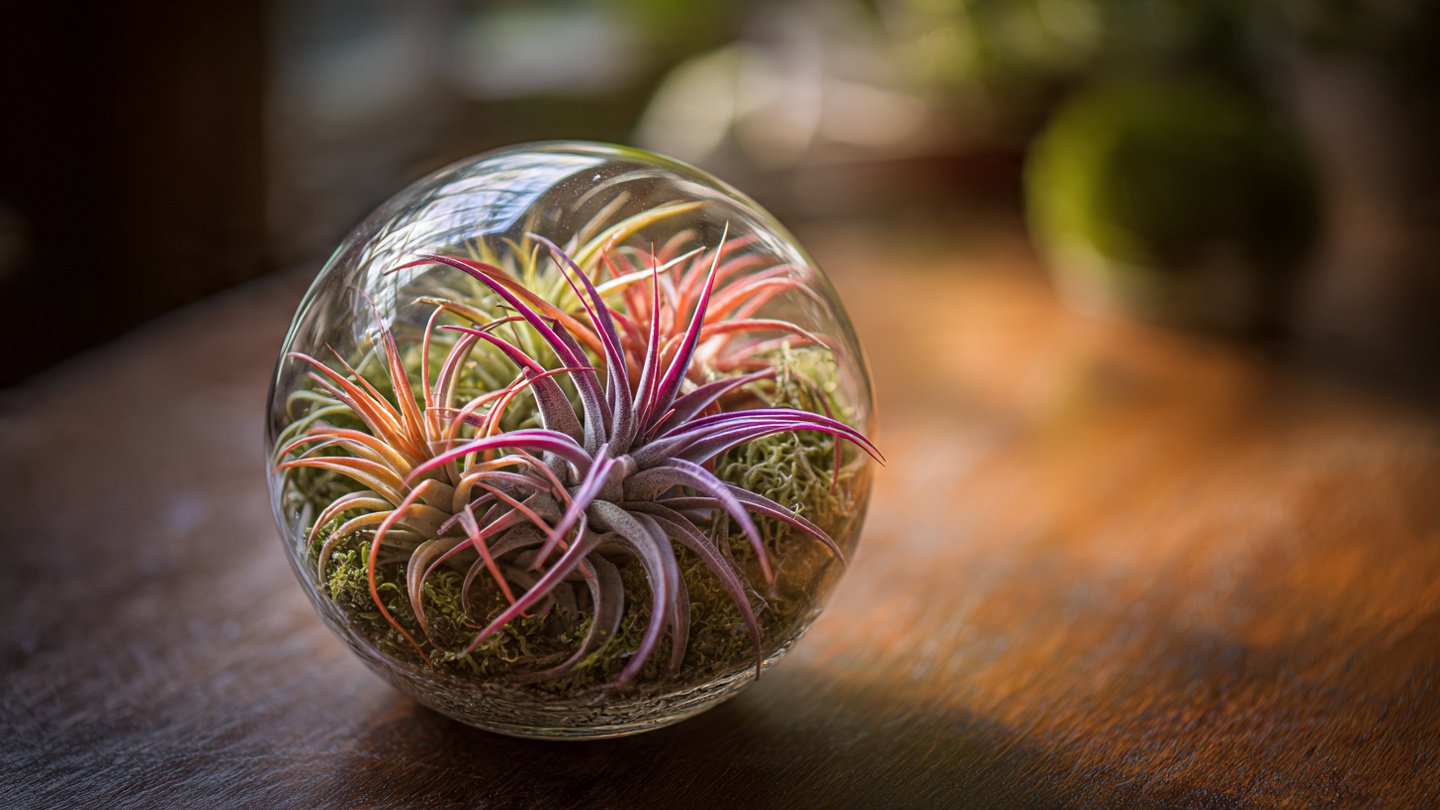
Tillandsia, commonly known as air plants, are one of the most unique and fascinating plants to grow at home. Unlike most plants, air plants don’t require soil to thrive—they absorb nutrients and moisture directly from the air through tiny scales on their leaves called trichomes. This makes them ideal candidates for creative displays, such as glass globes, terrariums, and hanging ornaments.
If you’ve ever admired these floating beauties in a store or online and wondered how to care for them, this complete guide will walk you through everything you need to know to grow Tillandsia in a glass globe successfully.
Why Grow Tillandsia in a Glass Globe?
Growing Tillandsia in a glass globe is more than just a decorative choice. Here’s why it’s a favorite among plant enthusiasts:
- Aesthetic appeal: Glass globes highlight the plant’s sculptural beauty and create a floating, ethereal effect.
- Space-saving: Perfect for apartments, offices, or small rooms.
- Versatility: Can be hung, placed on shelves, or used as table centerpieces.
- Easy to display: No soil, no mess—ideal for modern interior décor.
However, because glass globes are enclosed and small, proper care is essential to prevent moisture build-up, rot, or insufficient airflow.
Choosing the Right Tillandsia for Your Globe
Not all air plants are created equal. Some thrive better in the confined space of a globe, while others need more air circulation. Here are some popular choices:
- Tillandsia ionantha: Small, colorful, and highly adaptable. Perfect for beginners.
- Tillandsia bulbosa: Curly leaves and unique shape add a sculptural look.
- Tillandsia xerographica: Larger, slow-growing, and striking for statement displays.
- Tillandsia stricta: Hardy and resilient, with compact growth.
When choosing your plant, consider size and growth habit to ensure it fits comfortably inside your globe without being crowded.
Selecting the Perfect Glass Globe
Glass globes come in various shapes and sizes, and choosing the right one is essential for your air plant’s health.
Tips for selecting a globe:
- Size matters: Make sure there’s enough room for the plant to expand slightly. Crowding can lead to stress or mold.
- Openings: Opt for globes with an opening large enough to allow easy watering and airflow. Completely sealed globes are risky.
- Shape: Hanging globes create a floating effect, while flat-bottomed globes can sit on shelves or tables.
- Material quality: Choose clear, durable glass for visibility and aesthetic appeal.
A globe with a wide opening not only simplifies watering but also allows good air circulation, which is critical for Tillandsia.
Preparing Your Glass Globe for Planting
Before adding your Tillandsia, it’s a good idea to clean and prepare your globe:
- Wash the globe thoroughly with warm, soapy water to remove dust or residues.
- Rinse completely to remove soap traces that can harm the plant.
- Dry completely—plants placed in a wet globe may develop rot.
- Add optional decorative elements like pebbles, sand, or moss, but keep them minimal to avoid trapping moisture.
Remember, air plants don’t need soil, so your decorations are purely for aesthetics and support.
Planting Tillandsia in a Glass Globe
Placing your air plant in a globe is simple but requires care:
- Position the plant carefully: Hold the plant gently by the base and place it inside the globe. Avoid bending the leaves.
- Avoid overcrowding: Give leaves room to breathe; proper spacing reduces the risk of rot.
- Use lightweight support: If needed, small pebbles or a wire hook can stabilize the plant without obstructing airflow.
- Consider lighting: Place the globe near indirect sunlight or bright indoor light to encourage growth and vibrancy.
Once positioned, you’re ready for the most critical step: watering and care.
Watering Tillandsia in a Glass Globe
Watering is the most common challenge for air plant enthusiasts, especially in enclosed globes.
Key tips:
- Frequency: Mist 2–3 times per week or remove the plant from the globe for a soak in room-temperature water for 20–30 minutes once a week.
- Drain excess water: After soaking, gently shake off excess water and allow the plant to dry completely before returning it to the globe.
- Avoid standing water: Water should never pool at the bottom of the globe, as this causes rot.
- Humidity adjustment: In dry climates, you may need to mist more frequently, while in humid environments, reduce watering to prevent fungal issues.
Pro tip: Turn the globe slightly during drying to ensure all leaves dry evenly.
Providing Adequate Light
Tillandsia thrives in bright, indirect sunlight. Direct sunlight through glass can magnify heat and scorch the leaves, so positioning is important.
- Ideal spots: Near north or east-facing windows, bright bathrooms, or under fluorescent indoor lights.
- Artificial lighting: If natural light is insufficient, full-spectrum grow lights for 10–12 hours a day work well.
- Rotation: Rotate the globe occasionally to ensure even light distribution on all sides of the plant.
Feeding Your Air Plant
Although air plants can survive without fertilizer, feeding promotes faster growth and vibrant color:
- Use bromeliad or Tillandsia fertilizer diluted to 1/4 strength.
- Apply once a month by misting the leaves lightly.
- Avoid adding fertilizer to the globe in liquid form without removing the plant first, as leftover solution can cause rot.
Maintaining Proper Air Circulation
Air circulation is essential for air plants:
- Open globes allow natural airflow and prevent stagnant moisture.
- Avoid placing the globe in a tight cabinet or fully enclosed terrarium unless you remove the plant regularly for drying.
- Use a small fan in low-airflow rooms if necessary.
Good airflow prevents fungal infections and leaf rot, which are common in closed environments.
Cleaning and Maintaining Your Globe
Regular maintenance keeps your display healthy and beautiful:
- Dusting the globe with a soft cloth enhances visibility.
- Occasional washing: Remove the plant and wash the globe every few weeks to prevent algae or mineral buildup.
- Inspect leaves: Trim any brown or damaged leaves to encourage new growth.
Maintenance is simple and ensures your Tillandsia continues to thrive in its stylish home.
Troubleshooting Common Problems
Even with careful care, air plants in globes can face challenges:
- Brown leaf tips: Usually caused by insufficient humidity or inconsistent watering. Increase misting frequency.
- Leaves curling inward: Often a sign of dehydration. Soak the plant and monitor water needs.
- Rotting base: Excess moisture or poor drying is usually the culprit. Ensure the plant dries completely after watering.
- Slow growth or dull color: Could indicate low light or lack of nutrients. Adjust lighting and fertilization.
With observation and small adjustments, these problems are usually easy to fix.
Creative Display Ideas for Glass Globes
Once you’ve mastered care, glass globes offer endless decorative possibilities:
- Hanging globes: Suspend from ceilings or hooks for floating displays.
- Table centerpieces: Place several globes together for a striking arrangement.
- Mini ecosystems: Add small decorative stones, sand, or driftwood to complement the air plant.
- Gift ideas: Air plants in globes make unique, low-maintenance gifts for friends and family.
The beauty of Tillandsia in a globe is its versatility—you can adapt it to any room or style.
Conclusion: Bringing Life to Your Space with Air Plants
Growing Tillandsia in a glass globe is both an art and a science. With the right plant, proper light, consistent watering, and good airflow, your air plant will not only survive but thrive and add a magical touch to your home.
Remember the key points:
- Select small, fast-growing Tillandsia varieties.
- Use a glass globe with a wide opening for airflow.
- Water carefully, ensuring the plant dries completely.
- Provide bright, indirect light.
- Fertilize monthly and maintain cleanliness.
By following this complete guide, even a beginner can enjoy the joy of floating greenery and the calming presence of air plants. Glass globes transform a simple Tillandsia into a living work of art, bringing life, color, and freshness to any indoor space.
Start today, and watch your air plant float, grow, and thrive in its elegant glass home.