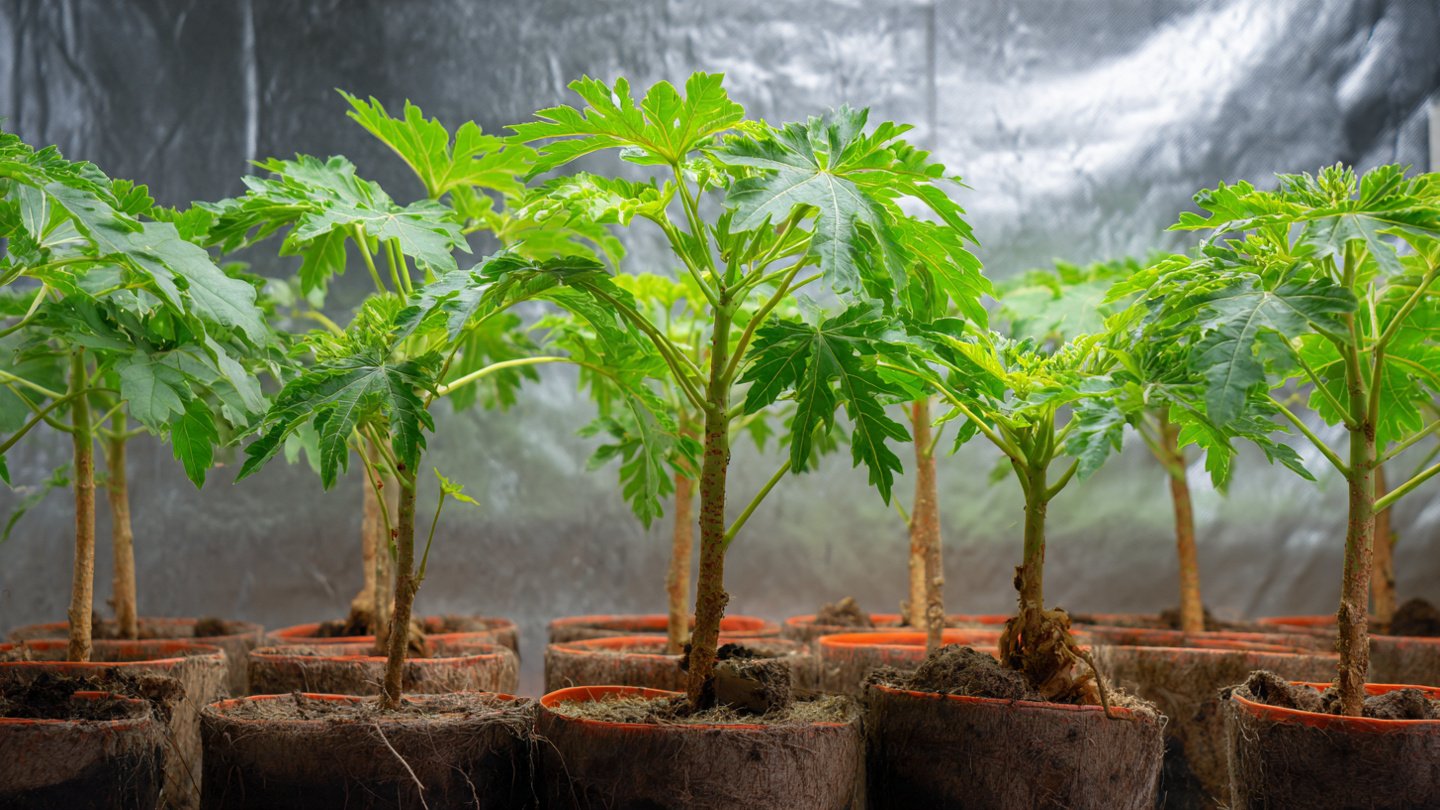
Papaya is one of the fastest-growing fruit plants, prized for its sweet taste, nutritional value, and year-round productivity in warm climates. Traditionally, papaya is grown from seed, but seed-grown plants often show uneven growth, uncertain fruit quality, and delayed fruiting. This is where papaya air layering comes in as a game-changing propagation technique.
Air layering allows you to produce a new papaya plant that is genetically identical to the parent plant, ensuring known fruit quality, faster establishment, and earlier fruiting. When done correctly, air-layered papaya plants can bear fruit significantly sooner than seed-grown ones. This guide explains exactly how to do papaya air layering the right way—from preparation to transplanting—so you can enjoy healthy plants and quicker harvests.
What Is Air Layering and Why Use It for Papaya?
Air layering is a vegetative propagation method where roots are induced to form on a stem while it is still attached to the parent plant. Once roots develop, the stem is cut and planted as a new individual.
Benefits of Papaya Air Layering
- Faster growth compared to seedlings
- Earlier fruiting (often months earlier)
- Guaranteed fruit quality
- Uniform plant size and performance
- Ideal for propagating superior or female plants
Unlike seeds, which can produce male, female, or hermaphrodite plants unpredictably, air layering ensures you reproduce a plant with known flowering and fruiting characteristics.
Is Papaya Suitable for Air Layering?
Papaya is semi-woody and hollow-stemmed, which makes air layering more challenging than with woody fruit trees—but it is absolutely possible with proper technique and timing.
Best results are achieved when:
- The parent plant is healthy and actively growing
- The stem is firm but not fully woody
- Temperature is warm (25–35°C / 77–95°F)
Air layering works best in tropical and subtropical climates.
Best Time to Perform Papaya Air Layering
Timing plays a critical role in success.
Ideal Season
- Late spring to early summer
- During active growth periods
- Avoid cold months and heavy monsoon periods
Warm temperatures and high humidity promote rapid root formation.
Selecting the Right Parent Plant
The quality of your air-layered papaya depends entirely on the parent plant.
Choose a plant that is:
- Disease-free
- Vigorous and fast-growing
- Already fruiting with good-quality papayas
- Preferably female or hermaphrodite
Avoid weak, pest-infested, or nutrient-deficient plants.
Tools and Materials Needed
Keep everything ready before starting:
- Sharp, sterilized knife or blade
- Rooting hormone (optional but recommended)
- Moist coco peat, sphagnum moss, or compost
- Plastic wrap or polyethylene sheet
- Twine or rubber bands
- Aluminum foil or black plastic (optional)
Clean tools prevent infections and increase success rates.
Step-by-Step Guide to Papaya Air Layering
Step 1: Choose the Right Branch
Select a healthy branch:
- Thickness of a pencil or slightly thicker
- Located 2–4 feet above ground
- Free of flowers and fruits
Avoid very young green shoots or very old woody stems.
Step 2: Girdle the Stem
- Make two circular cuts around the stem about 1–1.5 inches apart
- Carefully remove the bark layer between the cuts
- Scrape lightly to remove the cambium layer
This prevents nutrients from flowing downward and encourages root formation.
Step 3: Apply Rooting Hormone
Although optional, rooting hormone greatly improves success.
- Apply powder or gel rooting hormone to the exposed area
- Use hormones containing IBA or NAA for best results
This step speeds up root initiation and strengthens root development.
Step 4: Wrap with Moist Growing Medium
- Take a handful of moist (not dripping wet) coco peat or sphagnum moss
- Pack it around the girdled area
- Ensure full contact with the exposed stem
The medium should retain moisture while allowing airflow.
Step 5: Secure the Wrap
- Cover the medium with plastic wrap
- Tie both ends tightly with twine or rubber bands
- Optionally wrap with aluminum foil to block sunlight
Make sure the wrap is sealed to prevent moisture loss.
Care During Root Development
Roots typically begin forming within 3–6 weeks, depending on conditions.
Monitoring Tips
- Check moisture weekly
- Re-moisten if medium feels dry
- Avoid opening frequently
A successful air layer will show white or cream-colored roots pressing against the plastic.
When and How to Separate the Air Layer
Once roots are well-developed:
Signs It’s Ready
- Dense root growth visible through plastic
- Roots at least 2–3 inches long
Separation Process
- Cut the stem just below the rooted section
- Use a clean, sharp tool
- Handle gently to avoid damaging roots
Transplanting the Air-Layered Papaya
Potting First Is Best
Do not plant directly into the ground immediately.
- Use a medium-sized pot with drainage holes
- Fill with light, well-draining soil
- Place the rooted layer carefully and cover roots gently
Aftercare
- Keep in partial shade for 10–14 days
- Water lightly but consistently
- Avoid direct sunlight initially
Gradually acclimate the plant to full sun.
Planting in the Ground
After 2–3 weeks of pot establishment:
- Choose a sunny, well-drained location
- Dig a wide planting hole
- Add compost but avoid excess nitrogen
- Water deeply after planting
Spacing should be at least 6–8 feet between plants.
How Air Layering Leads to Faster Fruiting
Because air-layered papaya plants are physiologically mature, they skip early juvenile stages.
What to Expect
- Faster flowering
- Earlier fruit set
- More uniform fruit quality
- Shorter time to harvest
In favorable conditions, air-layered papaya may fruit 3–5 months earlier than seed-grown plants.
Common Problems and Solutions
No Root Formation
- Cause: Dry medium or poor timing
- Solution: Maintain moisture and perform during active growth
Rotting at Layer Site
- Cause: Excess moisture or poor airflow
- Solution: Use lightly moist medium and proper sealing
Weak Roots
- Cause: Skipping rooting hormone
- Solution: Use hormone and allow more time before cutting
Advantages Over Seed-Grown Papaya
| Feature | Air Layered | Seed Grown |
|---|---|---|
| Fruit Quality | Guaranteed | Variable |
| Fruiting Time | Early | Delayed |
| Plant Type | Known | Uncertain |
| Growth Uniformity | High | Inconsistent |
Tips for Higher Success Rates
- Perform air layering in warm weather
- Always use healthy parent plants
- Maintain consistent moisture
- Avoid disturbing the layer too often
- Pot before ground planting
Even beginners can achieve success by following these steps carefully.
Final Thoughts
Papaya air layering is a powerful propagation method that offers faster growth, predictable results, and early fruiting. While it requires a bit more care than seed sowing, the rewards are well worth the effort—especially if you want consistent fruit quality and quicker harvests.
By choosing the right parent plant, following proper layering techniques, and providing gentle aftercare, you can successfully grow strong papaya plants that begin producing fruit sooner and more reliably. For home gardeners and small growers alike, air layering is an excellent way to multiply high-performing papaya plants and enjoy fresh fruit faster.