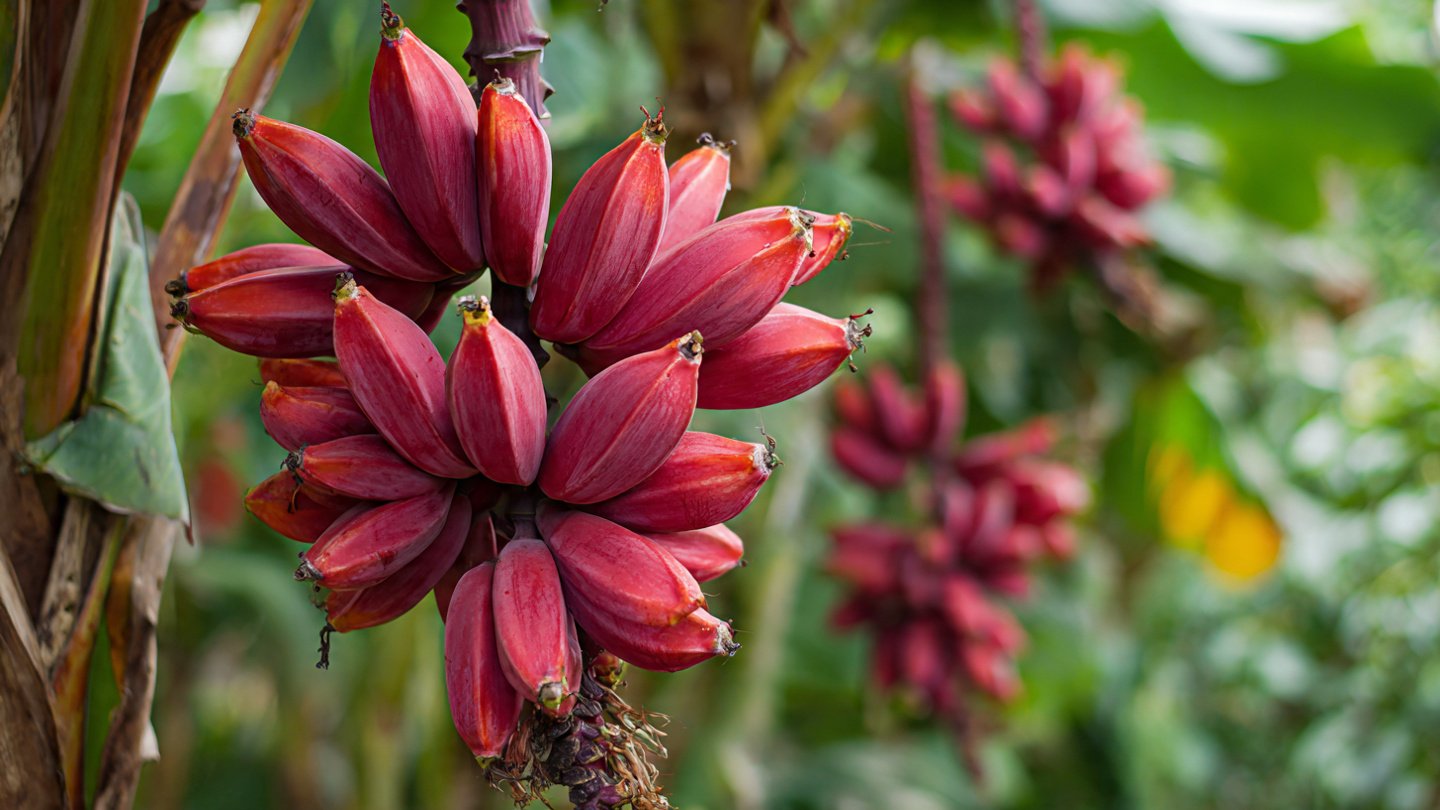
Red bananas are one of the most eye-catching plants you can add to a tropical garden. With their deep burgundy-red skins, lush green leaves with a reddish tint, and sweet, creamy flavor, they offer both ornamental beauty and edible rewards. While they look exotic and rare, red bananas are surprisingly achievable to grow if you understand their tropical needs.
This complete guide will walk you through everything you need to know—from choosing the right variety and planting location to care, harvesting, and using red bananas as a dramatic landscape feature.
What Are Red Bananas?
Red bananas are part of the Musa family, commonly known as Musa acuminata ‘Red Dacca’ or similar red-skinned cultivars. Unlike yellow Cavendish bananas, red bananas have:
- Reddish-purple skin
- Creamy flesh with a hint of berry flavor
- Taller, more ornamental plants
- Strong visual contrast in tropical landscapes
They are especially popular in South Asia, Southeast Asia, and tropical regions, making them well-suited to warm, humid gardens.
Why Grow Red Bananas in Your Garden?
Growing red bananas isn’t just about fruit—it’s about transforming your outdoor space.
Key benefits include:
- Dramatic tropical appearance
- Large, lush leaves that create shade
- Unique fruit color that stands out
- Fast growth compared to many fruit trees
- Dual purpose: ornamental + edible
In a tropical garden, red banana plants instantly become a focal point.
Ideal Climate and Growing Conditions
Red bananas thrive in true tropical to subtropical climates.
Temperature
- Ideal range: 24–35°C (75–95°F)
- Growth slows below 15°C
- Frost can kill the plant
Sunlight
- Full sun for best growth and fruiting
- Minimum 6–8 hours of direct sunlight daily
Humidity
- High humidity encourages large leaves and healthy growth
- Dry air can cause leaf tearing and browning
If you live in a cooler region, red bananas can still be grown in large containers and moved indoors during cold months.
Choosing the Right Planting Location
Location is critical for both health and visual impact.
Select a spot that offers:
- Full sun exposure
- Protection from strong winds
- Well-draining soil
- Enough space for mature height (10–15 feet)
Planting red bananas near walls, fences, or among other tropical plants enhances their dramatic look while offering wind protection.
Soil Preparation for Red Bananas
Red bananas love rich, fertile soil.
Ideal soil characteristics:
- Loose and well-draining
- High organic matter
- Slightly acidic to neutral pH (5.5–7.0)
How to prepare soil:
- Dig a hole at least 60 cm wide and deep
- Mix garden soil with compost or well-rotted manure
- Add coco peat or sand if soil is heavy
- Ensure water drains easily
Healthy soil is the foundation for large leaves and vibrant fruit color.
Planting Red Banana Plants
Red bananas are usually grown from suckers (pups) rather than seeds.
Planting steps:
- Choose a healthy sucker with strong roots
- Plant upright at the same depth it grew previously
- Firm soil gently around the base
- Water thoroughly after planting
- Mulch heavily to retain moisture
Spacing plants 2.5–3 meters apart allows good airflow and visual balance.
Watering Requirements
Bananas are water-loving plants, but they hate waterlogged soil.
Best watering practices:
- Water deeply 2–3 times per week
- Increase frequency during hot weather
- Reduce watering during heavy rains
- Never allow roots to sit in standing water
Mulching with dry leaves or straw helps maintain moisture and protects shallow roots.
Fertilizing for Lush Growth and Rich Color
Red bananas are heavy feeders.
Use a combination of:
- Compost or vermicompost every 4–6 weeks
- Balanced NPK fertilizer (10-10-10 or similar)
- Potassium-rich fertilizer during flowering
- Liquid feeds like banana peel tea or seaweed extract
Nitrogen promotes leaf growth, while potassium enhances fruit color and sweetness.
Pruning and Maintenance
Proper maintenance keeps plants healthy and attractive.
Routine care includes:
- Removing damaged or dry leaves
- Limiting each clump to 1–2 strong suckers
- Cutting old stems after fruiting
- Cleaning around the base to prevent pests
After fruit harvest, the main stem will die back—this is normal. New suckers will take over.
Common Pests and Diseases
Red bananas are relatively hardy but can face issues in humid climates.
Common problems:
- Aphids and mealybugs
- Banana weevils
- Leaf spot diseases
- Root rot from poor drainage
Prevention tips:
- Keep soil well-drained
- Use neem oil sprays
- Avoid overcrowding
- Remove infected leaves promptly
Healthy plants resist most issues naturally.
Flowering and Fruit Development
Red bananas typically flower 9–15 months after planting, depending on care and climate.
What to expect:
- A large purple flower bud emerges
- Hands of red bananas develop gradually
- Fruit matures in 3–4 months
Bananas are ready to harvest when the skin turns deep red and the fruit becomes plump.
Harvesting Red Bananas
Harvesting at the right time ensures the best flavor and color.
Harvest tips:
- Cut the entire bunch carefully
- Avoid letting fruit overripen on the plant
- Ripen harvested bananas at room temperature
Fully ripe red bananas are sweeter and softer than yellow bananas.
Using Red Bananas for Stunning Visual Appeal
Red banana plants are landscape stars.
Design ideas:
- Use as a focal point in tropical gardens
- Plant near water features or patios
- Pair with hibiscus, bird of paradise, or palms
- Grow in large decorative containers
Their bold foliage and colorful fruit create instant tropical drama.
Can Red Bananas Be Grown in Containers?
Yes, red bananas adapt well to containers if cared for properly.
Container tips:
- Choose large pots (minimum 60 liters)
- Ensure drainage holes
- Use rich potting mix
- Feed and water more frequently
Container-grown plants may be smaller but are equally striking.
Final Thoughts
Growing red bananas in your tropical garden is a rewarding experience that blends visual beauty, exotic appeal, and delicious fruit. With the right climate, rich soil, consistent watering, and proper feeding, these stunning plants thrive and quickly become the centerpiece of any landscape.
Whether you’re aiming to create a lush tropical retreat or simply want a unique fruit plant that turns heads, red bananas offer unmatched charm and satisfaction. With patience and care, your garden can soon showcase towering red banana plants that are as beautiful as they are productive.