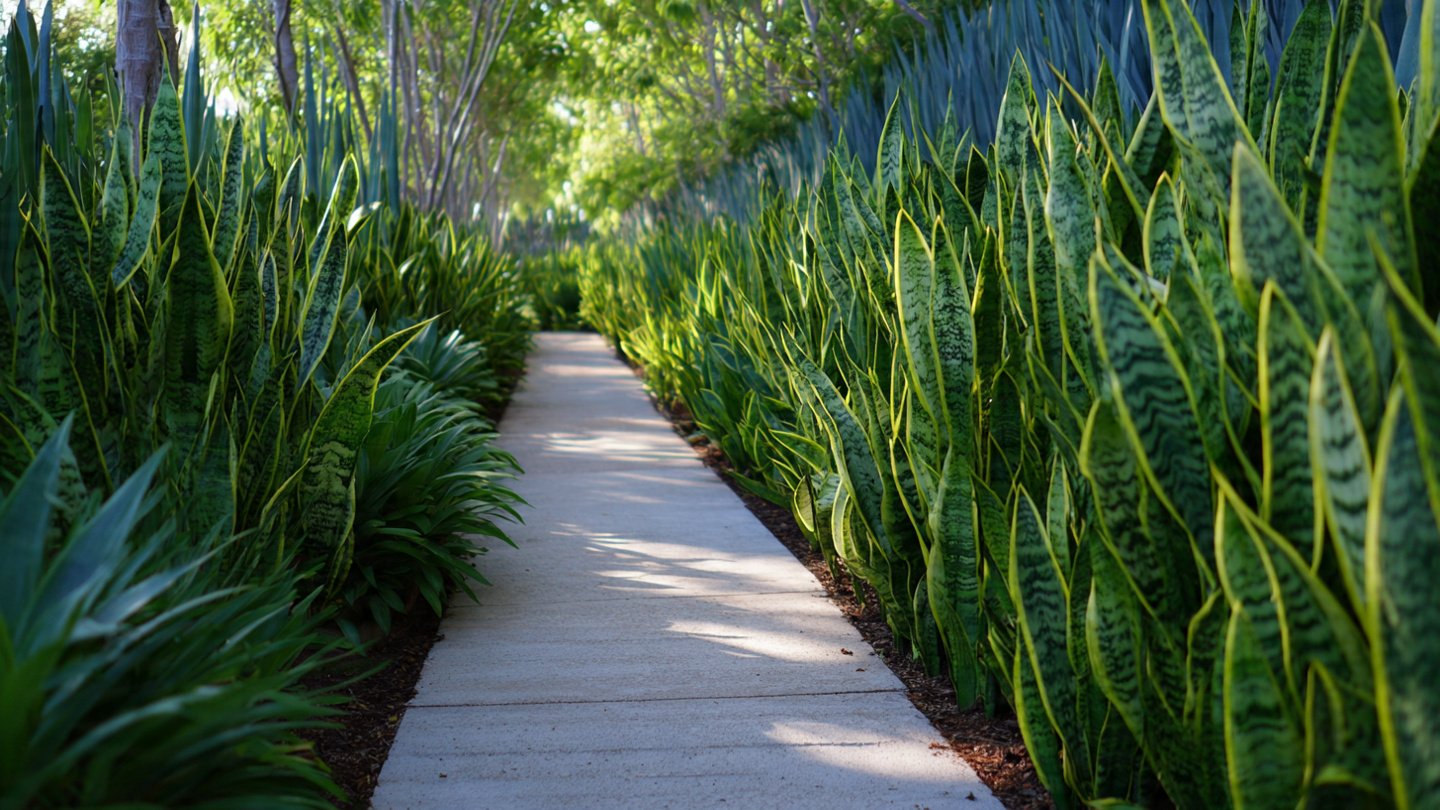
A beautiful garden pathway not only guides guests through your outdoor space but also enhances the overall aesthetic of your landscape. Among the many plants suitable for pathway borders, snake plants (Sansevieria spp.) stand out for their architectural form, low maintenance, and year-round appeal. With their upright leaves, dramatic color variations, and resilience, snake plants can transform ordinary pathways into striking, elegant borders that require minimal effort. This guide will show you how to create stunning pathway borders with rows of snake plants, from planning and planting to care and design tips.
Why Snake Plants Are Perfect for Pathway Borders
Snake plants offer several advantages for defining garden paths:
- Architectural Appeal: Their tall, sword-shaped leaves create clean, vertical lines that contrast beautifully with soft grasses or low-growing flowers.
- Year-Round Greenery: Snake plants are evergreen, providing a consistent, polished look even in winter.
- Low Maintenance: They thrive in a variety of soil types, tolerate drought, and resist pests, making them ideal for borders.
- Space Efficiency: Their upright growth habit makes them perfect for narrow pathways where spreading plants could obstruct walking.
- Versatility: Snake plants adapt well to full sun, partial shade, and even indoor settings if desired.
These qualities make snake plants a practical and visually striking choice for any pathway border.
Step 1: Plan Your Pathway Design
Before planting, careful planning ensures the pathway border enhances both form and function:
- Pathway Width: Determine how wide your path is. Narrow paths (2–3 feet) benefit from shorter snake plant varieties, while wide paths allow taller species.
- Planting Pattern: Decide whether you want even rows, staggered arrangements, or alternating with other low plants for a dynamic effect.
- Number of Plants: Measure the length of your pathway and plan for spacing between plants. Typically, 6–12 inches apart works for smaller varieties and 12–18 inches for larger ones.
- Complementary Elements: Consider adding stones, mulch, or lighting along the border to enhance the overall look.
A well-thought-out plan ensures your snake plant border is both functional and visually appealing.
Step 2: Choose the Right Snake Plant Variety
Snake plants come in multiple varieties, each with unique leaf shapes and colors:
- Sansevieria trifasciata ‘Laurentii’: Tall green leaves with yellow edges, perfect for bold vertical accents.
- Sansevieria trifasciata ‘Moonshine’: Silvery-green leaves, ideal for softer, modern pathways.
- Sansevieria cylindrica: Cylindrical, architectural leaves for a unique, sculptural look.
- Sansevieria hahnii: Compact, rosette-forming variety, ideal for narrow pathways.
Select a variety based on pathway width, desired height, and visual impact.
Step 3: Prepare the Soil and Pathway Edge
Snake plants are adaptable but thrive in well-draining soil:
- Soil Type: Mix garden soil, sand, and organic compost for optimal drainage and nutrition.
- Pathway Edge: Clear the area of weeds, stones, and debris. Level the soil along the pathway edge.
- Drainage Considerations: If your pathway tends to collect water, elevate the soil slightly or plant in a raised border.
- Mulching: A layer of mulch helps retain moisture, suppress weeds, and provides a polished look around the plants.
Proper preparation promotes healthy growth and long-lasting pathway borders.
Step 4: Planting Your Snake Plants
Planting in a row requires attention to spacing, depth, and orientation:
- Spacing: Maintain 6–12 inches apart for smaller varieties and 12–18 inches for larger species. Crowding can inhibit growth and reduce airflow.
- Planting Depth: Plant at the same depth as the root ball, ensuring roots are fully covered. Avoid burying the crown too deeply.
- Orientation: Angle leaves slightly outward or upright to create a uniform, tidy appearance.
- Watering: Water thoroughly after planting to help the roots establish, but avoid overwatering.
With proper planting, your snake plants will form a strong, attractive border over time.
Step 5: Incorporate Lighting and Decorative Elements
Adding subtle lighting and decorative elements enhances the impact of your pathway border:
- Solar Lights: Place small solar lights between plants for evening illumination.
- Pathway Stones: Decorative pebbles, bricks, or stepping stones complement the vertical structure of snake plants.
- Accent Plants: Low-growing flowers or ornamental grasses can add color and softness while maintaining the pathway’s clean lines.
- Edging: Use stone, wood, or metal edging to define the border and prevent soil from spilling onto the path.
These touches elevate the overall aesthetic and make the pathway inviting at all times.
Step 6: Watering and Fertilization
Snake plants are drought-tolerant but benefit from proper watering and occasional feeding:
- Watering: Water deeply but infrequently, allowing soil to dry between watering. Overwatering can cause root rot.
- Fertilization: Apply a balanced, slow-release fertilizer once in spring and mid-summer for optimal growth. Avoid over-fertilizing, which can reduce leaf strength.
- Mulch: Organic mulch helps retain moisture and moderates soil temperature around the roots.
Regular but moderate care keeps your pathway border healthy and vibrant.
Step 7: Pruning and Maintenance
Minimal pruning is required, but occasional maintenance improves appearance:
- Remove Dead Leaves: Trim yellow or damaged leaves at the base to maintain neatness.
- Shape Plants: For taller varieties, remove overgrown leaves that encroach onto the pathway.
- Control Pests: Snake plants are generally pest-resistant, but check for mealybugs or spider mites occasionally. Treat organically if needed.
Regular maintenance ensures your pathway remains tidy and elegant year-round.
Step 8: Propagation for Expanding Borders
Snake plants propagate easily, making it simple to expand your pathway design:
- Division: Separate rhizomes from mature plants and replant in prepared soil along new pathway sections.
- Leaf Cuttings: Cut a healthy leaf into 3–4 inch segments, let them callus, and plant in well-draining soil.
- Container Propagation: Start new plants in pots to grow before transplanting along the pathway.
Propagation allows continuous renewal and expansion of your striking pathway borders.
Step 9: Seasonal Care
Snake plants require minimal seasonal adjustments:
- Winter: Reduce watering during colder months; plants enter a slow growth phase.
- Spring/Summer: Increase watering slightly and fertilize to encourage growth.
- Sunlight Adjustments: In extremely hot regions, provide afternoon shade to prevent leaf scorching.
- Leaf Cleaning: Dust leaves periodically to maintain a polished, vibrant look.
Seasonal care helps snake plants maintain their beauty and health throughout the year.
Step 10: Design Tips for Maximum Impact
Enhance the visual appeal of your pathway with design techniques:
- Uniform Height: Plant similar-sized varieties for a neat, formal border.
- Variegated Foliage: Mix varieties with green, yellow, or silvery leaves for a dynamic, eye-catching effect.
- Alternating Colors: Use alternating rows of variegated and solid-colored plants for contrast.
- Layered Planting: Combine snake plants with low ground covers for texture and color contrast.
Creative design choices transform a simple pathway into a stunning focal point in your garden.
Benefits of Snake Plant Pathway Borders
- Low Maintenance: Hardy and resilient, requiring minimal care.
- Year-Round Structure: Evergreen leaves maintain form in all seasons.
- Air Purification: Snake plants improve air quality by filtering toxins near your home or patio.
- Drought-Tolerant: Perfect for areas with irregular rainfall or for busy gardeners.
- Aesthetic Appeal: Adds structure, elegance, and a modern touch to your garden design.
Snake plants provide practical benefits while creating visually striking borders for any pathway.
Conclusion
Creating stunning pathway borders with rows of snake plants is a simple yet highly effective way to enhance your home garden. With their architectural leaves, evergreen nature, and low maintenance requirements, snake plants are ideal for both formal and casual landscapes. By carefully planning the layout, selecting the right variety, preparing soil, and providing minimal care, you can transform a simple garden path into an elegant feature.
Incorporate additional elements like lighting, decorative stones, and complementary plants to elevate the visual impact. Regular pruning, seasonal adjustments, and occasional fertilization ensure your border remains lush, tidy, and healthy. Whether lining a backyard walkway, front garden path, or patio edge, snake plants provide a timeless, low-maintenance, and visually stunning solution for pathway borders that impress year-round.