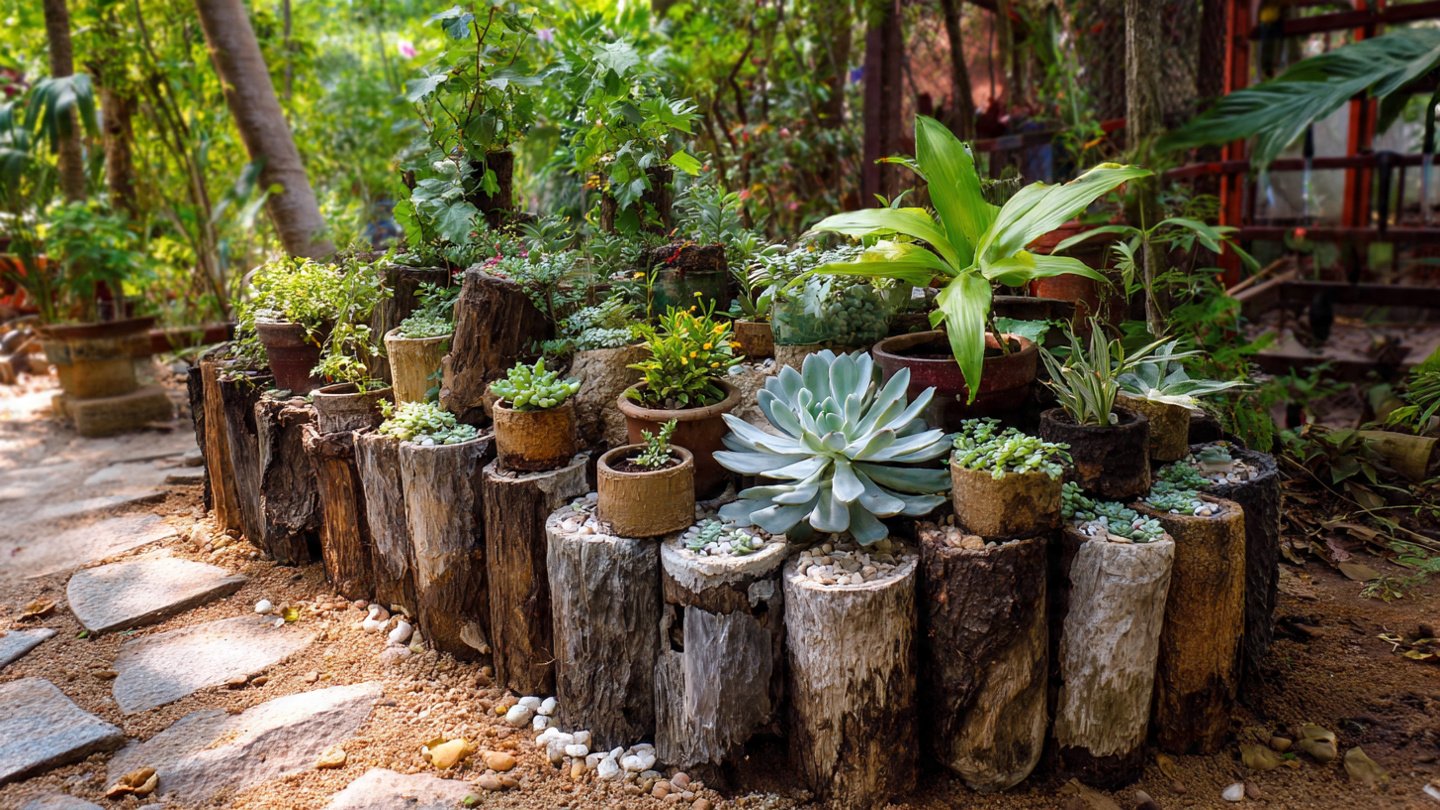
Transforming a garden doesn’t always require expensive materials or professional landscaping. Sometimes, the most beautiful and meaningful garden makeovers come from reusing what you already have. A dry tree stump and a few plastic bottles—items often seen as waste—can become the foundation of a stunning, eco-friendly garden design.
This creative approach not only saves money but also reduces waste, promotes sustainability, and allows you to express your personality through your garden. Whether you’re working with a small backyard, balcony, or unused corner of your yard, this DIY garden makeover idea proves that beauty can grow from unexpected places.
Why Use Dry Stumps and Plastic Bottles in Garden Design?
Dry stumps and plastic bottles are often discarded without a second thought. However, both materials offer incredible potential when reimagined creatively.
A dry tree stump provides a natural, sculptural focal point. Its rugged texture and organic shape blend beautifully with plants and flowers. Instead of removing it, which can be costly and labor-intensive, turning it into a garden feature gives it a new purpose.
Plastic bottles, on the other hand, are versatile, lightweight, and easy to shape. When reused as planters, edging, or decorative elements, they help reduce plastic waste while adding a unique DIY charm to your garden.
Benefits of an Eco-Friendly Garden Makeover
Creating a garden using recycled materials offers several advantages beyond aesthetics.
First, it reduces environmental impact by keeping plastic out of landfills and repurposing natural materials. Second, it significantly lowers costs, making gardening accessible to everyone. Third, it encourages creativity and hands-on involvement, turning gardening into a rewarding personal project.
An eco-friendly garden also sends a powerful message about sustainability, inspiring others to rethink waste and embrace greener practices.
Planning Your Garden Design
Before you begin, take time to visualize how you want your garden to look. Consider the size of your stump, available space, and sunlight conditions.
Decide whether your stump will serve as:
- A raised planter
- A vertical garden base
- A decorative centerpiece
Plastic bottles can be used in various ways, such as:
- Hanging planters
- Border edging
- Mini pots for herbs or succulents
Sketching a simple layout helps you organize materials and avoid overcrowding plants.
Preparing the Dry Stump
Start by cleaning the stump thoroughly. Remove loose bark, debris, and any sharp edges. If the stump is solid, you can hollow out the top using basic tools to create a planting cavity.
Drill small drainage holes if needed to prevent water from pooling. If hollowing isn’t possible, the stump can still serve as a base for attaching bottle planters or placing pots on top.
Applying a natural wood sealant is optional but can help slow decay while maintaining a rustic appearance.
Turning Plastic Bottles into Planters
Plastic bottles are incredibly easy to convert into planters. Use bottles of different sizes to add visual interest.
Basic steps include:
- Cutting an opening on the side or top
- Poking drainage holes at the bottom
- Painting or decorating the exterior if desired
You can leave bottles clear for a modern look or paint them in earthy tones to blend with the garden. Eco-friendly paints are recommended.
Creative Ways to Combine Stumps and Bottles
The real magic happens when you combine both elements into a cohesive design.
Vertical Bottle Garden on a Stump
Attach plastic bottle planters around the sides of the stump using wire or screws. This creates a living column of greenery and flowers.
Stump-Centered Flower Bed
Use the stump as the centerpiece of a small circular garden bed. Surround it with bottle planters arranged like petals, creating a floral pattern.
Tiered Garden Effect
Place larger plants directly in the stump cavity and smaller plants in bottle planters positioned at varying heights around it.
These designs add depth, texture, and visual movement to your garden.
Choosing the Right Plants
Plant selection plays a key role in the success of your DIY garden.
For stump planters:
- Ferns
- Hostas
- Succulents
- Flowering annuals
For plastic bottle planters:
- Herbs like basil and mint
- Trailing plants such as pothos or petunias
- Small succulents and cacti
Choose plants with similar water and light needs to simplify maintenance.
Soil and Drainage Tips
Use high-quality potting soil for both stump and bottle planters. Avoid garden soil, which can compact and block drainage.
Adding a layer of small stones or gravel at the bottom of each planter improves drainage. Proper drainage prevents root rot and extends the life of your DIY planters.
Watering and Maintenance
Recycled planters often dry out faster than traditional pots, so regular monitoring is important.
Water gently and consistently, checking soil moisture before adding more water. Mulching the top of stump planters helps retain moisture and regulate temperature.
Trim plants as needed to maintain shape and encourage healthy growth.
Adding Decorative Touches
Enhance your garden’s charm with small decorative details.
Ideas include:
- Solar lights around the stump
- Painted stones
- Twine or rope accents
- Natural moss for a woodland feel
These touches elevate your DIY project and create a cozy, inviting atmosphere.
Seasonal Adaptations
Your garden can evolve with the seasons. Swap out plants for seasonal flowers or add festive decorations throughout the year.
During colder months, bottle planters can be brought indoors or replanted with cold-tolerant species. The stump can still serve as a decorative feature even when not actively planted.
Teaching Sustainability Through Gardening
This type of garden makeover is also a great educational tool. It demonstrates how everyday waste can be transformed into something beautiful and functional.
Involving children or community members in the project promotes environmental awareness and hands-on learning.
Common Mistakes to Avoid
Avoid overcrowding plants, as this restricts airflow and growth. Ensure all planters have drainage holes to prevent waterlogging.
Don’t use bottles that previously held chemicals, and avoid placing the garden in full shade unless plants are shade-tolerant.
Final Thoughts
A DIY garden made from a dry stump and plastic bottles is more than just a creative project—it’s a statement about sustainability, resourcefulness, and the beauty of reimagined materials.
With a little planning and imagination, you can transform forgotten objects into a lush, eye-catching garden feature that reflects your values and creativity. This eco-friendly garden makeover proves that you don’t need a big budget or fancy tools to create something truly special—just a willingness to see potential where others see waste.