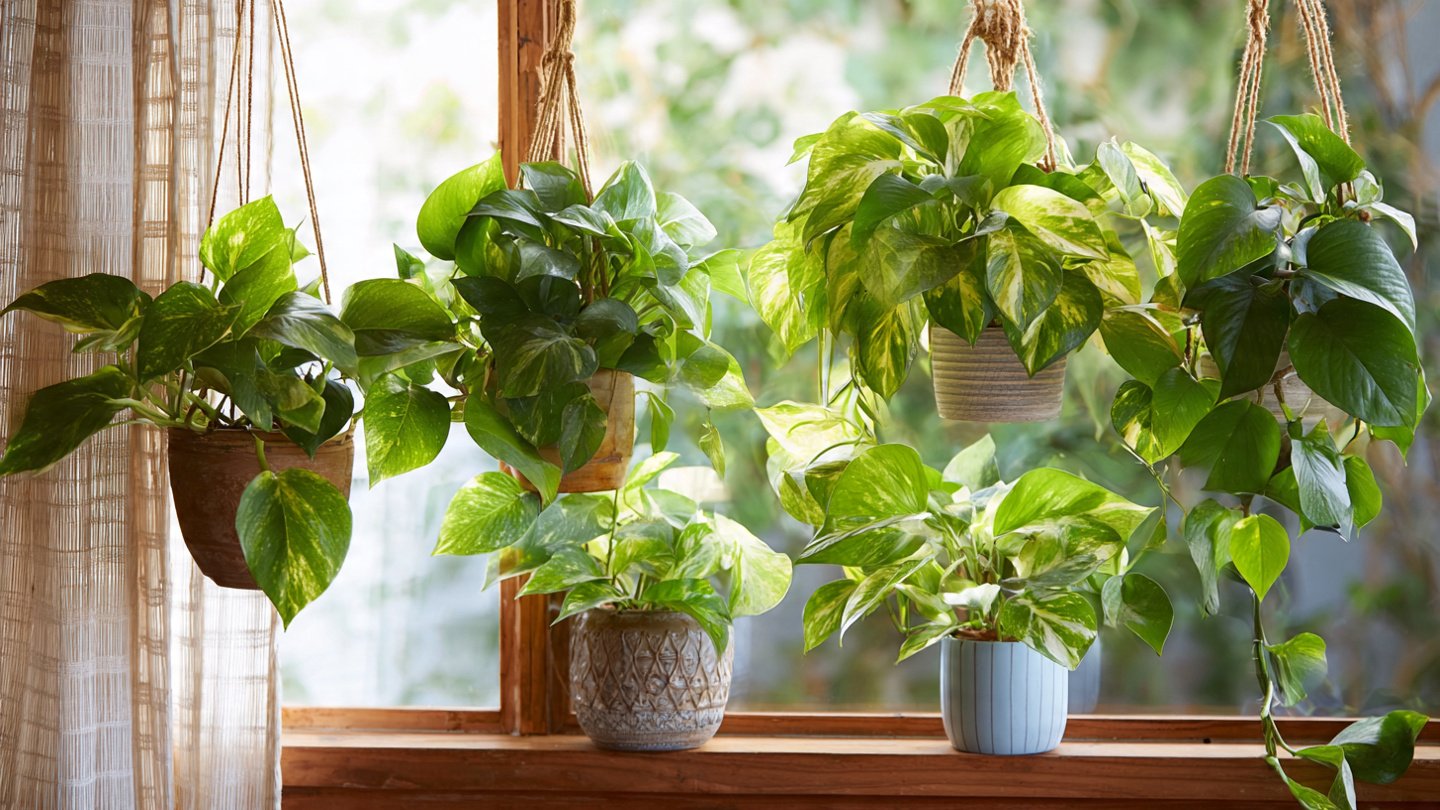
Pothos (Epipremnum aureum), also known as Devil’s Ivy, is one of the most popular houseplants in the world. Its trailing vines, vibrant green leaves, and low-maintenance nature make it perfect for beginners and experienced plant lovers alike. Despite being easy to grow, many pothos owners struggle with issues like yellowing leaves, leggy growth, or root rot. Plant experts emphasize that understanding pothos’ natural preferences and providing the right care can transform this resilient plant into a thriving, lush addition to any home.
In this guide, we’ll cover everything you need to know—from lighting and watering to pruning, propagation, and pest management—so you can care for pothos the right way.
Understanding Your Pothos Plant
Pothos is a tropical vine native to Southeast Asia, known for its heart-shaped, glossy leaves that can vary from solid green to variegated with white, yellow, or pale green streaks. Its natural habitat is the forest understory, which explains why it thrives in indirect light and moderate humidity.
Key characteristics to remember:
- It is tolerant of low light, but growth slows without enough indirect sunlight.
- It is drought-tolerant, but overwatering is the most common cause of plant stress.
- It can grow in soil or water, making it versatile for indoor settings.
- It’s non-toxic to humans but mildly toxic to pets if ingested.
Understanding pothos’ natural tendencies helps you mimic its environment and encourage healthy growth.
Choosing the Right Spot for Your Pothos
Lighting is crucial for healthy pothos growth:
- Bright, indirect light: Ideal for vibrant variegation and fast growth. Place near a north, east, or west-facing window, filtered through sheer curtains if sunlight is strong.
- Low light tolerance: Can survive in dim corners but may develop smaller leaves and less variegation.
- Avoid direct sunlight: Direct rays can scorch leaves, causing brown patches.
Proper placement ensures strong vines and healthy foliage while preventing stress or discoloration.
Watering Pothos the Expert Way
Watering is where many pothos owners go wrong. Experts recommend:
- Check soil moisture: Pothos prefers the soil to dry out slightly between waterings. Stick your finger about 1–2 inches into the soil; if it feels dry, it’s time to water.
- Avoid overwatering: Sitting in water can cause root rot—a common problem in pothos. Ensure the pot has drainage holes.
- Adjust frequency seasonally: Water more frequently in spring and summer when growth is active, and less in fall and winter when growth slows.
- Humidity tips: While pothos tolerates normal indoor humidity, occasional misting or a pebble tray can boost growth in dry environments.
Balanced watering promotes strong roots, healthy leaves, and sustained growth.
Soil and Fertilization
Experts emphasize that the right soil and feeding schedule can dramatically affect pothos health:
- Soil: Use a well-draining potting mix, such as a combination of peat moss, perlite, and pine bark. Avoid heavy garden soil that retains too much water.
- Fertilizer: Pothos are light feeders but benefit from balanced, water-soluble fertilizer (e.g., 10-10-10 NPK) every 4–6 weeks during the growing season.
- Avoid over-fertilization: Excess nutrients can cause leaf burn or unnatural growth patterns.
- Supplemental care: Organic options like fish emulsion or compost tea are gentle and effective.
Healthy soil and moderate fertilization encourage lush, vigorous vines with strong variegation.
Pruning and Training Pothos
Pruning is essential to maintain a full, attractive, and manageable plant:
- When to prune: Anytime vines become leggy, overcrowded, or overgrown. Experts recommend pruning in spring or summer for maximum regrowth.
- How to prune: Use clean, sharp scissors or pruning shears. Cut just above a leaf node, where new growth will emerge.
- Benefits:
- Encourages bushier growth
- Prevents vines from becoming too long or tangled
- Can be used for propagation
Training tips:
- Let vines trail naturally from shelves or hanging baskets for a cascading look.
- Use trellises, stakes, or decorative poles to encourage vertical growth.
- Rotate the plant periodically to ensure even light exposure and prevent lopsided growth.
Pruning and training give your pothos structure and aesthetic appeal while promoting healthier growth.
Propagation: Multiply Your Pothos Easily
One of the joys of pothos care is easy propagation:
- Stem cuttings: Cut a 4–6 inch vine just below a node. Remove lower leaves and place in water or directly in soil. Roots will develop in 2–4 weeks.
- Water propagation: Use a clear jar to watch roots grow. Change water every few days to prevent stagnation.
- Soil propagation: Plant cuttings in moist, well-draining soil and keep lightly shaded until established.
Propagation allows you to expand your indoor garden, share with friends, or refresh older plants. Experts say pothos is one of the most forgiving plants for beginners to propagate successfully.
Common Pothos Problems and Expert Solutions
Even the hardiest pothos can face challenges. Here’s what experts suggest:
1. Yellowing Leaves
- Causes: Overwatering, underwatering, low light, or nutrient deficiency.
- Solution: Check soil moisture, adjust watering, and provide adequate light and balanced fertilization.
2. Leggy Growth
- Cause: Insufficient light or lack of pruning.
- Solution: Move the plant to brighter, indirect light and prune back long vines to encourage fuller growth.
3. Brown Leaf Tips
- Causes: Low humidity, over-fertilization, or inconsistent watering.
- Solution: Mist leaves, reduce fertilizer, and maintain a consistent watering routine.
4. Pests
- Common pests: Spider mites, mealybugs, aphids.
- Solution: Wipe leaves with a damp cloth, spray with insecticidal soap, or isolate the plant if infestation occurs.
By paying attention to leaf color, growth patterns, and environmental conditions, you can catch problems early and keep your pothos thriving.
Seasonal Care for Pothos
Adjusting care according to the season helps your plant flourish year-round:
- Spring and summer: Increased light, warmth, and active growth require more frequent watering and fertilization.
- Fall and winter: Growth slows; reduce watering and fertilization. Maintain moderate light and keep the plant away from drafts or heaters.
- Repotting: Experts recommend repotting every 1–2 years in spring to refresh soil and provide room for root growth.
Seasonal adjustments ensure your pothos maintains vitality, color, and structural integrity throughout the year.
Expert Tips for Maximizing Pothos Growth
- Rotate regularly: Turn the plant to prevent uneven light exposure.
- Clean leaves: Wipe dust off leaves to improve photosynthesis.
- Avoid extremes: Keep the plant in temperatures between 60–85°F (15–29°C).
- Combine with trailing displays: Use pothos in hanging baskets or high shelves for visual impact.
- Watch for variegation loss: Variegated pothos may revert to green in low light; ensure bright indirect light for patterned leaves.
Following expert advice ensures your pothos is healthy, vibrant, and aesthetically pleasing.
Conclusion
Caring for pothos the right way involves understanding its natural preferences, providing indirect light, moderate watering, well-draining soil, and occasional fertilization, and pruning for structure and health. Experts emphasize that observation and consistency are key—by monitoring leaf color, growth patterns, and environmental conditions, you can prevent common issues like yellowing, leggy growth, or root rot.
Additional practices such as propagation, seasonal adjustments, and pest monitoring further enhance the plant’s vigor and beauty. Whether you’re a beginner or an experienced plant enthusiast, following these expert-approved techniques ensures your pothos thrives as a lush, trailing, and vibrant houseplant that adds greenery and life to any space.
With the right care, your pothos will reward you with years of healthy growth, cascading vines, and visually stunning foliage, proving why it remains one of the most beloved houseplants worldwide.