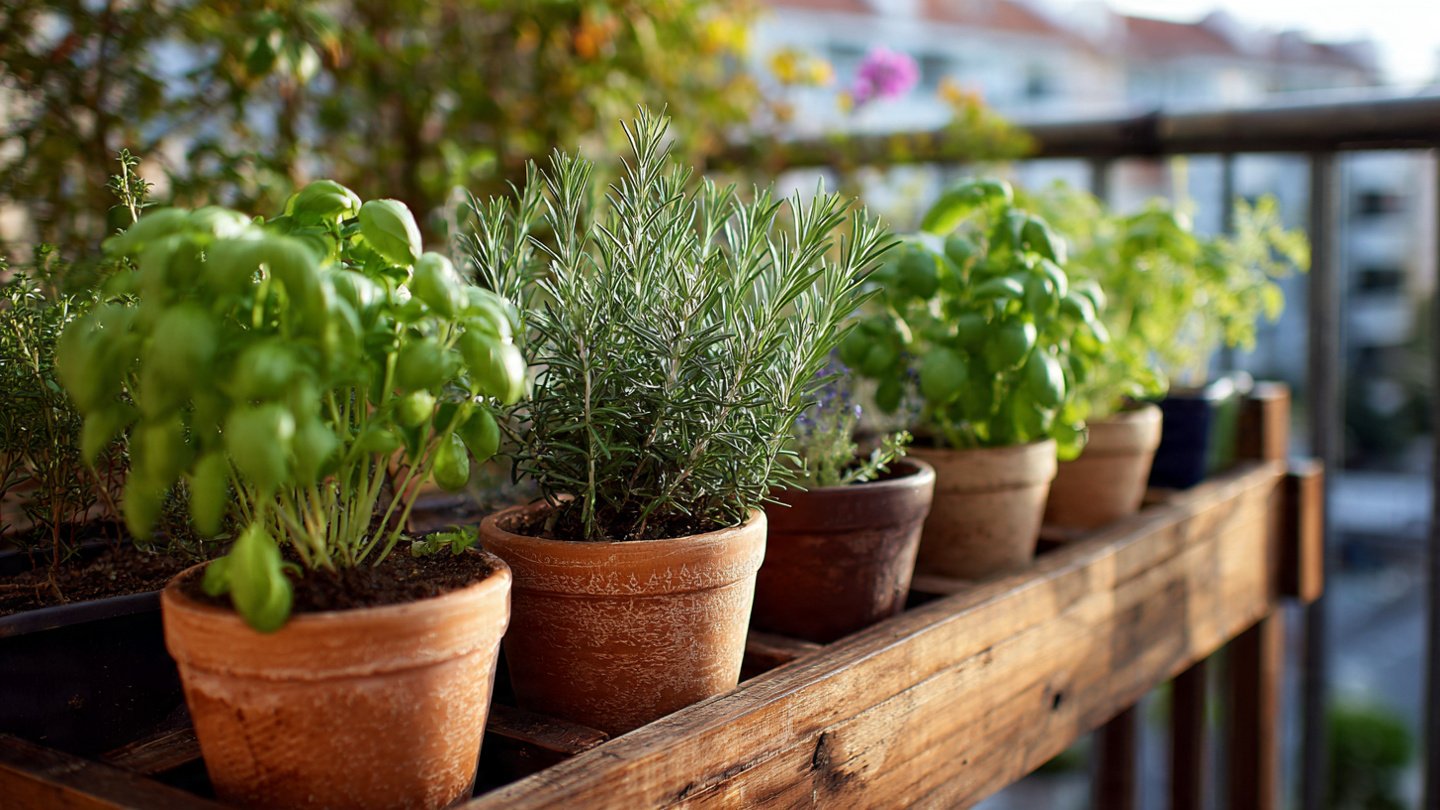
There’s something deeply satisfying about stepping onto your balcony, snipping a handful of fresh herbs, and adding them straight to your cooking. Even in the heart of a busy city, a sunny balcony can become a miniature herb garden that transforms the way you cook, eat, and connect with your food.
You don’t need a backyard or years of gardening experience to grow herbs successfully. With the right plant choices and a bit of know-how, a small, sun-drenched balcony can provide fresh flavors year-round. This guide walks you through everything you need to know to choose the best herbs for a sunny space—and how to use them to cook better every day.
Why a Sunny Balcony Is Perfect for Growing Herbs
Most culinary herbs evolved in warm, Mediterranean climates where sunlight is abundant and soil drains well. That makes a sunny balcony an ideal environment. When herbs receive at least six hours of direct sunlight per day, they develop stronger flavors, sturdier growth, and higher essential oil content—the compounds responsible for aroma and taste.
Sun-loving herbs also tend to be more forgiving. They thrive in containers, require minimal maintenance, and often grow more vigorously than herbs kept indoors or in shady spots. If your balcony gets plenty of light, you’re already halfway to a successful herb garden.
Understanding Your Balcony’s Sun Exposure
Before choosing herbs, take a moment to observe your balcony throughout the day. Is it bathed in morning light, intense afternoon sun, or both? South- and west-facing balconies typically receive the most sun, while east-facing spaces get gentler morning light.
Full sun doesn’t mean extreme heat all day long, but if your balcony becomes very hot in summer, you may need to provide some afternoon shade or water more frequently. Knowing your light patterns will help you select herbs that not only survive, but thrive.
The Best Herbs for a Sunny Balcony
Not all herbs love the sun equally, but many flourish in bright, warm conditions. These are the top performers for sunny balcony gardens.
Basil: The Balcony Superstar
Basil is often the first herb people think of, and for good reason. It loves warmth and sunlight, growing quickly when conditions are right. Sweet basil, Genovese basil, and Thai basil are all excellent choices for a sunny balcony.
Regular harvesting encourages bushy growth and prevents flowering, which can make the leaves bitter. Use fresh basil in pasta, salads, pesto, and even infused oils. Few herbs reward attention as generously as basil.
Rosemary: Fragrant and Resilient
Rosemary thrives in full sun and prefers slightly drier conditions, making it ideal for balconies. Its woody stems and needle-like leaves give it a sculptural look that doubles as decor.
This herb is perfect for roasted vegetables, meats, and homemade bread. Rosemary can live for years in a container if given good drainage and occasional pruning. It’s a long-term investment that pays off in flavor.
Thyme: Small Plant, Big Flavor
Thyme is a compact herb that loves sun and doesn’t demand much space. Its low-growing habit makes it ideal for balcony planters and window boxes.
Lemon thyme, creeping thyme, and classic English thyme all do well in sunny spots. Thyme’s earthy flavor works beautifully in soups, stews, roasted dishes, and marinades. Once established, it’s remarkably drought-tolerant.
Oregano: A Mediterranean Favorite
Oregano thrives in full sun and slightly lean soil. Too much fertilizer can actually reduce its flavor, so it’s well-suited to container life.
Greek oregano is especially popular for cooking, adding depth to tomato sauces, pizza, grilled vegetables, and meats. Regular trimming keeps the plant compact and encourages fresh growth.
Sage: Bold and Beautiful
Sage loves sunlight and produces soft, velvety leaves with a strong, savory flavor. It’s both practical and ornamental, with silvery foliage that reflects light beautifully on a balcony.
Use sage sparingly in cooking—its flavor is powerful. It pairs well with butter, pumpkin, chicken, and pasta dishes. Sage prefers good airflow, so avoid overcrowding it with other plants.
Chives: Easy and Versatile
Chives grow well in sunny balconies and add a mild onion flavor to dishes without overwhelming them. They’re perfect for small pots and produce delicate purple flowers that are also edible.
Snip chives frequently and use them fresh in eggs, salads, dips, and soups. They’re one of the easiest herbs to maintain and bounce back quickly after harvesting.
Herbs to Grow With a Little Extra Care
Some herbs enjoy sun but benefit from slightly gentler conditions or more frequent watering.
Mint (With Boundaries)
Mint loves light but can struggle in extreme heat. It’s also famously invasive, so it should always be grown in its own pot. Morning sun and light afternoon shade are ideal.
Use mint in teas, desserts, salads, and refreshing summer drinks. Keeping it contained ensures it stays manageable while still thriving.
Parsley: Sun-Tolerant but Thirsty
Parsley can handle full sun, but it prefers consistent moisture. Flat-leaf parsley is favored for cooking, while curly parsley adds texture and visual interest.
This herb is a staple in many cuisines, enhancing sauces, salads, and garnishes. Regular watering and harvesting keep it productive.
Choosing the Right Containers
Good containers are just as important as the herbs themselves. Pots should have drainage holes to prevent waterlogging, which is the most common cause of herb failure.
Terracotta pots are popular because they allow moisture to evaporate, helping prevent root rot. However, they dry out faster, so plastic or glazed ceramic pots may be better in very hot climates.
Choose containers that give roots room to grow. Most herbs do well in pots at least 8–10 inches deep. For larger herbs like rosemary and sage, bigger is better.
Soil and Watering Basics
Herbs prefer well-draining soil rather than rich, heavy compost. A high-quality potting mix with added sand or perlite works well.
Water deeply but less frequently. Let the top inch of soil dry out between waterings, especially for Mediterranean herbs like thyme and rosemary. Overwatering dilutes flavor and weakens plants.
Harvesting for Better Flavor
The best time to harvest herbs is in the morning, after the dew has dried but before the sun is at its hottest. This is when essential oils are most concentrated.
Never harvest more than one-third of a plant at a time. Regular, gentle harvesting encourages new growth and keeps herbs from becoming woody or leggy.
Cooking Better With Balcony-Fresh Herbs
Cooking with herbs you’ve grown yourself changes how you approach food. You start seasoning with intention, adding freshness at the last moment rather than relying on dried alternatives.
Fresh herbs brighten simple dishes. A handful of basil can transform a basic tomato sauce. A sprig of rosemary elevates roasted potatoes. Chives make scrambled eggs feel restaurant-worthy.
When herbs are growing just steps away, you’re more likely to experiment—and that’s where better cooking begins.
Turning Your Balcony Into a Flavor Garden
A sunny balcony is more than just extra space—it’s an opportunity to cook better, waste less, and enjoy fresher meals. By choosing the right herbs and giving them a little care, you can create a compact garden that feeds both your kitchen and your creativity.
You don’t need perfection or abundance. Even a few well-chosen pots can make a noticeable difference in how your food tastes and how connected you feel to what you’re cooking.
Once you start harvesting from your balcony, it’s hard to imagine cooking any other way.