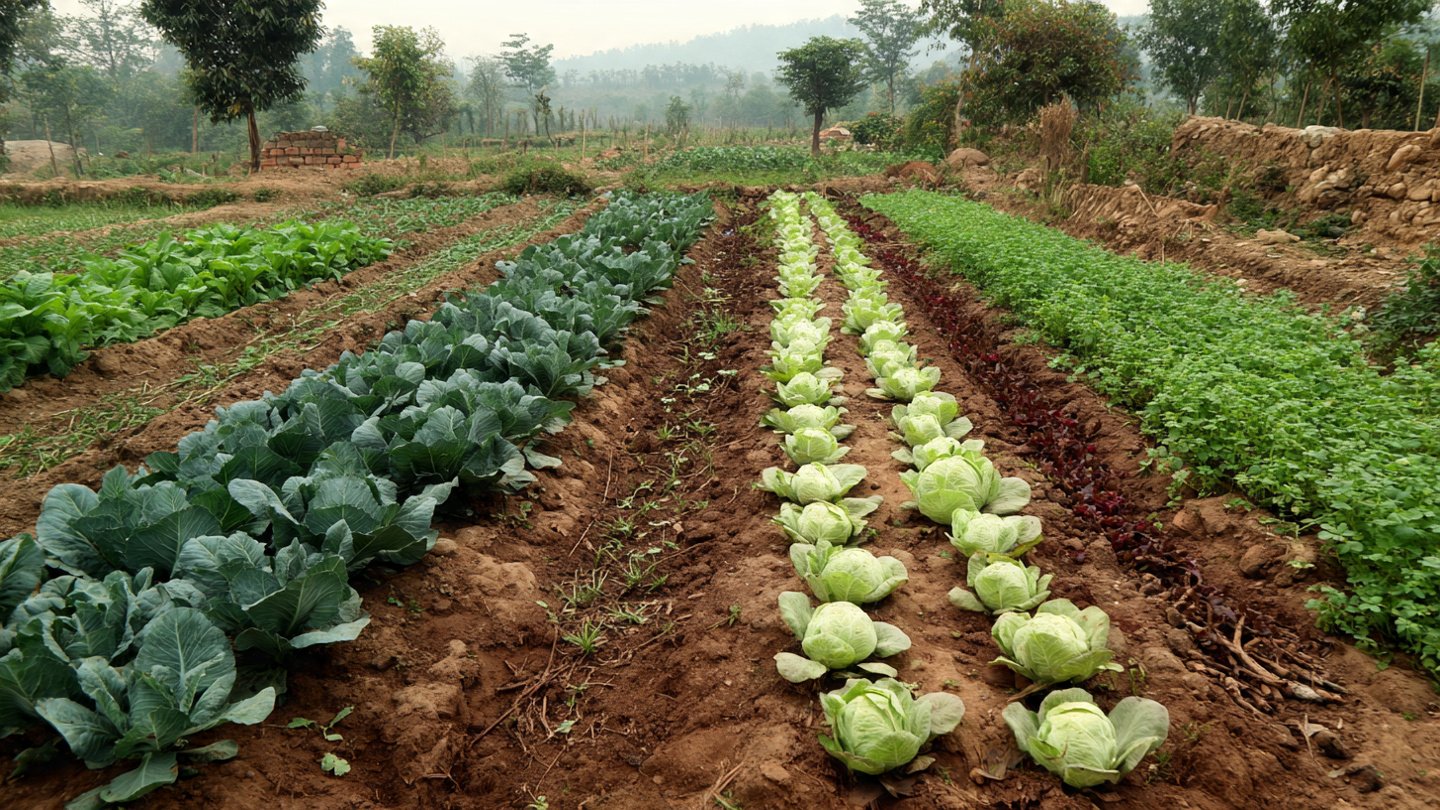
For decades, modern agriculture has focused on maximizing yields through monoculture farming—planting the same crop season after season across vast areas of land. While this approach increased short-term productivity, it also contributed to a silent crisis beneath the surface. Soils became depleted of nutrients, beneficial microorganisms disappeared, erosion intensified, and farms grew increasingly vulnerable to droughts, pests, and climate extremes. Across many regions, once-productive farmland slipped into degradation.
Yet a growing number of farmers are proving that recovery is possible. By diversifying crops and reintroducing ecological balance into their fields, degraded farmland is regaining fertility, structure, and resilience. Crop diversification is not a new idea, but its renewed adoption is transforming exhausted soils into living systems once again.
Understanding Farmland Degradation
Degraded farmland is characterized by declining soil health, reduced organic matter, compaction, poor water retention, and loss of biodiversity. These conditions often develop gradually, making them easy to overlook until yields drop significantly.
Key contributors to degradation include:
- Continuous monocropping
- Excessive use of chemical fertilizers and pesticides
- Heavy tillage that disrupts soil structure
- Limited ground cover, leading to erosion
- Lack of crop rotation or diversity
Over time, these practices strip the soil of its ability to support crops naturally. Farmers then rely increasingly on synthetic inputs to maintain production, further deepening the cycle of degradation.
What Crop Diversification Means
Crop diversification involves growing a variety of crops rather than relying on a single species. This can take several forms:
- Crop rotation: Changing crops each season
- Intercropping: Growing multiple crops together
- Cover cropping: Planting non-harvested crops to protect and enrich soil
- Agroforestry: Integrating trees and shrubs with crops
Each approach introduces different root systems, nutrient demands, and biological interactions, creating a more balanced and resilient farming system.
Restoring Soil Fertility Through Diversity
One of the most powerful benefits of crop diversification is the restoration of soil fertility. Different plants interact with soil nutrients in unique ways.
Nutrient Cycling and Balance
Legumes such as beans, peas, and clover fix atmospheric nitrogen into the soil, reducing dependence on synthetic fertilizers. Deep-rooted crops like sorghum or sunflowers draw nutrients from lower soil layers, making them available to future crops.
When these plants decompose, they return organic matter to the soil, improving nutrient availability and long-term fertility.
Organic Matter and Soil Structure
Diverse cropping systems increase the amount of organic residue left in the field. This organic matter feeds soil organisms and helps form soil aggregates—small clumps that improve aeration and water infiltration.
As organic matter levels rise, soils become looser, richer, and more capable of supporting healthy plant growth.
Reviving Soil Biology
Healthy soil is alive. Billions of microorganisms—bacteria, fungi, protozoa, and earthworms—work together to break down organic material, cycle nutrients, and protect plants from disease.
Monocultures limit the food sources available to these organisms, reducing their diversity and function. Crop diversification reverses this trend.
Different plants release unique root exudates—sugars and compounds that feed specific microbes. A diverse crop mix supports a wider range of organisms, rebuilding a robust soil food web.
Beneficial fungi, such as mycorrhizae, form symbiotic relationships with plant roots, extending their reach and improving nutrient uptake. Over time, these biological partnerships enhance soil fertility naturally.
Improving Water Retention and Drought Resistance
Degraded soils often struggle to absorb and retain water. Compaction and loss of organic matter cause rainfall to run off rather than soak in, increasing erosion and reducing moisture availability during dry periods.
Crop diversification improves water dynamics in several ways:
- Varied root systems create channels for water infiltration
- Increased organic matter acts like a sponge, holding moisture
- Continuous ground cover reduces evaporation
As a result, diversified fields are more resistant to drought and less prone to flooding. This resilience is especially critical as climate change increases weather unpredictability.
Natural Pest and Disease Management
Pests and diseases thrive in monoculture systems where their preferred host plants are abundant and continuous. Crop diversification disrupts these patterns.
Rotating crops breaks pest life cycles by removing their food source. Intercropping can confuse insect pests and reduce their ability to locate host plants. Some crops even release natural compounds that deter harmful insects or suppress soil-borne diseases.
In diversified systems, beneficial insects such as ladybugs and predatory wasps are more likely to thrive, providing natural pest control. This reduces the need for chemical pesticides and promotes ecological balance.
Enhancing Climate Resilience
Diversified farms are better equipped to handle climate stress. When multiple crops are grown, the risk of total crop failure decreases. If one crop performs poorly due to heat, pests, or disease, others may still succeed.
Different crops respond differently to weather extremes, spreading risk and stabilizing farm income. Additionally, improved soil structure and organic matter help buffer crops against temperature fluctuations and moisture stress.
In this way, crop diversification acts as a natural insurance policy in an increasingly uncertain climate.
Economic Benefits for Farmers
While diversification requires planning and knowledge, it often leads to long-term economic gains.
Benefits include:
- Reduced spending on fertilizers and pesticides
- Improved and more stable yields over time
- Access to new markets and crop varieties
- Greater resilience to price fluctuations
Diversified systems may initially yield less of a single crop, but the combined output and reduced input costs often result in higher overall profitability.
Real-World Success Stories
Across the world, farmers are witnessing tangible improvements through diversification.
In parts of sub-Saharan Africa, rotating cereals with legumes has restored soil fertility and doubled yields in previously degraded fields. In South America, intercropping and cover cropping have reduced erosion and improved water retention on sloped farmland. In North America, diversified rotations combined with reduced tillage are rebuilding organic matter lost over decades of intensive farming.
These success stories demonstrate that soil degradation is not irreversible. With the right practices, land can heal.
Challenges and Learning Curves
Despite its benefits, crop diversification is not without challenges. Farmers may face:
- Limited access to diverse seeds
- Lack of technical knowledge or extension support
- Short-term yield adjustments during transition
- Market barriers for non-traditional crops
Addressing these challenges requires education, supportive policies, and investment in research and infrastructure. Collaboration between farmers, scientists, and policymakers is key to scaling successful diversification practices.
A Path Toward Regenerative Agriculture
Crop diversification is a cornerstone of regenerative agriculture—a farming approach that prioritizes soil health, biodiversity, and ecosystem function. By working with nature rather than against it, farmers can restore degraded land while maintaining productivity.
As soils regain fertility, they also sequester carbon, improve water quality, and support wildlife. The benefits extend beyond individual farms to entire landscapes and communities.
Conclusion
Degraded farmland tells a story of imbalance, but it also holds the potential for renewal. By diversifying crops, farmers are proving that soil health can be restored, resilience can be rebuilt, and productivity can return without relying solely on external inputs.
Crop diversification transforms fields from fragile systems into dynamic, living ecosystems. It strengthens soil structure, revives biological life, improves water management, and buffers farms against climate and economic shocks.
In a world facing growing environmental and food security challenges, diversified farming offers a hopeful path forward—one where healthy soil becomes the foundation for resilient agriculture and sustainable livelihoods.