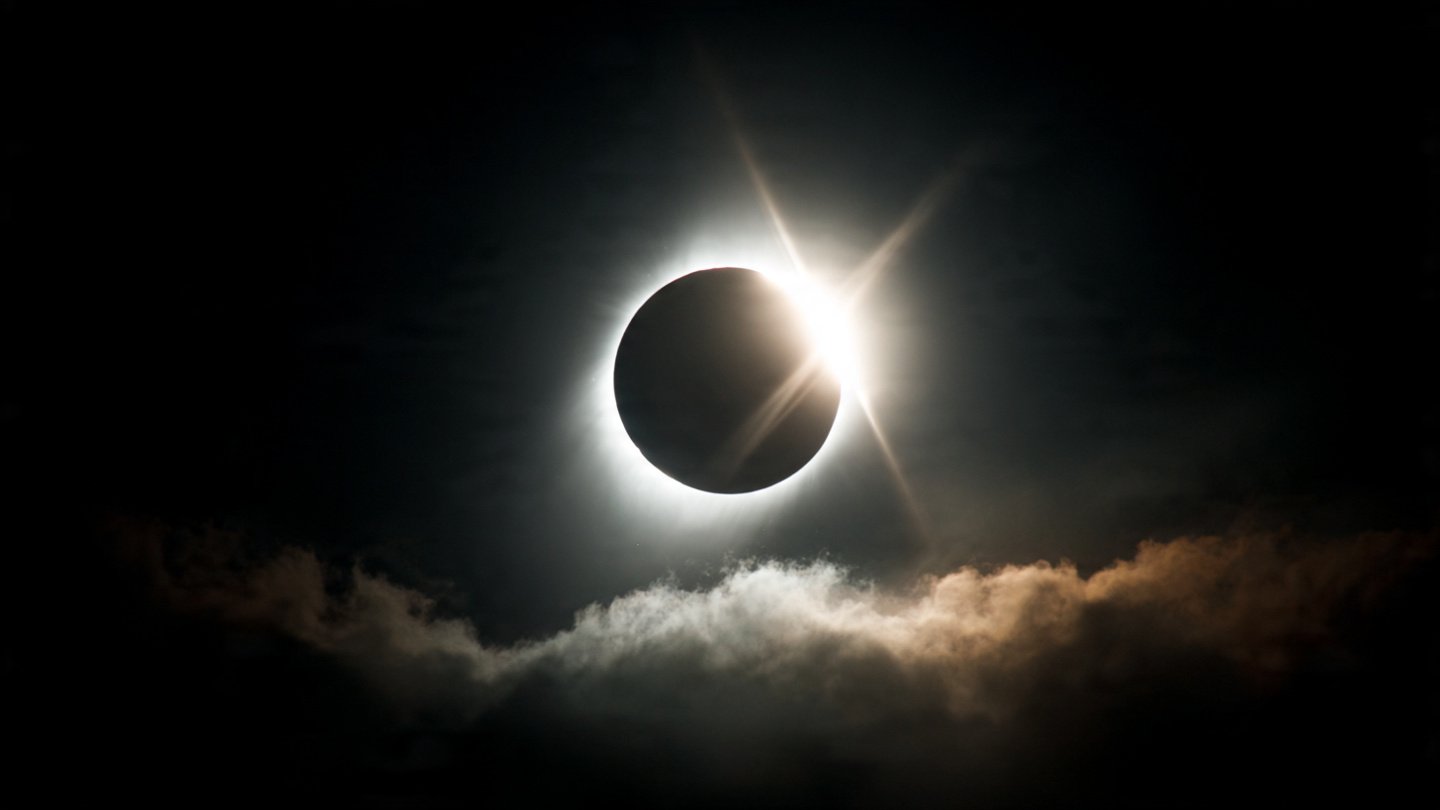
Few events in nature rival the drama and beauty of a total solar eclipse—when the Moon perfectly aligns between Earth and the Sun, momentarily turning day into night. But some eclipses stand above others in rarity and spectacle. One such event is the “Eclipse of the Century”, set to occur on August 2, 2027, and expected to be one of the longest total solar eclipses visible on land this century.
What Is a Total Solar Eclipse?
A total solar eclipse happens when the Moon completely covers the Sun’s bright disk as seen from Earth. This alignment creates a narrow strip of totality—a shadowed path where observers see the Sun’s glowing outer atmosphere, called the corona, while the sky around them dims dramatically. Outside this totality path, viewers experience a partial eclipse but not full darkness.
Sunlight disappears, temperatures drop, planets and bright stars may become visible, and the sky takes on an eerie twilight—offering a breathtaking experience cherished by scientists and skywatchers alike.
The Exact Date: August 2, 2027
Astronomers have pinpointed Monday, August 2, 2027 as the date of this remarkable total solar eclipse. This event is gaining global attention because the Moon will be near its closest point to Earth (perigee) while Earth is at a favorable position relative to the Sun. This rare combination allows the Moon to cover the Sun for an unusually long time, producing a totality duration that few eclipses can match.
Nearly Six Minutes of Total Darkness
What makes the 2027 eclipse especially noteworthy is the duration of totality—up to 6 minutes and 23 seconds in some locations along the path. That’s longer than the brief 2–4 minutes typical of most solar eclipses, and it’s why this one is often called the eclipse of the century.
While totality eclipses occur roughly every 18 months somewhere on Earth, ones lasting more than six minutes—and visible on land—are extremely rare. For context, the 2009 total solar eclipse held a maximum totality duration of about 6 minutes and 38 seconds, but much of that path was over the ocean. The upcoming 2027 event stands out because that extended period of darkness will be visible across populated regions.
During totality, the sky transitions from daylight to an eerie dusk, with the Sun’s corona forming a pearly glowing ring overhead. The sudden transformation from bright sunlight to near darkness in mid‑day is something few natural phenomena can rival, and watching it unfold for over half a dozen minutes is a memory many eclipse chasers will treasure.
The Path of Totality: Where Darkness Will Fall
The path of totality is the narrow band across Earth where the total eclipse is visible. For the 2027 event, this path begins over the Atlantic Ocean and travels eastward across southern Europe, North Africa, and the Middle East before ending near Somalia. Major regions where totality will be visible include:
- Southern Spain (including Cádiz and Málaga)
- Gibraltar
- Morocco
- Algeria
- Tunisia
- Libya
- Egypt
- Sudan
- Saudi Arabia
- Yemen
- Somalia
- British Indian Ocean Territory
Visitors within this narrow corridor will witness total darkness as the Moon’s shadow races across the surface of Earth.
Best Places to Witness the Eclipse
Choosing the right place to witness this eclipse depends on what you value most: maximum totality, cultural experience, weather reliability, or travel convenience. Here are some of the best spots:
1. Luxor, Egypt
Duration: ~6 minutes 22 seconds
Why go: Luxor likely offers the longest totality on land, historic surroundings (like ancient temples and the Valley of the Kings), and arid climate with high odds of clear skies.
2. Aswan & Lake Nasser, Egypt
Duration: Around 6 minutes
Why go: Quiet desert vistas and reflective waters create striking visual settings for the eclipse.
3. Southern Spain (Cádiz, Málaga, etc.)
Duration: ~4–5 minutes
Why go: Spain’s southern regions offer easier travel infrastructure, great food and culture, and significant portions of totality.
4. North Africa (Morocco, Algeria, Tunisia)
Duration: Between ~4 and 6 minutes
Why go: Clear desert skies, open landscapes, and historical cities make for memorable viewing.
5. Red Sea Coast and Saudi Cities (Jeddah, Mecca)
Duration: ~5–6 minutes
Why go: Stunning locations blending modern skylines with celestial spectacle under dramatic skies.
6. Yemen and Somalia (remote equatorial plains)
Duration: ~4–5 minutes
Why go: Vast open horizons with minimal light pollution; however, travel may be challenging.
Each location offers a different backdrop—from ancient history to modern cities, from sandy deserts to ocean horizons—making the eclipse a global event with diverse viewing experiences.
Why This Eclipse Is So Exceptional
Solar eclipses vary in length because of the elliptical orbits of Earth and the Moon. When the Moon is near perigee (closest to Earth) and Earth’s distance from the Sun is near its farthest point, the Moon appears slightly larger and covers the Sun more completely for a longer time—creating extended totality. The 2027 eclipse’s rare geometry produces a total darkness window that few eclipses match this century.
Astronomers often refer to these long-duration events as once‑in‑a‑lifetime because the window of totality remains narrow, and the alignment conditions are unusually favorable. Millions of people live within a day’s travel of the path, increasing the chance that eclipse chasers and tourists will flock to ideal viewing spots.
What Observers Will See During Totality
During totality, daytime transforms into an eerie twilight:
- Temperature drops noticeably.
- Shadows become sharper and oddly distinct.
- Bright planets and stars emerge in the sky above.
- 360° horizon glows like sunset light.
- The Sun’s corona becomes visible— a pearly halo stretching into space.
Because totality lasts several minutes in some areas, observers will have time not just to experience the moment but also to absorb and photograph it—something eclipses of shorter duration make much harder.
Safety First: How to Watch an Eclipse Safely
Although totality itself is safe to view with the naked eye, the partial phases before and after totality are dangerous to look at without proper eye protection. Normal sunglasses are not safe. Instead, use:
- Certified solar eclipse glasses
- Solar filters for binoculars and telescopes
- Pinhole projectors or solar projection boxes
Even a tiny sliver of the exposed Sun can cause serious eye damage if viewed without proper protection.
Final Thoughts
The total solar eclipse of August 2, 2027 will be a defining astronomical event of the century—a prolonged period of total darkness lasting up to 6 minutes and 23 seconds, visible across three continents. From the sweeping sands of Egypt to the historic cities of Spain and the open deserts of North Africa, millions will have a chance to witness nature’s grand alignment.
Whether you’re a seasoned eclipse chaser or a first‑time skywatcher, this rare celestial phenomenon offers a once‑in‑a‑lifetime experience worth planning for. Just remember to protect your eyes, choose your viewing spot carefully, and be prepared to see day turn into night in the blink of a cosmic