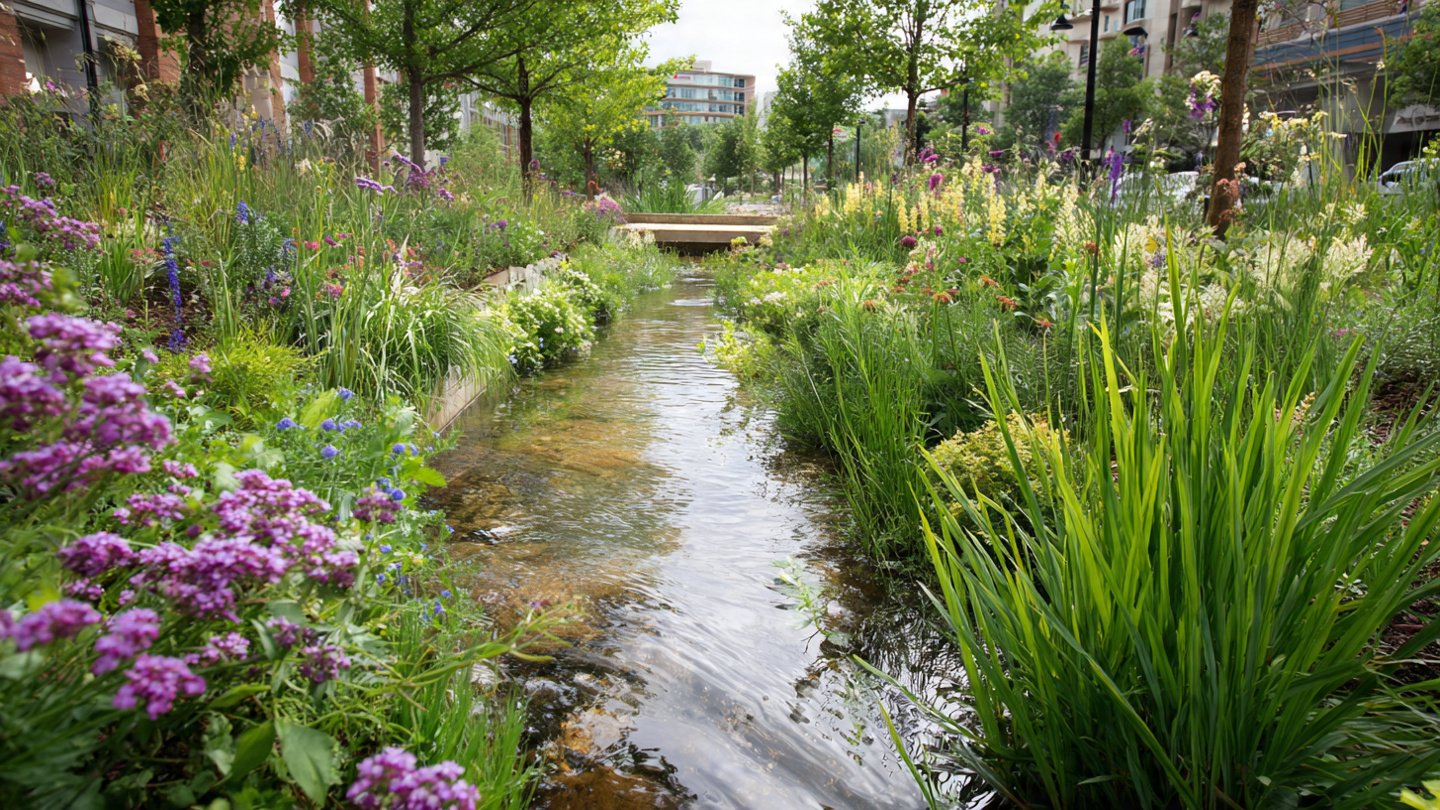
Urban flooding is one of the most pressing challenges facing cities today. Rapid urbanization, impervious surfaces, and aging stormwater infrastructure have led to devastating floods, property damage, and environmental degradation. But in recent years, a remarkable solution has emerged—rain gardens. In flood-prone cities around the world, over 8 million rain gardens have been constructed, transforming urban landscapes while mitigating flood risks and restoring ecosystems.
This article explores how these gardens work, their benefits, and why they are becoming an essential component of modern urban planning.
What Is a Rain Garden?
A rain garden is a shallow, planted depression designed to capture, absorb, and filter stormwater runoff from roofs, driveways, streets, and other impervious surfaces. Unlike traditional lawns or concrete drainage systems, rain gardens slow down water, allowing it to percolate into the soil, recharge groundwater, and reduce the burden on urban storm drains.
Key features of rain gardens include:
- Native or water-tolerant plants
- Mulch to reduce erosion and retain moisture
- Graded slopes to direct runoff into the garden
- Soil engineered for optimal drainage and filtration
By mimicking natural landscapes, rain gardens transform how cities manage rainwater.
The Scale of Urban Rain Gardens
Over the past decade, flood-prone cities worldwide—from New York and Chicago to Mumbai and Amsterdam—have embraced rain gardens as a sustainable solution. Estimates suggest that more than 8 million rain gardens have been implemented globally, collectively covering hundreds of thousands of acres.
This massive scale has been driven by:
- Government initiatives and urban planning regulations
- Community-led environmental projects
- Incentive programs encouraging residents and businesses to install gardens
For example, cities like Portland, Oregon, have made rain gardens a standard component of stormwater management programs, while New York City has invested millions to integrate them into public spaces and private properties.
How Rain Gardens Absorb Water and Prevent Flood Damage
1. Slowing Down Stormwater
When rain hits impervious surfaces like roofs and roads, water flows quickly into storm drains, often overwhelming systems and causing flash floods. Rain gardens act as natural sponges, slowing down runoff and preventing excessive water accumulation.
2. Increasing Infiltration
Rain gardens are built with engineered soil layers that promote infiltration. Water captured in the garden gradually percolates into underground aquifers, recharging groundwater supplies rather than contributing to surface flooding.
3. Reducing Pressure on Sewer Systems
During heavy rainfall, combined sewer systems can overflow, leading to water pollution and property damage. By capturing runoff at the source, rain gardens reduce the volume of water entering municipal storm drains, lowering the risk of urban flooding.
Environmental Benefits of Rain Gardens
Beyond flood prevention, rain gardens provide numerous ecosystem services:
1. Filtering Pollutants
Runoff from urban areas often carries oil, heavy metals, fertilizers, and pesticides. Rain gardens filter these pollutants naturally, preventing contamination of rivers, lakes, and oceans.
2. Enhancing Biodiversity
By using native plants and pollinator-friendly species, rain gardens create microhabitats for birds, bees, butterflies, and other beneficial organisms. Cities with widespread rain gardens have reported significant increases in urban biodiversity.
3. Mitigating Urban Heat Island Effects
The vegetation in rain gardens contributes to cooling urban areas by providing shade and releasing moisture, reducing heat buildup from concrete and asphalt surfaces.
4. Supporting Carbon Sequestration
Plants in rain gardens absorb carbon dioxide during photosynthesis. While individual gardens may sequester modest amounts, the cumulative effect of millions of gardens contributes to carbon reduction at the urban scale.
Social and Community Benefits
Rain gardens aren’t just environmental tools—they also enhance community resilience and quality of life:
- Aesthetic value: Rain gardens beautify neighborhoods with flowers, shrubs, and greenery
- Educational opportunities: Schools and community centers use rain gardens to teach about water cycles and sustainability
- Property value: Well-maintained gardens can increase real estate appeal
- Community engagement: Residents often participate in planting and maintaining gardens, fostering stewardship and local pride
By combining environmental protection with social engagement, rain gardens create resilient, vibrant neighborhoods.
Challenges and Solutions in Implementing Rain Gardens
Despite their benefits, scaling rain gardens to millions across cities comes with challenges:
1. Space Constraints
Urban areas often have limited open spaces. Creative solutions include:
- Converting street medians or sidewalks into rain garden zones
- Installing miniature rain gardens on rooftops and terraces
2. Maintenance
Rain gardens require ongoing care to thrive:
- Mulching, pruning, and weeding
- Periodic soil amendments to maintain filtration
Many cities address this through community volunteer programs and partnerships with environmental NGOs.
3. Public Awareness
Residents may be unaware of rain garden benefits or proper design. Educational campaigns and incentive programs have proven effective in increasing adoption.
Case Studies: Rain Gardens in Action
New York City, USA
In response to frequent flash floods, NYC launched a Green Infrastructure Program, including thousands of rain gardens across parks, schools, and residential areas. The initiative reduces stormwater entering combined sewers by millions of gallons annually, protecting streets and homes from flooding.
Singapore
Singapore, known for its heavy rainfall, has integrated rain gardens into urban planning through the Active, Beautiful, Clean Waters (ABC Waters) Program. Rain gardens not only manage floodwater but also enhance public spaces with recreational and educational amenities.
Mumbai, India
Mumbai’s seasonal monsoon floods prompted the city to encourage community rain garden projects in flood-prone neighborhoods. These gardens absorb rooftop and street runoff, mitigating property damage while improving air quality and greenery in densely populated areas.
Future Prospects: Scaling Up Rain Gardens
With urban populations growing and climate change intensifying extreme weather, the need for rain gardens will only increase. Experts recommend:
- Integration into city master plans to ensure stormwater management is built into development projects
- Government incentives to encourage private property owners to install rain gardens
- Smart technology to monitor water absorption, soil health, and maintenance needs
- Community partnerships to maintain and expand green infrastructure
If properly scaled, rain gardens could prevent billions in flood-related damages annually while creating resilient, sustainable cities.
How Individuals Can Contribute
Residents can also participate in this green revolution:
- Install a small rain garden at home to capture rooftop runoff
- Plant native, water-absorbing plants that thrive in local climate conditions
- Educate neighbors and schools about rain garden benefits
- Volunteer with city or NGO programs to maintain community rain gardens
Even a single home rain garden can make a measurable impact on stormwater absorption and neighborhood resilience.
Conclusion: Rain Gardens Are Transforming Cities
The story of over 8 million rain gardens across flood-prone cities is more than just about water management. It’s about reconnecting urban life with natural systems, creating resilient communities, and restoring ecosystems in concrete-dominated landscapes.
By absorbing water, preventing flood damage, filtering pollutants, and supporting biodiversity, rain gardens have proven themselves as an essential tool for sustainable urban living. As more cities adopt and expand these green spaces, the combined effect could redefine urban planning for generations, turning flood-prone areas into thriving, resilient, and beautiful environments.