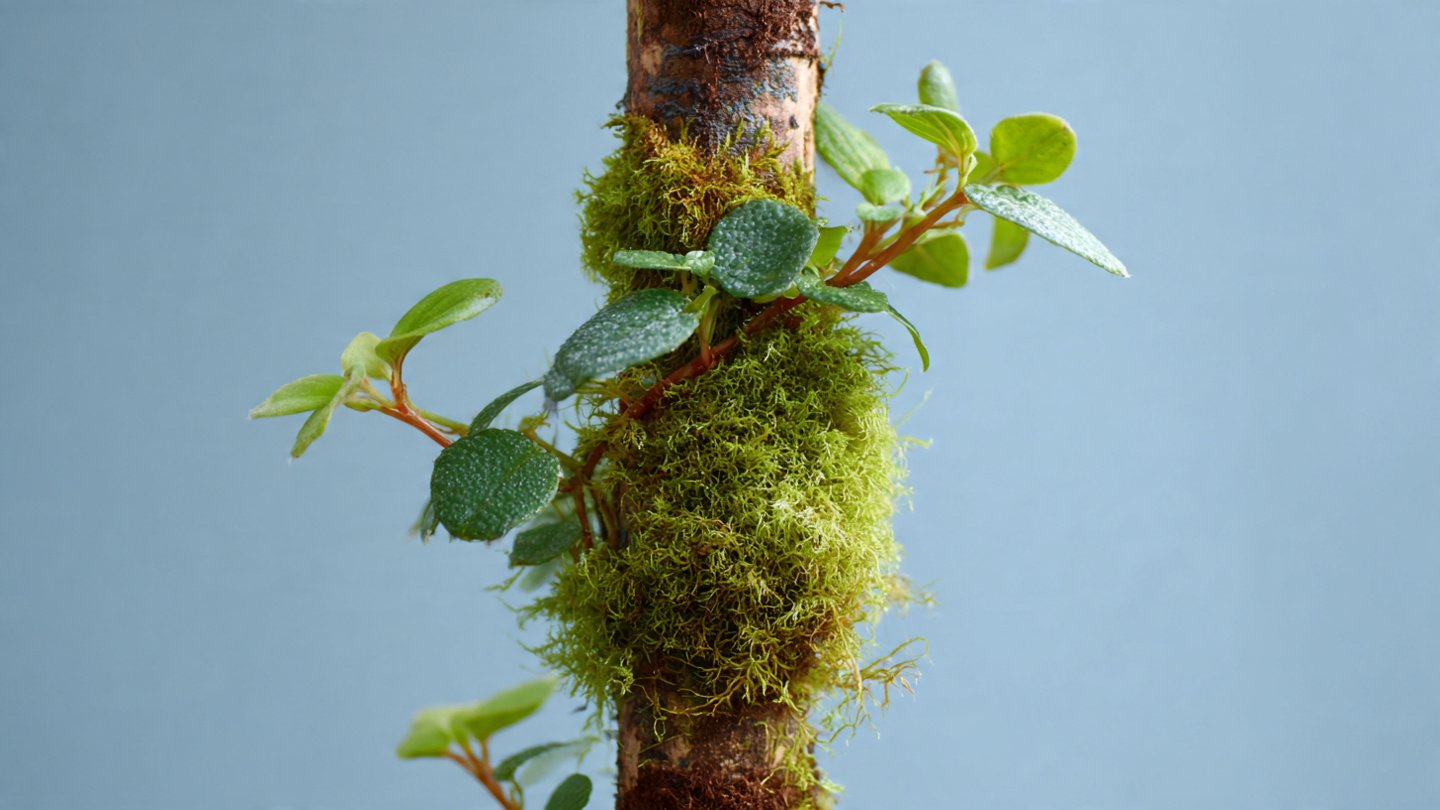
If you love climbing houseplants like Monstera, pothos, philodendron, or syngonium, you’ve probably seen them growing up a tall, fuzzy pole wrapped in moss. That simple structure is called a moss pole, and it can completely change the way your climbing plants grow, look, and thrive.
But what exactly is a moss pole, and why do plant experts swear by it?
In this guide, we’ll break down what a moss pole is, how it works, which plants benefit the most, and how using one can transform a leggy houseplant into a lush, vertical showpiece.
What Is a Moss Pole?
A moss pole is a vertical plant support made from a sturdy inner core (usually wood, PVC, or plastic) wrapped in sphagnum moss, coco coir, or similar fibrous material. It is placed directly into a plant’s pot, allowing climbing plants to attach themselves as they grow upward.
Unlike ordinary stakes or trellises, moss poles are designed to mimic a plant’s natural growing environment, especially tropical rainforests where many houseplants evolved.
In the wild, climbing plants grow up tree trunks, rocks, or other surfaces, using aerial roots to anchor themselves. A moss pole recreates this surface indoors.
Why Do Climbing Plants Need Support?
Many popular houseplants are natural climbers, not trailing plants by design. When grown without support, they often sprawl, droop, or develop long, weak stems.
Examples include:
- Monstera deliciosa
- Philodendron (especially heartleaf and climbing varieties)
- Pothos
- Syngonium
- Scindapsus
- Epipremnum species
Without something to climb, these plants:
- Become leggy
- Produce smaller leaves
- Lose their upright form
- Grow unevenly
A moss pole provides structure and encourages plants to grow upward instead of outward, just as they would in nature.
How Does a Moss Pole Work?
A moss pole helps climbing plants in three key ways: physical support, moisture retention, and root attachment.
1. Provides Vertical Support
As the plant grows, its stems are gently tied or guided toward the moss pole. Over time, the plant naturally wraps around it, using the pole as a backbone.
This allows the plant to:
- Grow taller
- Maintain stronger stems
- Display leaves more prominently
Vertical growth also saves space, making moss poles ideal for small apartments or indoor jungles.
2. Encourages Aerial Root Growth
Many climbing plants produce aerial roots, which are roots that grow from stems rather than soil. These roots are designed to latch onto surfaces.
The moss on the pole gives aerial roots something soft and textured to grip. Once attached, the plant becomes more stable and self-supporting.
This attachment mimics how the plant would cling to tree bark in the wild.
3. Retains Moisture for Healthier Growth
Sphagnum moss holds moisture exceptionally well. When lightly misted, the moss pole stays humid, providing hydration directly to aerial roots.
This extra moisture:
- Prevents aerial roots from drying out
- Encourages faster growth
- Supports larger, healthier leaves
For tropical plants that thrive in humidity, this can make a noticeable difference.
How a Moss Pole Improves Leaf Size and Shape
One of the biggest reasons plant lovers use moss poles is leaf development.
When climbing plants grow upward with proper support:
- Leaves become larger
- Fenestrations (leaf splits and holes) appear more often
- Leaf spacing becomes tighter
- Overall growth looks fuller and more mature
This is especially true for Monstera deliciosa and climbing philodendrons, which only reach their iconic leaf size when allowed to climb.
Without support, these plants may survive—but they won’t thrive.
Moss Pole vs. Stake vs. Trellis
Not all plant supports are created equal. Here’s how moss poles compare:
Moss Pole
- Best for tropical climbers
- Supports aerial roots
- Retains moisture
- Encourages natural growth patterns
Stake (Wood or Bamboo)
- Provides basic support
- Does not retain moisture
- Does not support aerial roots
- Mostly structural
Trellis
- Good for vining or flowering plants
- Offers multiple climbing paths
- Less effective for aerial root attachment
If your plant has aerial roots and naturally climbs tree trunks, a moss pole is usually the best choice.
Which Plants Benefit Most from Moss Poles?
Moss poles are ideal for epiphytic and climbing plants, including:
- Monstera deliciosa
- Monstera adansonii
- Philodendron hederaceum
- Philodendron micans
- Pothos (golden, marble queen, neon)
- Scindapsus pictus
- Syngonium podophyllum
- Rhaphidophora tetrasperma
Trailing plants can also be trained upward, but climbers benefit the most.
How to Use a Moss Pole Correctly
Using a moss pole is simple, but proper setup makes all the difference.
Step 1: Insert the Pole Securely
Place the pole in the pot close to the main stem, pushing it down until it reaches the bottom for stability.
Step 2: Gently Attach the Plant
Use soft plant ties, twine, or Velcro strips to loosely guide stems toward the pole. Avoid tying too tightly.
Step 3: Keep the Moss Slightly Moist
Mist the pole regularly, especially in dry climates. It should be damp, not dripping wet.
Step 4: Adjust as the Plant Grows
As new growth appears, continue guiding it upward until the plant naturally attaches itself.
Common Mistakes to Avoid
Even though moss poles are beginner-friendly, a few mistakes can limit their benefits.
- Letting the pole dry out completely – dry moss won’t support aerial roots
- Using a pole that’s too short – plants grow fast and may outgrow it
- Tying stems too tightly – can damage growth
- Ignoring light needs – climbing doesn’t replace proper lighting
A moss pole supports growth, but it doesn’t replace good care.
Do Moss Poles Need Maintenance?
Yes, but it’s minimal.
Over time:
- Moss may compress or degrade
- Poles may need extension
- Older moss may need refreshing
Some plant owners choose extendable moss poles, allowing the support to grow with the plant.
Occasional misting and gentle adjustments are usually all that’s required.
Are Moss Poles Necessary?
Not every plant needs a moss pole to survive—but many benefit enormously from one.
If you want:
- Taller growth
- Bigger leaves
- A neater, vertical look
- Healthier aerial roots
Then a moss pole is one of the best upgrades you can make for climbing houseplants.
Final Thoughts
A moss pole is more than just a stick in a pot—it’s a tool that recreates nature indoors. By offering support, moisture, and a climbing surface, moss poles allow tropical plants to grow the way they were meant to.
Whether you’re nurturing a young pothos or trying to unlock the full potential of a Monstera, adding a moss pole can turn ordinary growth into something spectacular.
If you’re serious about healthy, happy climbing plants, a moss pole isn’t optional—it’s a game changer 🌿