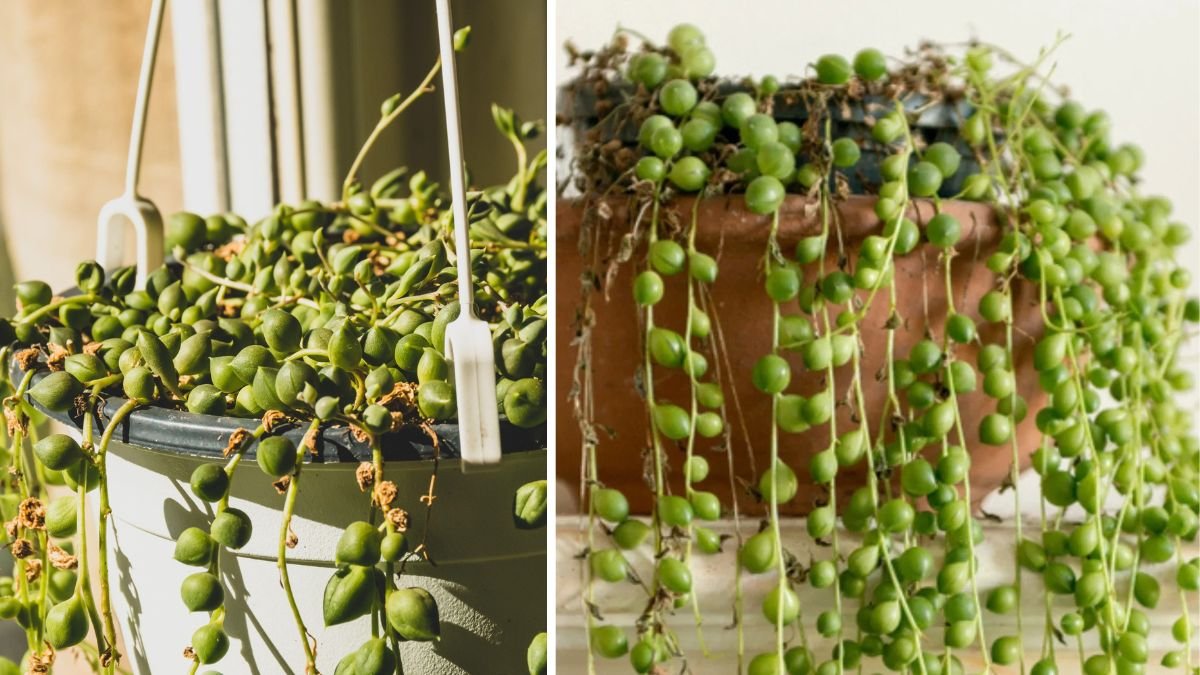
The String of Pearls (Senecio rowleyanus) is one of the most striking succulents you can grow. Its cascading, bead-like leaves create an elegant, almost jewelry-like effect, making it a favorite among indoor plant enthusiasts. However, many owners notice a frustrating problem: the pearls begin to shrivel. When this happens, it can make the plant look unhealthy, limp, and even lead to its decline if not addressed. Understanding why this happens—and how to fix it—requires a closer look at the plant’s needs and the conditions it prefers.
Here’s an in-depth guide on why your String of Pearls is shriveling and what you can do to restore its health.
1. Underwatering: The Most Common Cause
Shriveling is often a sign that the plant is not getting enough water. String of Pearls stores moisture in its round leaves, so when it doesn’t receive sufficient water, the beads start to wrinkle and shrink as the plant uses up its stored reserves.
Signs of underwatering:
- Pearls look small, wrinkled, or shriveled.
- The stems may appear thin or limp.
- The soil feels completely dry several inches down.
How to fix it:
- Water thoroughly, ensuring the soil is evenly moist but not waterlogged.
- Allow the top inch of soil to dry out before the next watering.
- Water less frequently during winter, as the plant’s growth slows down.
A good rule of thumb is to give your plant a deep soak when the beads start to wrinkle but avoid constant, shallow watering, which can cause other problems.
2. Overwatering: The Silent Threat
While underwatering is a common issue, overwatering can also cause shriveling. Excess water can lead to root rot, preventing the plant from absorbing nutrients and moisture properly. When roots are damaged, the pearls may shrink and eventually fall off.
Signs of overwatering:
- Leaves become translucent or mushy before shriveling.
- Stems appear soft or discolored.
- The soil is consistently wet or soggy.
How to fix it:
- Stop watering immediately if you suspect overwatering.
- Remove the plant from its pot and inspect the roots. Trim any brown or mushy roots with sterilized scissors.
- Repot the plant in fresh, well-draining succulent soil.
- Ensure the pot has drainage holes to prevent water from sitting at the bottom.
Overwatering is particularly dangerous because the plant may look healthy at first while the roots slowly deteriorate underneath. Correcting it early can save your String of Pearls.
3. Improper Lighting
String of Pearls thrives in bright, indirect sunlight. Insufficient light can stress the plant, causing leaves to shrivel as it struggles to photosynthesize and maintain its energy reserves. Conversely, too much direct sunlight can scorch the leaves, leading to shrinkage and brown spots.
Signs of light-related stress:
- Pearls are smaller or shriveled along the parts of the plant farthest from the light source.
- Stems stretch toward the light, a condition called etiolation.
- Leaves develop brown patches if exposed to harsh direct sun.
How to fix it:
- Place your plant near a bright, south- or west-facing window with filtered light.
- Rotate the plant occasionally to ensure even light distribution.
- If natural light is insufficient, supplement with a full-spectrum grow light for 10–12 hours a day.
Proper lighting ensures healthy bead development and prevents shriveling caused by stress.
4. Temperature and Humidity Stress
String of Pearls prefers warm temperatures between 70–80°F (21–27°C) during the growing season and cooler but not freezing conditions in winter. Extreme temperatures, either hot or cold, can cause leaves to shrivel as the plant goes into survival mode.
Signs of temperature stress:
- Pearls shrivel, turn brown, or drop during cold snaps.
- Leaves may dry out quickly in overly hot, dry environments.
- The plant may halt growth during prolonged exposure to unsuitable temperatures.
How to fix it:
- Keep your plant away from drafty windows, heaters, or air conditioners.
- Avoid placing it in rooms where temperatures fall below 50°F (10°C).
- Maintain moderate humidity; too much moisture in the air can contribute to fungal issues, while excessively dry air may stress the plant.
Balancing temperature and humidity is key to preventing seasonal shriveling.
5. Root-Bound Plants
If your String of Pearls has been in the same pot for several years, it may become root-bound. When roots have no space to grow, the plant struggles to take up enough water and nutrients, causing the leaves to shrivel.
Signs of being root-bound:
- Soil dries out very quickly after watering.
- Stems grow poorly or seem thinner than usual.
- Roots are visible at the drainage holes or circling the pot.
How to fix it:
- Repot your plant into a slightly larger container with fresh, well-draining succulent soil.
- Gently loosen the root ball to encourage new growth.
- Avoid oversized pots, which can retain too much moisture and increase the risk of root rot.
Repotting rejuvenates the plant and restores proper water absorption, which helps prevent shriveling.
6. Nutrient Deficiency
While String of Pearls doesn’t require heavy feeding, nutrient deficiencies can lead to shriveled leaves and slow growth. Lack of essential minerals like nitrogen, potassium, or phosphorus may stress the plant, especially during the growing season.
Signs of nutrient deficiency:
- Leaves are smaller, discolored, or shriveled.
- Growth appears stunted or uneven.
- Older leaves may yellow or drop prematurely.
How to fix it:
- Use a balanced succulent fertilizer diluted to half strength every 4–6 weeks during the growing season (spring and summer).
- Avoid fertilizing in winter when the plant is dormant.
- Look for organic options or fertilizers high in potassium to promote healthy bead growth.
Providing appropriate nutrients supports overall plant health and helps maintain the plump, vibrant appearance of the pearls.
7. Pests and Diseases
Shriveling can also be caused by pests such as mealybugs, aphids, or spider mites. These insects suck moisture and nutrients from the plant, causing leaves to shrivel and stems to weaken. Fungal infections due to excess moisture can have a similar effect.
Signs of pest infestation:
- Tiny white cottony patches (mealybugs).
- Webbing or tiny moving dots (spider mites).
- Yellowing or shriveled leaves concentrated in patches.
How to fix it:
- Isolate the plant immediately to prevent pests from spreading.
- Treat with insecticidal soap or neem oil according to instructions.
- Remove severely affected leaves to reduce stress on the plant.
- Ensure proper air circulation and avoid overwatering to prevent fungal growth.
Timely pest control is crucial to prevent permanent damage and leaf loss.
Preventing Future Shriveling
Preventing shriveling comes down to replicating the natural conditions that String of Pearls thrives in:
- Water appropriately – Water deeply but infrequently, letting the soil dry out between sessions.
- Provide bright, indirect light – Avoid low-light locations or harsh direct sunlight.
- Maintain optimal temperature – Keep the plant away from drafts, heat vents, and cold windows.
- Use well-draining soil – Avoid soil that retains excess moisture.
- Fertilize lightly – Support growth during the active season with a diluted succulent fertilizer.
- Check regularly for pests – Early detection prevents severe damage.
By following these practices, you can keep your pearls plump, vibrant, and cascading beautifully.
Conclusion
A shriveling String of Pearls is usually a signal that something is off—whether it’s watering, lighting, temperature, nutrients, or pests. While underwatering is the most common culprit, overwatering, root issues, and environmental stress can also cause the delicate beads to shrink. The key is observation and timely intervention: check soil moisture, examine the plant for pests or root problems, and ensure it has the right light, temperature, and nutrients.
With proper care, your String of Pearls can regain its lush, cascading appearance, turning your indoor space into a verdant display. These elegant succulents are resilient, and with a little attention, they reward you with one of the most unique and stunning foliage displays in any houseplant collection.
Remember: shriveling is not necessarily a death sentence—it’s a call for care. Listen to your plant, adjust its environment, and soon those beautiful pearls will be plump, healthy, and thriving again.