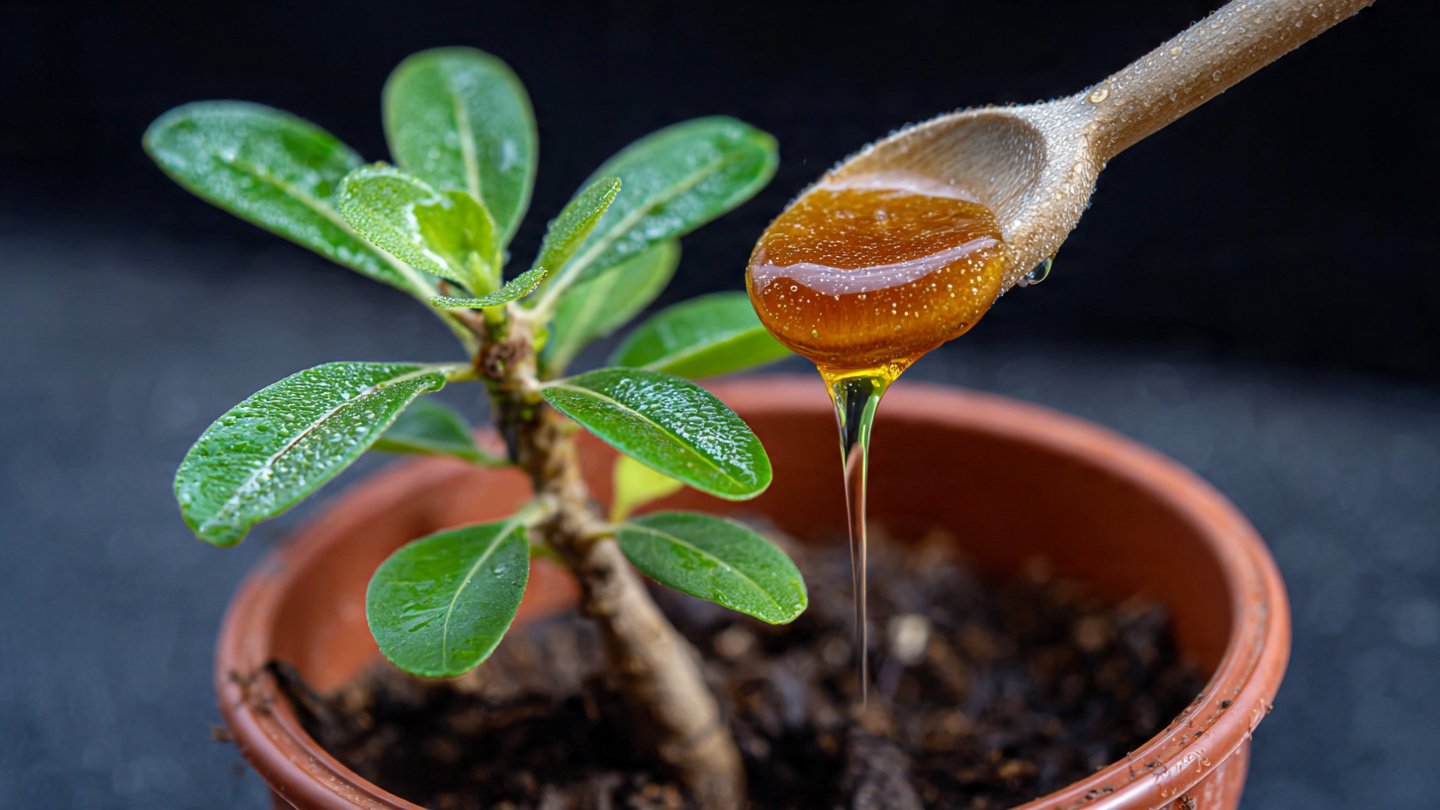
Honey is often touted as a natural alternative to commercial rooting hormones, and for good reason. Its effectiveness comes from a combination of antimicrobial properties, natural sugars, and growth-promoting compounds. Here’s a detailed breakdown:
1. Antimicrobial Properties
One of the main challenges when propagating cuttings is preventing rot and fungal infections. Fresh plant cuttings are vulnerable to pathogens, especially at the site where the stem is cut. Honey naturally contains hydrogen peroxide, low moisture content, and acidic pH, all of which inhibit bacterial and fungal growth.
By applying honey to a cutting before planting, you essentially create a protective barrier that reduces the chance of infection. This gives the cutting a better chance to develop roots successfully.
2. Natural Sugars for Energy
Cuttings do not have a root system yet, so they rely entirely on stored energy to produce new roots. Honey is rich in glucose, fructose, and other simple sugars, which can provide an immediate energy source for the cutting.
This sugar supply helps fuel the metabolic processes necessary for root initiation, allowing the cutting to stay healthy while it establishes its new root system.
3. Growth-Promoting Compounds
Honey contains trace amounts of vitamins, minerals, and enzymes that can promote plant growth. While not as concentrated as commercial rooting hormones like IBA (Indole-3-butyric acid), these compounds can help stimulate cell division and root formation.
Additionally, honey’s osmotic properties help maintain moisture around the cutting, creating a favorable microenvironment for root development.
4. How to Use Honey as a Rooting Hormone
- Choose fresh honey: Raw or unpasteurized honey works best because it retains its natural enzymes and antimicrobial properties.
- Prepare the cutting: Trim your plant cutting to the desired length, removing any lower leaves to avoid rot.
- Apply honey: Dip the cut end of the stem into honey. You can either coat it lightly or roll it in a small amount.
- Plant immediately: Insert the honey-coated cutting into moist potting soil or a propagation medium like perlite or sand.
- Maintain humidity: Keep the cutting in a warm, humid environment to support root growth.
Most cuttings treated with honey will start developing roots within 2–4 weeks, depending on the plant species.
5. Advantages and Limitations
Advantages:
- 100% natural and chemical-free
- Readily available in most households
- Reduces the risk of rot and infection
Limitations:
- Slower rooting compared to synthetic hormones in some cases
- Less effective for very hard-to-root or woody plants
- Can attract ants or other insects if excess honey is used
Conclusion:
Honey works as an effective rooting hormone primarily because it protects the cutting from infection, provides sugars for energy, and creates a microenvironment conducive to root growth. While it may not replace synthetic hormones for every plant, it’s an excellent natural alternative for beginners, herbaceous plants, and small-scale propagation projects.