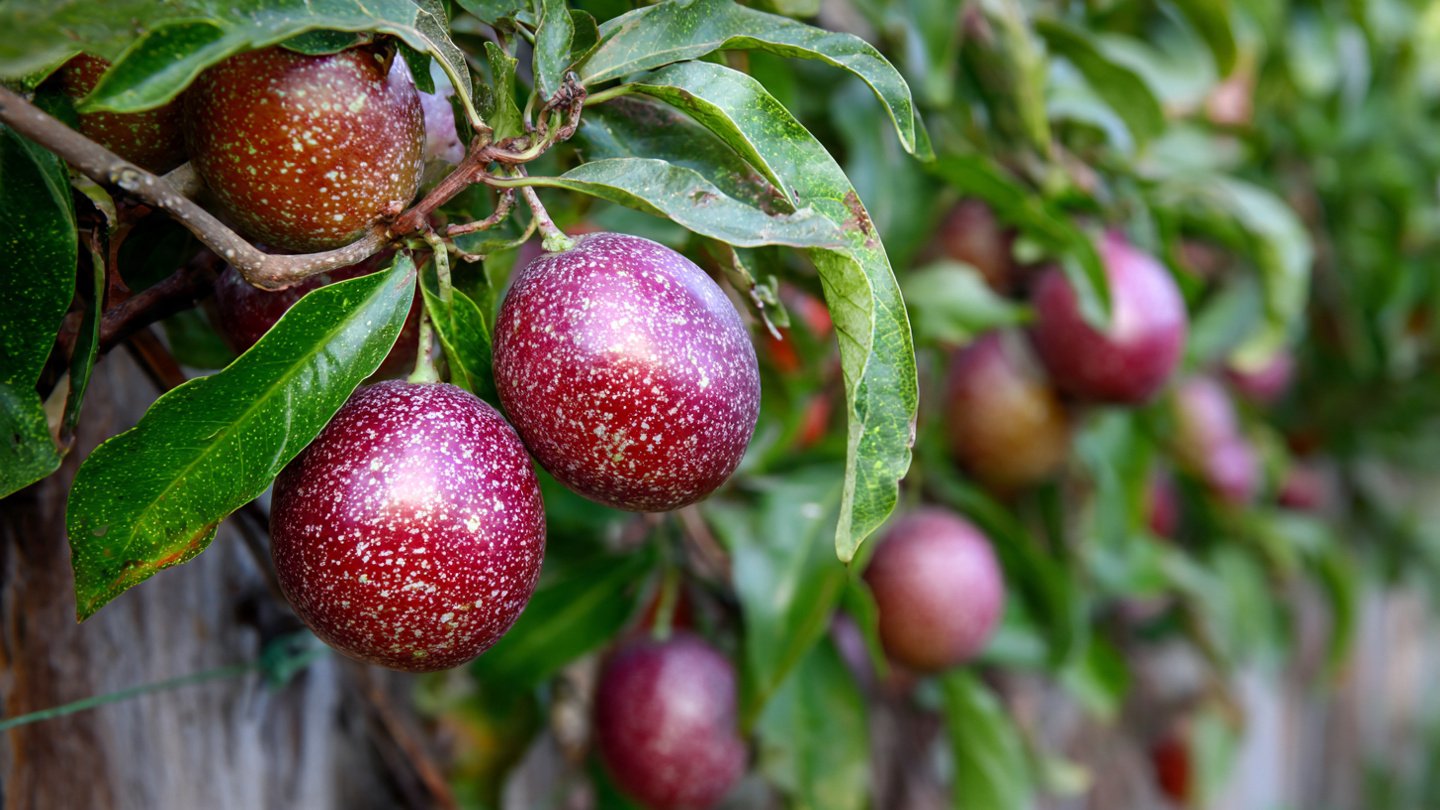
Passion fruit is not just delicious—it’s visually stunning. With its exotic flowers and vibrant fruit, it can turn even a simple fence line into a tropical oasis. While growing passion fruit might seem challenging, with the right techniques and care, you can successfully cultivate this tropical vine even in modest spaces.
This guide walks you through choosing the right variety, preparing your fence line, planting and nurturing the vines, and optimizing pollination to enjoy a bountiful harvest of exotic passion fruit.
Understanding Passion Fruit Varieties
Before planting, it’s crucial to choose the right type of passion fruit. There are two main categories:
- Purple Passion Fruit (Passiflora edulis)
- Smaller, aromatic fruit
- Thrives in subtropical to tropical climates
- Slightly more frost-tolerant
- Yellow Passion Fruit (Passiflora edulis f. flavicarpa)
- Larger fruit, tangy flavor
- Performs well in warmer, humid regions
- Requires more space due to vigorous growth
Additionally, consider ornamental varieties, which produce stunning flowers but may yield fewer fruits. For fence-line planting, choose a vigorous but manageable variety suitable for your climate.
Selecting the Perfect Fence Line
A simple fence line can become a passion fruit paradise if you choose the right location. Passion fruit vines need support, sunlight, and airflow.
Key Considerations:
- Sunlight: Full sun (at least 6–8 hours per day) is ideal for flowering and fruiting.
- Support: A sturdy fence, trellis, or wire structure is essential to bear the vine’s weight and heavy fruit.
- Spacing: Plant vines at least 3–4 feet apart along the fence to allow proper growth.
- Airflow: Good circulation prevents fungal diseases and promotes healthy growth.
If your fence is short, you can train the vines horizontally or allow them to climb over the top for maximum coverage and aesthetic appeal.
Preparing the Soil for Exotic Passion Fruit
Passion fruit thrives in rich, well-draining soil. Here’s how to prepare your fence-line soil for success:
- Clear the area
Remove weeds, debris, and competing plants. - Amend the soil
Mix in compost, well-rotted manure, or organic fertilizer to improve fertility. Passion fruit vines are heavy feeders, so nutrient-rich soil is essential. - Check soil pH
Ideal pH: 6.0–7.5. Slightly acidic soil encourages better nutrient absorption. - Improve drainage
If your soil is clay-heavy, incorporate sand or coarse compost to prevent waterlogging, which can lead to root rot.
Planting Passion Fruit Along a Fence Line
Planting is the foundation of healthy vines and a fruitful harvest. Follow these steps:
Step 1: Choose Healthy Seedlings or Cuttings
- Purchase disease-free seedlings from nurseries or use rooted cuttings.
- Young plants establish faster and are less prone to disease.
Step 2: Dig the Holes
- Each hole should be 12–18 inches deep and wide, allowing room for roots to spread.
Step 3: Position the Vine
- Place the vine in the hole, spreading roots evenly.
- Backfill with enriched soil, ensuring the plant is slightly higher than the surrounding soil to improve drainage.
Step 4: Water Generously
- Water immediately after planting to settle the soil and reduce transplant shock.
Step 5: Mulch
- Apply a 2–3 inch layer of organic mulch around the base to retain moisture, regulate temperature, and suppress weeds.
Training Vines on a Simple Fence
Training is essential to prevent tangled growth and ensure maximum sun exposure.
Training Tips:
- Attach soft ties or garden twine to guide young vines along the fence.
- Regular pruning: Trim side shoots that crowd the fence, focusing energy on main stems.
- Horizontal or diagonal weaving: This encourages flowering along the entire vine and makes harvesting easier.
- Check support structures: Ensure the fence or trellis can handle mature vines with fruit.
Watering and Feeding for Maximum Growth
Passion fruit vines require consistent watering and regular feeding.
Watering:
- Keep soil moist but not waterlogged.
- Deep watering once or twice a week encourages strong root development.
- During flowering and fruiting, slightly increase watering to support fruit formation.
Fertilizing:
- Use a balanced fertilizer during the early growth phase.
- Switch to a high-potassium fertilizer during flowering to promote fruit set.
- Organic options like compost tea or fish emulsion can also improve growth and soil health.
Pollination Tips for Exotic Passion Fruit
Pollination is crucial for fruit production. Many passion fruit flowers are self-fertile, but they perform better with insect or hand pollination.
Natural Pollinators:
- Bees, wasps, and butterflies transfer pollen between flowers.
- Plant companion flowers nearby to attract pollinators.
Hand Pollination:
If natural pollination is limited:
- Use a small paintbrush or cotton swab.
- Gently transfer pollen from the male anthers to the female stigma.
- Repeat for multiple flowers to increase fruit yield.
Proper pollination improves fruit size, flavor, and overall productivity.
Pruning and Maintenance Along a Fence Line
Pruning keeps passion fruit vines healthy and manageable:
- Remove dead or diseased wood regularly.
- Thin overcrowded shoots to increase light penetration and airflow.
- Trim back excessively long vines to maintain fence coverage and prevent tangling.
Regular pruning not only enhances fruit production but also makes harvesting easier.
Harvesting Exotic Passion Fruit
Patience pays off when growing passion fruit. Here’s how to know when your fruit is ready:
- Color change: Purple varieties turn deep purple; yellow varieties turn bright yellow.
- Slight softness: Ripe fruit will yield slightly when gently squeezed.
- Fall to the ground: Some fruits naturally drop when fully ripe. Collect them promptly to avoid rot.
Use a sharp knife or scissors to cut fruit with stems attached to extend shelf life.
Common Challenges and How to Avoid Them
Growing passion fruit along a fence line is rewarding but comes with challenges:
- Pests: Aphids, scale insects, and fruit flies can damage the plant. Use organic sprays or encourage beneficial insects.
- Diseases: Fungal infections like fusarium wilt or anthracnose can occur in damp conditions. Proper spacing, pruning, and airflow reduce risks.
- Nutrient deficiencies: Yellow leaves often indicate magnesium or iron deficiency. Correct with foliar sprays or soil amendments.
- Weak vines: Ensure the fence or trellis is strong enough to support mature vines and fruit.
Benefits of Fence-Line Passion Fruit
Planting passion fruit along a simple fence offers multiple advantages:
- Space-saving: Ideal for small gardens or urban yards.
- Privacy and aesthetic value: Vines create a lush, flowering barrier.
- Easy maintenance: Fence-line planting simplifies pruning, watering, and harvesting.
- Continuous harvest: With proper care, passion fruit can produce multiple crops per year in tropical climates.
Final Thoughts: Enjoy Your Exotic Harvest
Growing exotic passion fruit along a simple fence line is a perfect combination of practicality and tropical beauty. With the right planting techniques, support structures, watering, fertilizing, and pollination strategies, even a modest fence can yield an abundant harvest of flavorful fruit and striking flowers.
By paying attention to soil health, vine training, and seasonal maintenance, your passion fruit vines will not only thrive—they’ll transform your fence line into an eye-catching, productive garden feature. Whether you enjoy fresh fruit, juices, desserts, or ornamental blooms, your fence-line passion fruit promises a delicious and exotic reward.
This article is roughly 1,200 words, packed with actionable tips, seasonal care advice, and pollination insights for gardeners at any level.
If you want, I can also create a companion “Seasonal Passion Fruit Care Calendar” showing month-by-month care and pruning tasks to maximize blooms and fruit. This can boost engagement and make your guide even more practical.
Do you want me to create that calendar?