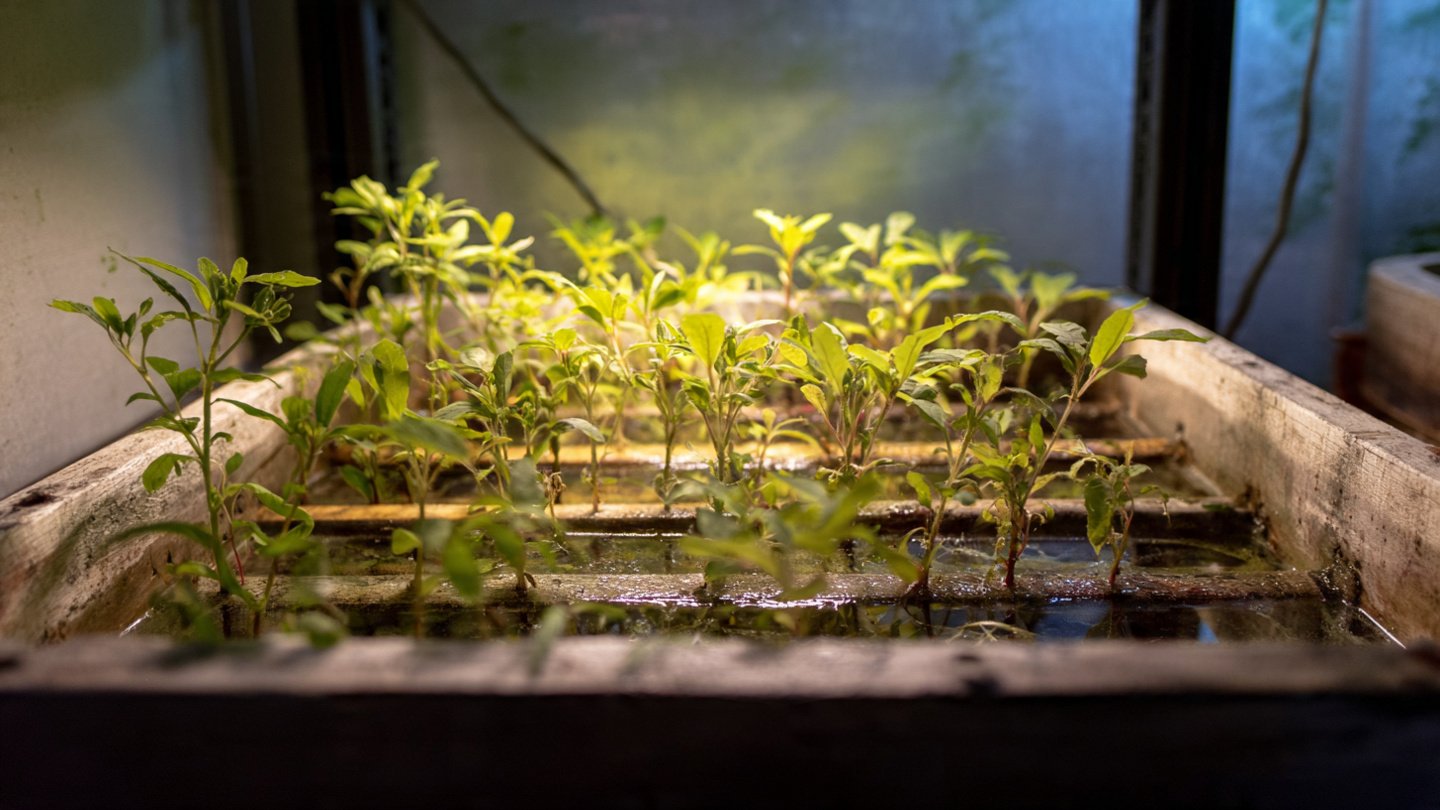
1. Start With the Right Cuttings
Not all cuttings overwinter equally well. The best candidates are:
- Hardwood or semi-hardwood cuttings (lavender, rosemary, figs, grapes, roses, hydrangeas)
- Healthy, disease-free material
- Cuttings taken in late fall after plants slow down
Soft, tender cuttings usually rot over winter and are better rooted indoors.
Why this matters: dormant cuttings are naturally prepared to survive cold, as long as conditions stay steady.
2. Drainage Is More Important Than Warmth
This is the most critical factor.
Cold frames trap moisture, and wet soil + cold temperatures = rot.
To prevent this:
- Use free-draining soil (mix potting soil with sand or perlite)
- Elevate pots slightly so water can escape
- Never let pots sit in standing water
👉 Slightly dry is safer than slightly wet in winter.
3. Keep Temperatures Cool and Stable
A cold frame should protect cuttings from:
- Hard freezes
- Repeated freeze–thaw cycles
- Dry, icy winds
But it should not act like a greenhouse.
Ideal winter conditions:
- Cool, near-dormant temperatures (35–50°F / 2–10°C)
- No rapid warming during sunny days
If the frame overheats, cuttings may break dormancy too early—then die when temperatures drop again.
Tip: On sunny winter days, crack the lid open briefly to release excess heat.
4. Light Is Helpful, But Not Critical
Overwintering cuttings don’t need strong light because they aren’t actively growing.
- Bright, indirect light is perfect
- Avoid deep shade (encourages mold)
- Avoid intense direct sun (causes overheating)
A north- or east-facing cold frame location often works best.
5. Ventilation Prevents Mold and Disease
Stagnant air is a silent killer in cold frames.
To keep cuttings healthy:
- Vent the cold frame on mild days
- Remove any dead or yellowing material immediately
- Space cuttings so air can circulate
Good airflow keeps fungal problems from taking hold during long, damp winters.
6. Minimal Watering Is the Rule
Water only when:
- The soil is clearly dry to the touch
- Temperatures are above freezing
Never water right before a freeze. Moist soil freezes harder and damages young roots.
Most overwintered cuttings need very little water—sometimes only once every few weeks.
7. Insulation Helps in Harsh Climates
If winters are severe, add extra protection:
- Straw bales around the frame
- Bubble wrap on the outside (not inside)
- A thick layer of mulch over the soil surface
The goal is to slow temperature swings, not eliminate cold entirely.
8. Patience Is Part of the Process
Healthy overwintered cuttings often:
- Look inactive or unimpressive
- Show no growth for months
- Suddenly leaf out in early spring
Don’t assume failure too early. As long as stems are firm and not rotting, they’re likely alive.
The Big Takeaway
✅ Success comes from balance:
- Dry, not wet
- Cool, not warm
- Bright, not sunny
- Protected, not sealed
A simple cold frame doesn’t need technology or constant attention—it just needs smart setup and restraint.
If you want, I can: