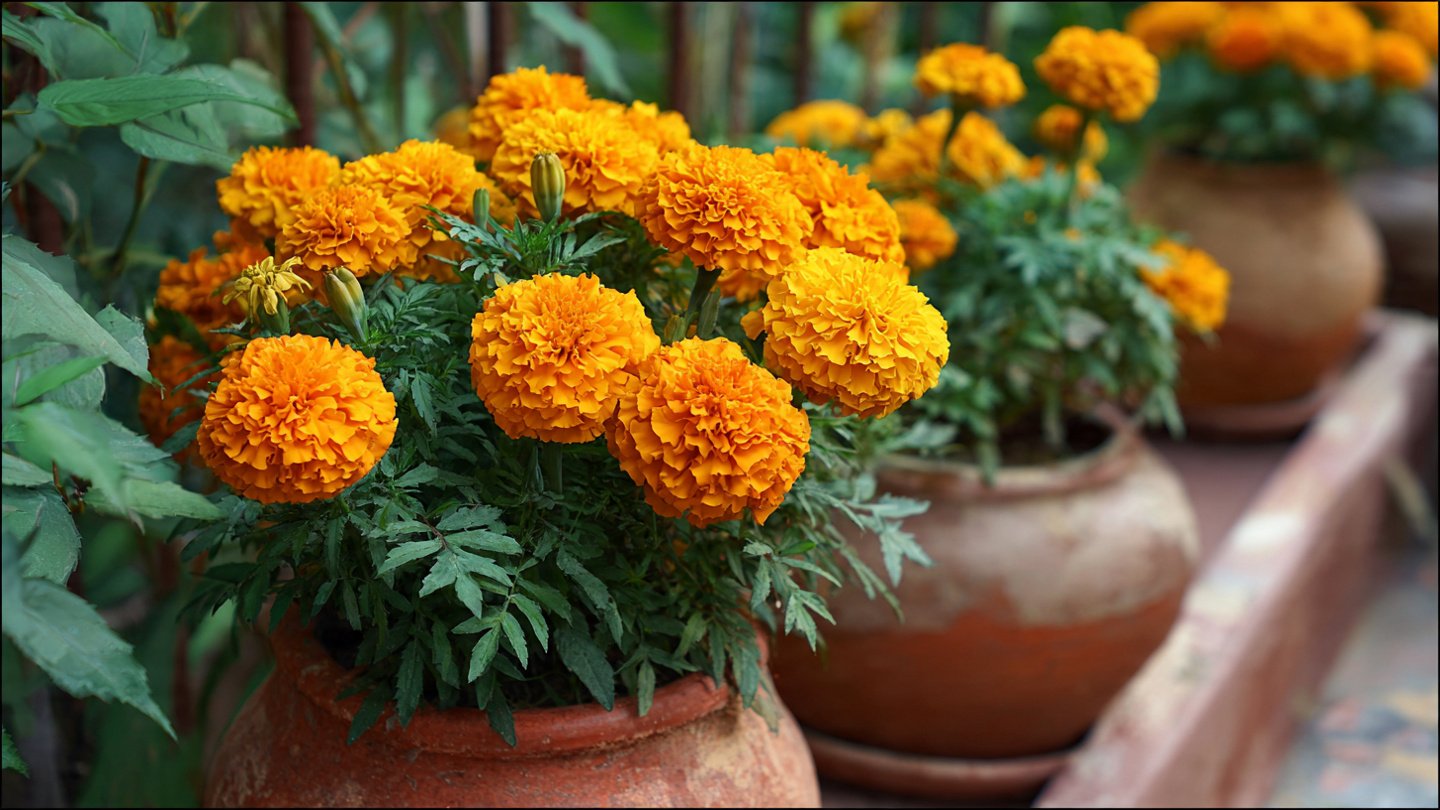
Marigolds are one of the most versatile and beautiful flowers that gardeners can grow. Beyond their vibrant colors and cheerful presence, marigolds are widely recognized for their natural pest-repellent properties, making them an essential addition to any garden. Growing marigolds in pots allows you to maximize their benefits in small spaces, patios, balconies, and even indoor areas, while keeping your garden free from harmful pests.
This guide will walk you through everything you need to know to grow marigolds in pots successfully, from selecting the right variety to care techniques that ensure healthy growth and effective natural pest control.
Why Marigolds Are Essential for Pest-Free Gardens
Marigolds (Tagetes species) are more than just ornamental flowers. They have properties that naturally repel many garden pests, making them a sustainable alternative to chemical pesticides.
1. Natural Pest Repellent
- Nematodes: The roots of marigolds release compounds that repel harmful root-knot nematodes, protecting nearby vegetables.
- Aphids and Whiteflies: The strong scent of marigold flowers discourages these common garden pests.
- Beetles and Tomato Hornworms: Growing marigolds near vegetable plants keeps these destructive insects at bay.
2. Attract Beneficial Insects
Marigolds also attract beneficial insects like ladybugs, lacewings, and hoverflies, which feed on harmful pests, creating a natural balance in your garden ecosystem.
3. Easy to Grow
Marigolds are hardy, fast-growing, and adaptable to various soil and climate conditions. Their ability to thrive in pots makes them perfect for gardeners with limited space.
Choosing the Right Marigold Variety
Several marigold varieties are suitable for container gardening. Selecting the right one depends on space, aesthetics, and pest control needs:
- French Marigolds (Tagetes patula): Compact, bushy, and ideal for pots. Excellent for repelling nematodes and aphids.
- African Marigolds (Tagetes erecta): Tall and showy, with large flowers. Suitable for bigger containers.
- Signet Marigolds (Tagetes tenuifolia): Smaller flowers with a strong fragrance, ideal for borders and pots.
- Patio Varieties: Specially bred for container growth, they produce vibrant blooms and require minimal space.
Choosing a compact variety ensures full growth in pots without overcrowding, which is crucial for maintaining plant health and maximizing pest control benefits.
Selecting the Right Pots
Growing marigolds in pots requires careful selection of the container:
- Size: Use pots 8–12 inches in diameter for smaller varieties and 12–16 inches for larger African marigolds.
- Drainage: Ensure the pot has drainage holes to prevent waterlogging, which can cause root rot.
- Material: Plastic, clay, or ceramic pots work well. Plastic retains moisture better, while clay allows soil aeration.
Choosing the right pot size prevents overcrowding and ensures that the marigold’s roots can grow freely, promoting healthy, vibrant plants.
Soil Preparation
Marigolds are adaptable, but for potted growth and maximum pest-repellent efficiency, a well-prepared soil mix is essential:
- Base: Use a good-quality potting mix rather than garden soil.
- Organic Matter: Mix in compost or well-rotted manure to enrich nutrients.
- Drainage: Add perlite or sand to improve aeration and prevent waterlogging.
- pH: Marigolds thrive in slightly acidic to neutral soil (pH 6.0–7.0).
Well-draining, nutrient-rich soil ensures strong root systems, which are critical for the plant’s natural pest-repelling properties.
Planting Marigolds in Pots
Step 1: Seed or Seedling Selection
- Seeds: Start seeds indoors 4–6 weeks before the last frost. Sow ½ inch deep in seed-starting mix. Keep soil moist and provide sunlight.
- Seedlings: Purchase healthy seedlings from nurseries. Choose compact, disease-free plants with strong stems and bright leaves.
Step 2: Planting Technique
- Fill the pot with prepared soil mix, leaving 1–2 inches at the top.
- Make a small hole and place the seedling or germinated seed. Cover with soil and gently firm.
- Water immediately to settle the soil and hydrate the roots.
Step 3: Spacing
Even in pots, proper spacing is important to avoid overcrowding, which can encourage pests and diseases:
- Small pots: 1–2 seedlings per pot
- Large pots: 3–4 seedlings per pot
- Maintain 6–8 inches between seedlings in larger containers
Care Tips for Healthy Potted Marigolds
Growing marigolds successfully in pots involves consistent care and maintenance:
1. Watering
- Keep the soil consistently moist, but avoid waterlogging.
- Water at the base rather than overhead to prevent fungal diseases.
- During hot weather, check daily, as pots dry faster than garden beds.
2. Sunlight
- Marigolds require 6–8 hours of direct sunlight daily.
- Place pots in sunny locations, such as balconies, patios, or near windows.
- For indoor gardens, supplement with grow lights if natural sunlight is insufficient.
3. Fertilization
- Use a balanced liquid fertilizer every 2–3 weeks to promote vibrant blooms.
- Over-fertilization with nitrogen may lead to more foliage and fewer flowers, reducing pest-repelling efficiency.
- Organic options like compost tea or seaweed extract also work well.
4. Deadheading
- Remove faded flowers to encourage continuous blooming.
- Deadheading improves air circulation, reducing fungal infections and maintaining plant health.
5. Pest Monitoring
- Marigolds are pest-resistant but occasionally may attract aphids or spider mites.
- Spray with water or organic insecticidal soap if pests appear.
- Keep surrounding areas clean to prevent infestations.
Using Marigolds as Natural Pest Repellents
The key benefit of growing marigolds in pots is protecting other plants naturally. Here’s how to maximize this benefit:
Companion Planting
- Place marigold pots near tomatoes, peppers, cucumbers, and other vegetables.
- The scent of marigolds repels nematodes, aphids, and beetles.
- Beneficial insects attracted to marigolds also feed on harmful pests, creating a balanced ecosystem.
Border and Strategic Placement
- Position marigolds around garden beds, along fences, or near the base of susceptible plants.
- Use multiple pots to create natural pest barriers around vulnerable crops.
Continuous Blooming
- Ensure continuous flowering by deadheading regularly and providing adequate sunlight.
- Constant bloom produces consistent pest-repellent effects throughout the growing season.
Advanced Tips for Maximum Success
- Rotate Pots: Move potted marigolds around the garden to cover more vulnerable areas.
- Mix Varieties: Use a mix of French, African, and signet marigolds for enhanced pest control and visual appeal.
- Indoor Applications: Place pots near windows or under grow lights to protect indoor plants from pests like aphids or whiteflies.
- Water-Soluble Extracts: Some gardeners use marigold extracts as natural sprays on vegetables to enhance pest resistance.
Benefits of Growing Marigolds in Pots
- Compact and manageable – perfect for urban or small-space gardens.
- Year-round flowering in suitable climates.
- Chemical-free pest control – reduces the need for harmful pesticides.
- Attractive and colorful – enhances garden aesthetics.
- Encourages biodiversity – attracts beneficial insects and pollinators.
Conclusion
Growing marigolds in pots is an easy, natural, and effective way to maintain a pest-free garden while enjoying beautiful, vibrant blooms. By selecting the right varieties, using appropriate pots, preparing nutritious soil, and following proper care techniques, you can cultivate healthy marigolds that protect your plants and enhance your garden’s visual appeal.
Whether you have a small balcony, rooftop, or limited garden space, marigolds in pots offer compact beauty, natural pest control, and continuous flowering, making them an indispensable addition to any home garden. With consistent care, proper placement, and strategic companion planting, you can enjoy a thriving garden free from pests—naturally and successfully.