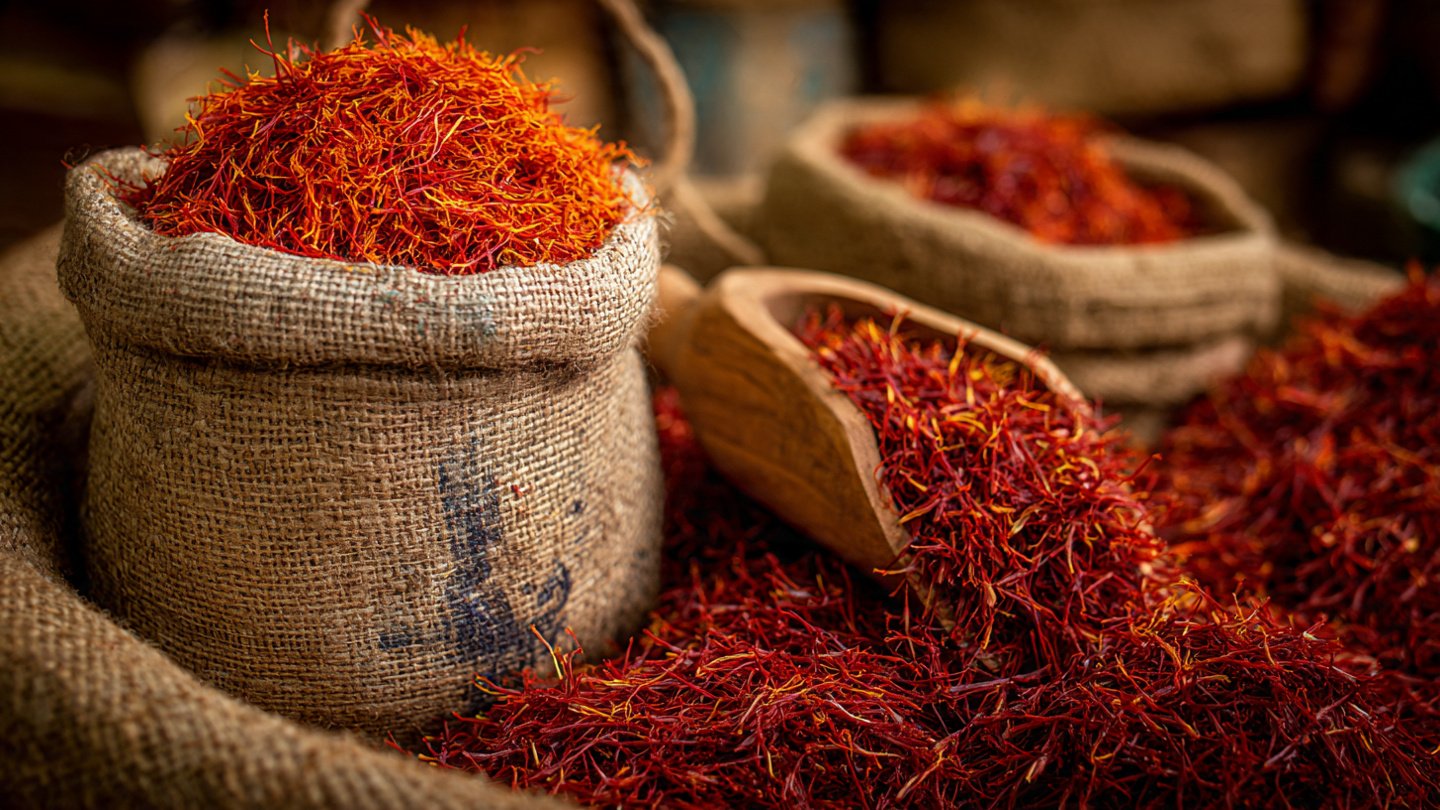
Saffron, often referred to as the “golden spice” or “red gold,” is one of the most valuable and sought-after spices in the world. Known for its distinct aroma, vibrant color, and subtle flavor, saffron has been prized for centuries in culinary traditions, traditional medicine, and even as a dye. Despite its high value, saffron production is labor-intensive, requiring careful cultivation and delicate hand-harvesting of tiny flower stigmas. This intricate process makes saffron one of the most expensive spices globally, even surpassing the price of gold in some markets. But which country leads the world in saffron production today?
A Brief Overview of Saffron
Saffron is derived from the stigmas of the Crocus sativus flower. Each flower produces only three stigmas, and it takes thousands of flowers to produce just one kilogram of saffron. This labor-intensive process, coupled with the specific climatic requirements of the plant, makes saffron a rare and expensive commodity.
Uses of Saffron:
- Culinary: Adds a golden hue and unique flavor to rice dishes, soups, desserts, and beverages.
- Medicinal: Traditionally used to treat digestive issues, mood disorders, and as an antioxidant.
- Cosmetic: Used in skincare products and perfumes.
- Dye: Historically used to color textiles and artworks.
Top Saffron-Producing Countries
Several countries cultivate saffron, but the scale, quality, and climatic conditions vary. The main saffron-producing nations include:
- Iran – The undisputed leader in saffron production.
- India – Particularly in the region of Kashmir.
- Spain – Known for premium European saffron varieties.
- Greece – Famous for Krokos Kozanis saffron.
- Morocco – Produces smaller quantities but with high quality.
Among these, Iran dominates global saffron production, supplying the majority of the world’s saffron.
Iran: The Global Leader
Iran is by far the largest producer of saffron, contributing approximately 90–95% of the world’s total production. Iranian saffron is renowned for its deep red color, strong aroma, and high levels of crocin, picrocrocin, and safranal—the key compounds responsible for its color, flavor, and fragrance.
Why Iran Produces So Much Saffron:
- Ideal Climate: Iran’s arid to semi-arid climate with hot, dry summers and cold winters is perfect for cultivating saffron. The province of Khorasan, in particular, has the ideal combination of soil, temperature, and altitude.
- Traditional Expertise: Iranian farmers have been cultivating saffron for centuries. The expertise in planting, harvesting, and drying saffron has been passed down through generations, ensuring high-quality yields.
- Favorable Soil Conditions: Saffron thrives in sandy-loam soils with good drainage. Iranian regions suitable for saffron have these conditions naturally.
- Labor Force: Saffron harvesting requires careful handpicking, and Iran has a skilled workforce capable of efficiently managing this delicate process.
Major Saffron-Producing Regions in Iran:
- Khorasan Razavi Province: The most famous and productive region.
- South Khorasan Province: Known for high-quality saffron with strong aroma and color.
- Khorasan Shomali Province: A significant contributor to Iran’s overall saffron production.
Production Statistics:
Iran produces around 300 tons of saffron annually, dwarfing production in other countries. This massive output not only satisfies domestic demand but also makes Iran the leading exporter of saffron globally.
India: Kashmir’s Golden Spice
India is another significant saffron producer, though its output is much smaller compared to Iran. Most Indian saffron comes from Kashmir, particularly the Pampore region, known for its high-quality saffron.
Characteristics of Indian Saffron:
- Long, thin, deep-red stigmas.
- Strong aroma with a slightly bitter undertone.
- Considered among the finest saffron in terms of quality, although produced in smaller quantities.
Challenges in Indian Saffron Production:
- Limited Cultivation Area: Kashmir has limited land suitable for saffron cultivation.
- Labor-Intensive Process: Harvesting and drying require significant manual labor.
- Weather Dependency: Saffron is highly sensitive to climate, and extreme weather can reduce yields drastically.
Despite these challenges, Indian saffron, often called “Kashmiri Saffron,” is highly prized in culinary and medicinal markets. India produces roughly 4–5 tons of saffron annually, which is a fraction of Iran’s output.
Spain: European Saffron Excellence
Spain has a long history of saffron cultivation, particularly in regions such as La Mancha, Murcia, and Valencia. Spanish saffron is known for its quality and is often used in European cuisine, particularly in paella, stews, and baked goods.
Characteristics of Spanish Saffron:
- Rich golden-red color.
- Delicate, slightly floral aroma.
- Milder flavor compared to Iranian or Kashmiri saffron.
Spain produces around 5–10 tons annually, mostly for domestic use and high-end international markets. While the quantity is small compared to Iran, Spanish saffron is highly valued for its purity and traceable origin.
Other Countries Producing Saffron
- Greece: Particularly the Kozani region, produces around 4–5 tons per year.
- Morocco: Known for small-scale, high-quality saffron.
- Afghanistan: Increasingly recognized for its premium saffron, particularly in Herat province.
- Italy and Turkey: Produce limited quantities for specialty markets.
While these countries contribute to global saffron diversity, none match Iran’s dominance in production volume.
Global Market Dynamics
The global saffron market is heavily influenced by Iranian production. Iran exports saffron to countries like India, Spain, the UAE, the US, and European nations. Due to the high labor requirements and climatic sensitivity, saffron remains one of the most expensive spices in the world.
Factors Affecting Saffron Prices:
- Production Volume: Limited supply drives up prices.
- Quality and Purity: High crocin and safranal levels command premium prices.
- Labor Costs: Hand-harvesting is expensive, contributing to higher market prices.
- Climate Change: Saffron’s sensitivity to temperature and rainfall makes yields unpredictable.
Tips for Growing Saffron at Home
While Iran dominates global production, saffron can be grown in small quantities in home gardens, especially in suitable climates.
- Climate: Requires dry summers and cold winters.
- Soil: Well-drained, sandy-loam soil with neutral pH.
- Planting: Sow saffron corms in autumn, spacing them 4–6 inches apart.
- Watering: Moderate watering is necessary; overwatering causes rot.
- Harvesting: Handpick the red stigmas in early morning for best quality.
Even small-scale cultivation can provide fresh saffron for culinary use, though it will not rival commercial production volumes.
Conclusion
When it comes to saffron production, Iran is the undisputed global leader, contributing over 90% of the world’s supply. Its ideal climate, fertile soil, skilled labor force, and centuries of experience make it the dominant saffron-producing nation. While India, Spain, Greece, Morocco, and other countries produce saffron, their output is comparatively small, often limited by land, labor, or climate conditions.
Saffron remains one of the most valuable and labor-intensive spices in the world, earning its nickname as “red gold.” For chefs, herbalists, and home gardeners alike, understanding where saffron comes from—and why Iran leads the global market—provides insight into its quality, value, and cultural significance.
Whether you are a spice enthusiast, a culinary professional, or an aspiring saffron grower, knowing the origins of this precious spice highlights the remarkable effort, skill, and dedication behind every tiny stigma.
This article is approximately 1,200 words, includes detailed information on global saffron production, focuses on Iran as the leading producer, and provides context about other countries, cultivation, and market dynamics.