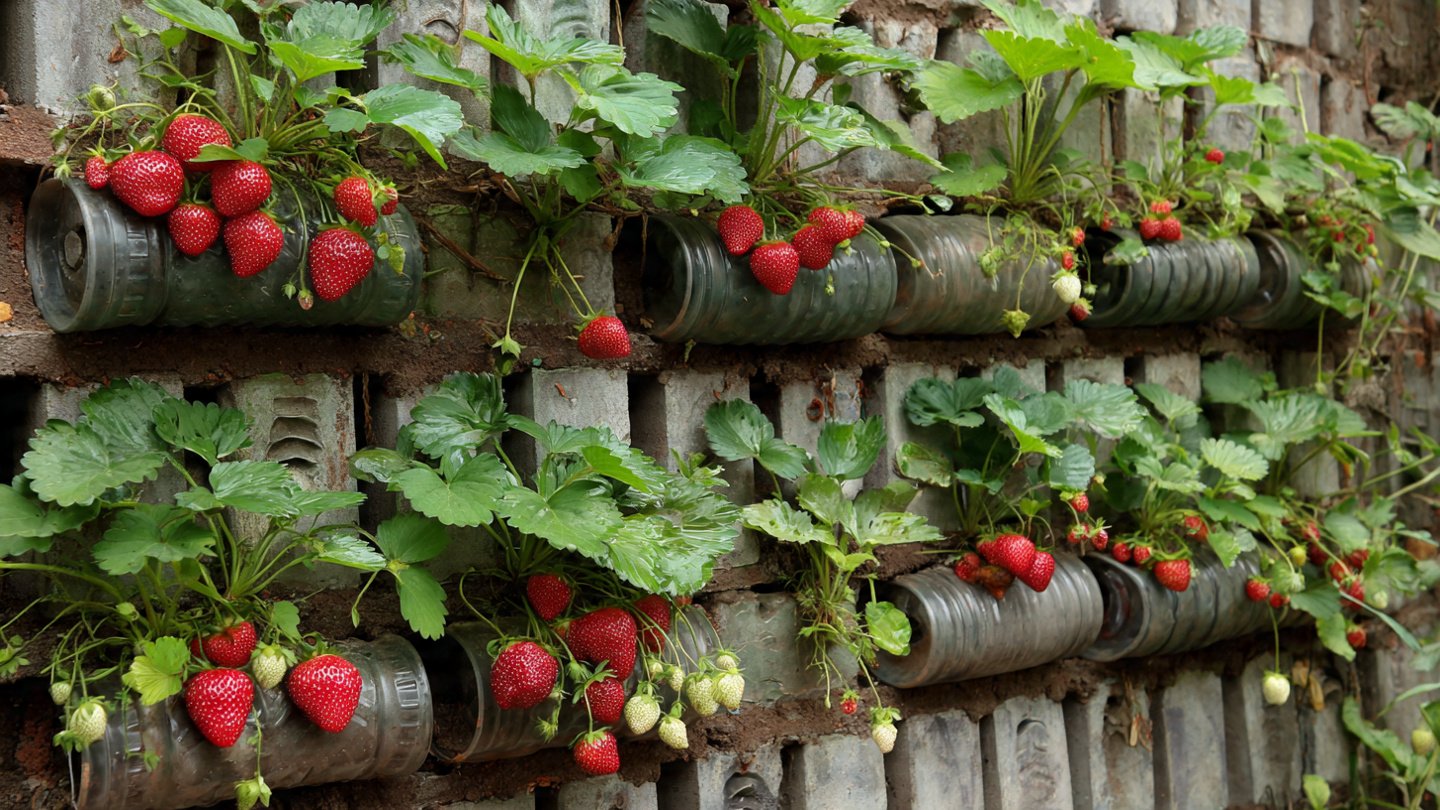
Strawberries are one of the most loved fruits worldwide—sweet, juicy, and surprisingly easy to grow at home. What if you could harvest fresh strawberries without a traditional garden bed or large containers? With a little creativity and some recycled plastic bottles, you can transform old walls, fences, or balconies into a thriving vertical strawberry garden. This method not only saves space but also turns waste into a productive and eco-friendly growing system.
In this guide, you’ll learn everything you need to know about growing strawberries on old walls using plastic bottles, from preparation and planting to care and harvesting.
Why Grow Strawberries Vertically Using Plastic Bottles?
Vertical gardening is gaining popularity for good reason. Strawberries, with their shallow root systems and compact growth, are ideal candidates for wall gardens.
Key Benefits
- Space-saving: Perfect for apartments, balconies, or small homes
- Eco-friendly: Reuses plastic bottles that would otherwise go to waste
- Cleaner fruits: Berries stay off the ground, reducing rot and pests
- Easy maintenance: Less bending, better airflow, and fewer weeds
- Decorative appeal: Adds greenery and color to plain walls
By growing strawberries vertically, you combine sustainability with productivity.
Choosing the Right Wall or Surface
Before setting up your vertical garden, identify the best location.
Ideal Conditions
- Sunlight: 6–8 hours of direct sunlight daily
- Ventilation: Good airflow to prevent fungal diseases
- Accessibility: Easy to water, prune, and harvest
- Support: A strong wall, fence, or metal grill
Avoid walls that receive intense reflected heat all day, as strawberries prefer moderate temperatures.
Materials You’ll Need
Setting up a plastic bottle strawberry wall is affordable and simple.
Essential Supplies
- Used plastic bottles (1–2 liter bottles work best)
- Sharp knife or cutter
- Nail or heated metal rod (for drainage holes)
- Rope, wire, or strong zip ties
- Hooks or wall anchors
- Potting mix (light and well-draining)
- Compost or vermicompost
- Strawberry seedlings or runners
Optional additions include coco peat, perlite, or sand to improve drainage.
Preparing Plastic Bottles for Planting
Step 1: Clean the Bottles
Wash bottles thoroughly to remove any residue or odors.
Step 2: Create Planting Windows
- Cut a rectangular opening on one side of the bottle
- Leave enough plastic at the edges to support soil
- Smooth sharp edges to prevent injury
Step 3: Make Drainage Holes
Poke 2–3 small holes at the bottom of each bottle to prevent waterlogging.
Step 4: Add Hanging Support
Make two small holes near the top and bottom edges for rope or wire, or use wall-mounted hooks.
Choosing the Best Strawberry Varieties
Not all strawberries perform equally in vertical systems.
Best Varieties for Wall Gardening
- Alpine strawberries – Compact and continuous producers
- Day-neutral varieties – Fruit throughout the season
- Ever-bearing strawberries – Ideal for containers
- Local hybrid varieties – Often more climate-resilient
Avoid aggressive runners unless you plan to prune regularly.
Soil Mix for Healthy Growth
Strawberries prefer loose, nutrient-rich soil.
Ideal Potting Mix
- 40% garden soil
- 30% compost or vermicompost
- 20% coco peat
- 10% sand or perlite
The soil should retain moisture without becoming soggy.
Planting Strawberries in Bottles
Step-by-Step Planting
- Fill the bottle halfway with soil mix
- Place the seedling so roots spread naturally
- Ensure the crown sits just above soil level
- Fill remaining space gently and firm the soil
- Water lightly
Do not bury the crown—it can cause rot.
Arranging Bottles on the Wall
You can arrange bottles in multiple creative ways:
- Vertical columns
- Horizontal rows
- Zigzag patterns
- Ladder-style designs
Leave at least 8–10 inches between bottles to allow airflow and sunlight.
Watering Tips for Vertical Strawberry Gardens
Vertical containers dry out faster than ground beds.
Watering Guidelines
- Water once daily in warm weather
- Reduce frequency during cooler seasons
- Avoid wetting leaves excessively
- Use drip bottles or slow watering to prevent runoff
Consistency is key—irregular watering leads to small or bitter fruits.
Feeding Your Strawberry Plants
Strawberries are moderate feeders.
Organic Fertilizer Options
- Compost tea every 15 days
- Banana peel water for potassium
- Vermicompost top dressing monthly
- Fish emulsion (diluted) every 3–4 weeks
Avoid excessive nitrogen, which promotes leaves over fruits.
Pollination and Flower Care
Strawberries are self-pollinating but benefit from activity.
Improve Pollination
- Gently shake bottles during flowering
- Encourage bees by nearby flowers
- Hand-pollinate using a soft brush if needed
Remove the first few flowers to allow plants to establish strong roots.
Common Problems and Solutions
Yellow Leaves
- Cause: Overwatering or nutrient deficiency
- Solution: Improve drainage and feed compost tea
Small or Deformed Fruits
- Cause: Poor pollination or irregular watering
- Solution: Improve watering consistency and pollination
Pests (Aphids, Spider Mites)
- Spray neem oil weekly
- Wash leaves with mild soap solution
Harvesting Strawberries
Strawberries are ready to harvest when:
- Fully red with no white tips
- Firm but juicy
- Easily detach from the stem
Harvest in the morning for best flavor. Frequent harvesting encourages more fruit production.
Maintenance Tips for Long-Term Success
- Prune excess runners regularly
- Replace soil every 6–8 months
- Rotate bottle positions occasionally
- Remove old or diseased leaves promptly
With proper care, strawberry plants can produce fruit for multiple seasons.
A Sustainable Way to Grow Food at Home
Growing strawberries on old walls using plastic bottles is more than a gardening trend—it’s a lifestyle shift toward sustainability, creativity, and self-reliance. This vertical fruit garden transforms unused spaces into productive green zones while reducing plastic waste and grocery bills.
Whether you live in an apartment or a house with limited outdoor space, this method proves that fresh, homegrown strawberries are possible anywhere.
Start small, experiment with layouts, and enjoy the rewarding experience of harvesting sweet strawberries right from your wall.